Raspberry Pi

92 Products

  • Raspberry Pi Zero 2 W - Elektor

    Raspberry Pi Foundation Raspberry Pi Zero 2 W

    Out of stock

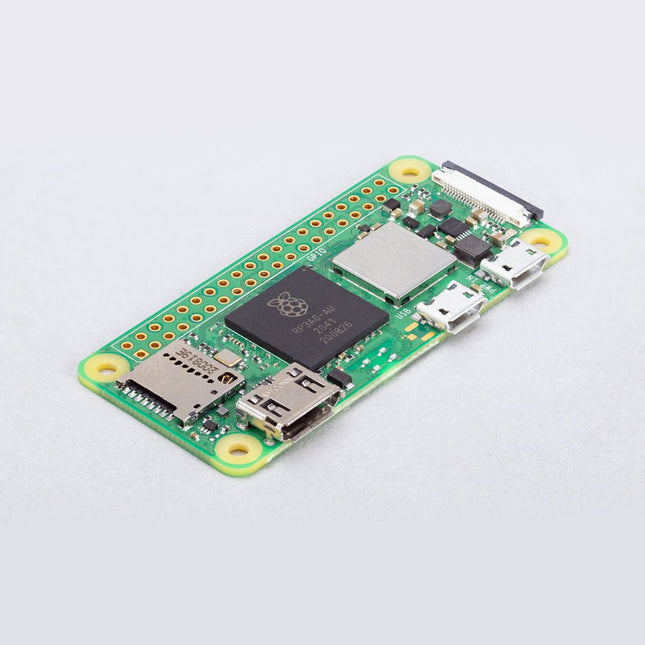
    Raspberry Pi Zero 2 W is the successor to the breakthrough Raspberry Pi Zero W. The board incorporates a quad-core 64-bit Arm Cortex-A53 CPU, clocked at 1 GHz. At its heart is a Raspberry Pi RP3A0 system-in-package (SiP), integrating a Broadcom BCM2710A1 die with 512 MB of LPDDR2 SDRAM. The upgraded processor provides Raspberry Pi Zero 2 W with 40% more single-threaded performance, and five times more multi-threaded performance, than the original single-core Raspberry Pi Zero. Features 64-bit quad-core processor VideoCore IV GPU 512 MB LPDDR2 DRAM 802.11b/g/n wireless LAN Bluetooth 4.2 / Bluetooth Low Energy (BLE) MicroSD card slot Mini HDMI and USB 2.0 OTG ports Micro USB power HAT-compatible 40-pin header Composite video and reset pins via solder test points CSI camera connector Specifications SoC Broadcom BCM2710A1 CPU 64-bit ARM Cortex-A53 (4x 1 GHz) GPU Broadcom VideoCore VI RAM 512 MB LPDDR2 Wireless LAN 2.4 GHz IEEE 802.11b/g/n Bluetooth Bluetooth 4.2, BLE USB 1x micro USB (for data)1x micro USB (for power supply) GPIO HAT-compatible 40-pin GPIO header Video & Audio 1080P HD video & stereo audio via mini-HDMI connector SD card microSD (for operating system and storage) Power 5 VDC / 2.5 A (supplied via micro USB connector) Dimensions 65 x 30 x 5 mm Raspberry Pi Zero 2 W is footprint-compatible with earlier Zero models.

    Out of stock

    € 19,95

    Best Price

  • Elektor Raspberry Pi Buffer Board - Elektor

    Elektor Labs Elektor Raspberry Pi Buffer Board

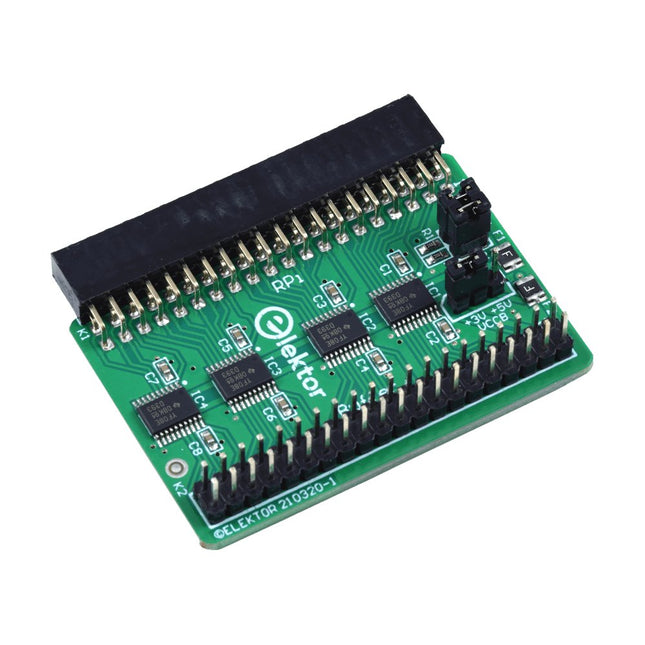
    When you experiment with the Raspberry Pi on a regular basis and you connect a variety of external hardware to the GPIO port via the header you may well have caused some damage in the past. The Elektor Raspberry Pi Buffer Board is there to prevent this! The board is compatible with Raspberry Pi Zero, Zero 2 (W), 3, 4, 5, 400 and 500. All 26 GPIOs are buffered with bi-directional voltage translators to protect the Raspberry Pi when experimenting with new circuits. The PCB is intended to be inserted in the back of Raspberry Pi 400/500. The connector to connect to the Raspberry Pi is a right angled 40-way receptacle (2x20). The PCB is only a fraction wider. A 40-way flat cable with appropriate 2x20 headers can be connected to the buffer output header to experiment for instance with a circuit on a breadboard or PCB. The circuit uses 4x TXS0108E ICs by Texas Instruments. The PCB can also be put upright on a Raspberry Pi. Downloads Schematics Layout

    € 34,95

    Members: € 31,46

  •  -50% Raspberry Pi Global Shutter Camera - Elektor

    Raspberry Pi Foundation Raspberry Pi Global Shutter Camera

    Out of stock

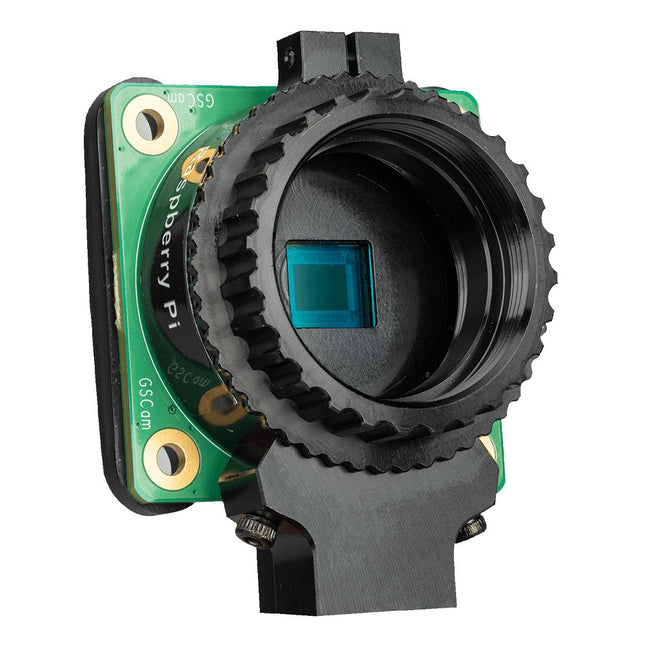
    The Raspberry Pi Global Shutter Camera is a specialised 1.6 MP camera from Raspberry Pi that is able to capture rapid motion without introducing artefacts typical of rolling shutter cameras. It is ideally suited to fast motion photography and to machine vision applications, where even small amounts of distortion can seriously degrade inference performance. With a large pixel size of 3.45 x 3.45 μm providing high light sensitivity, the Global Shutter Camera can operate with short exposure times (as low as 30 μs with adequate lighting), an advantage for high-speed photography. It features a 1.6 MP Sony IMX296 sensor, and it has the same C/CS-mount lens assembly as the Raspberry Pi High Quality Camera, for compatibility with the same broad variety of lenses. In common with other global shutter sensors, the IMX296 has a lower resolution than similarly sized rolling shutter sensors; a low pixel count is appropriate for machine vision applications, where high-resolution images are challenging to process in real time. The Global Shutter Camera's lower resolution means that with appropriate lens magnification, an image suitable for processing by a machine vision model can be captured natively. The Raspberry Pi Global Shutter Camera is compatible with any Raspberry Pi computer that has a CSI connector. Specifications Form factor 38 x 38 x 19.8 mm (29.5 mm adapter and dust cap) Weight 34 g (41 g with adapter and dust cap) Sensor Sony IMX296LQR-C Resolution 1.58 MP (color) Sensor size 6.3 mm (sensor diagonal) Pixel size 3.45 x 3.45 μm Output RAW10 Back focus length of lens Adjustable (12.5-22.4 mm) Lens standards CS-MountC-Mount (C-CS adapter included) IR cut filter Integrated Ribbon cable length 150 mm Included accessories C-CS mount adapterScrewdriver Tripod mount 1/4”-20 Included Raspberry Pi Global Shutter Camera C-CS mount adapter Screwdriver Ribbon cable (150 mm) Downloads Datasheet

    Out of stock

    € 59,95€ 29,95

    Best Price

  • The CAN Bus Companion - Elektor

    Elektor Publishing The CAN Bus Companion

    Out of stock

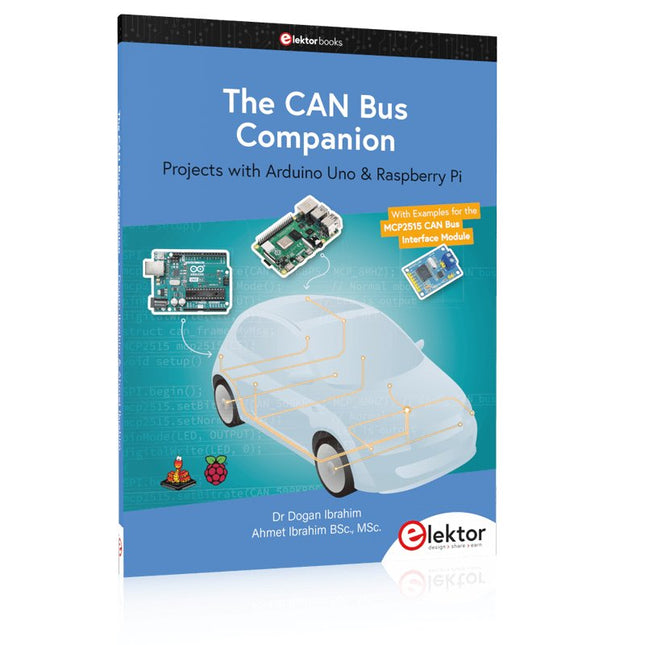
    This book details the use of the Arduino Uno and the Raspberry Pi 4 in practical CAN bus based projects. Using either the Arduino Uno or the Raspberry Pi with off-the-shelf CAN bus interface modules considerably ease developing, debugging, and testing CAN bus based projects. This book is written for students, practicing engineers, enthusiasts, and for everyone else wanting to learn more about the CAN bus and its applications. The book assumes that the reader has some knowledge of basic electronics. Knowledge of the C and Python programming languages and programming the Arduino Uno using its IDE and Raspberry Pi will be useful, especially if the reader intends to develop microcontroller-based projects using the CAN bus. The book should be a useful source of reference material for anyone interested in finding answers to questions such as: What bus systems are available for the automotive industry? What are the principles of the CAN bus? How can I create a physical CAN bus? What types of frames (or data packets) are available in a CAN bus system? How can errors be detected in a CAN bus system and how dependable is a CAN bus system? What types of CAN bus controllers exist? How do I use the MCP2515 CAN bus controller? How do I create 2-node Arduino Uno-based CAN bus projects? How do I create 3-node Arduino Uno-based CAN bus projects? How do I set the acceptance masks and acceptance filters? How do I analyze data on the CAN bus? How do I create 2-node Raspberry Pi-based CAN bus projects? How do I create 3-node Raspberry Pi-based CAN bus projects?

    Out of stock

    € 39,95

    Members: € 35,96

  •  -50% Raspberry Pi High Quality Camera Module (M12 Mount) - Elektor

    Raspberry Pi Foundation Raspberry Pi High Quality Camera Module (M12 Mount)

    Out of stock

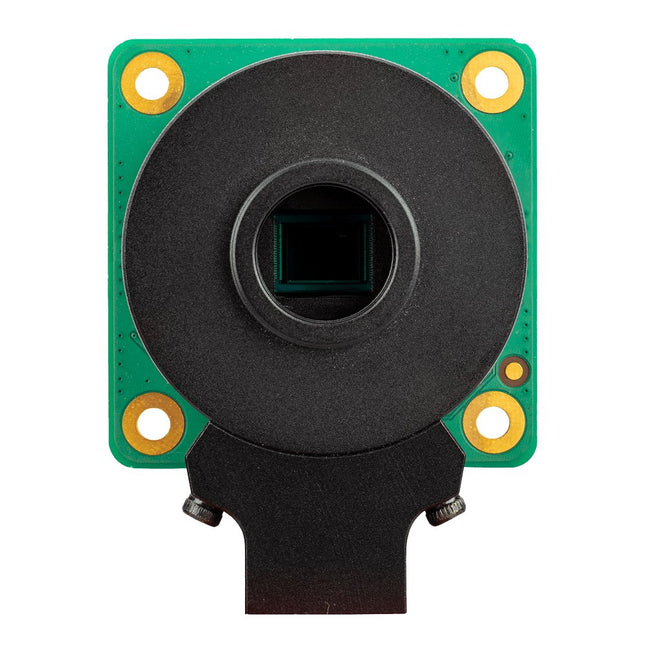
    The Raspberry Pi High Quality Camera is an affordable high-quality camera from Raspberry Pi. It offers 12-megapixel resolution and a 7.9-mm diagonal sensor for impressive low-light performance. The M12 Mount variant is designed to work with most interchangeable M12 lenses, and the CS Mount variant is designed to work with interchangeable lenses in both CS and C mount form factors (C mount lenses require the use of the C-CS adapter included with this variant). Other lens form factors can be accommodated using third-party lens adapters. The High Quality Camera is well suited to industrial and consumer applications, including security cameras, which require the highest levels of visual fidelity and/ or integration with specialist optics. It is compatible with all models of Raspberry Pi from Model B onwards. Specifications Sensor Sony IMX477R stacked, back-illuminated sensor Resolution 12.3 megapixels Sensor size 7.9 mm sensor diagonal Pixel size 1.55 x 1.55 μm Output RAW12/10/8, COMP8 Back focus length of lens 2.6–11.8 mm (M12 Mount variant)12.5–22.4 mm (CS Mount variant) Lens sensor format 1/2.3” (7.9 mm) or larger IR cut filter Integrated Ribbon cable length 200 mm Tripod mount 1/4”-20 Included 1x Circuit board carrying a Sony IMX477 sensor 1x FPC cable for connection to a Raspberry Pi computer 1x Milled aluminium lens mount with integrated tripod mount 1x C to CS mount adapter 3x Lens locking rings Required M12 Mount Lens

    Out of stock

    € 59,95€ 29,95

    Best Price

  • Raspberry Pi Camera Module 3 Wide NoIR - Elektor

    Raspberry Pi Foundation Raspberry Pi Camera Module 3 Wide NoIR

    Out of stock

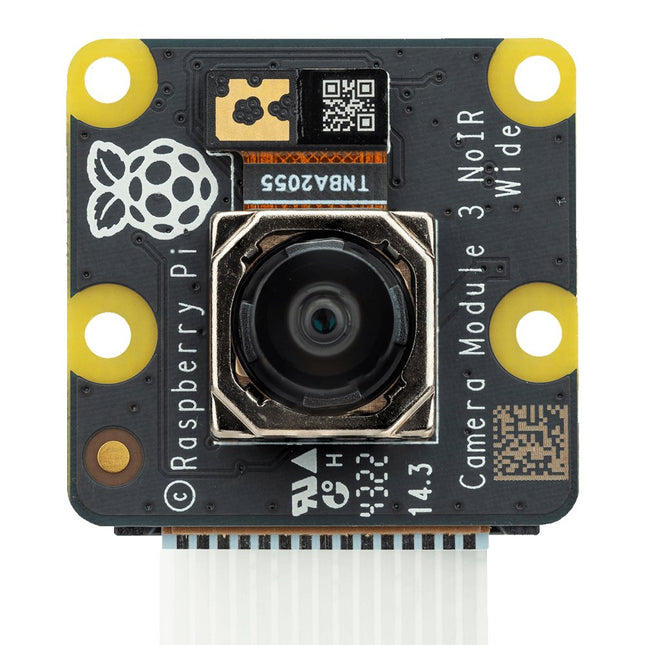
    Raspberry Pi Camera Module 3 is a compact camera from Raspberry Pi. It offers an IMX708 12-megapixel sensor with HDR, and features phase detection autofocus. Camera Module 3 is available in standard and wide-angle variants, both of which are available with or without an infrared cut filter. Camera Module 3 can be used to take full HD video as well as stills photographs, and features an HDR mode up to 3 megapixels. Its operation is fully supported by the libcamera library, including Camera Module 3’s rapid autofocus feature: this makes it easy for beginners to use, while offering plenty for advanced users. Camera Module 3 is compatible with all Raspberry Pi computers. All variants of Raspberry Pi Camera Module 3 feature: Back-illuminated and stacked CMOS 12-megapixel image sensor (Sony IMX708) High signal-to-noise ratio (SNR) Built-in 2D Dynamic Defect Pixel Correction (DPC) Phase Detection Autofocus (PDAF) for rapid autofocus QBC Re-mosaic function HDR mode (up to 3 megapixel output) CSI-2 serial data output 2-wire serial communication (supports I²C fast mode and fast-mode plus) 2-wire serial control of focus mechanism Specifications Sensor Sony IMX708 Resolution 11.9 MP Sensor size 7.4 mm sensor diagonal Pixel size 1.4 x 1.4 µm Horizontal/vertical 4608 x 2592 pixels Common video modes 1080p50, 720p100, 480p120 Output RAW10 IR cut filter Integrated in standard variants; not present in NoIR variants Autofocus system Phase Detection Autofocus Ribbon cable length 200 mm Cable connector 15 x 1 mm FPC Dimensions 25 x 24 x 11.5 mm (12.4 mm height for Wide variants) Variants of Raspberry Pi Camera Module 3 Camera Module 3 Camera Module 3 NoIR Camera Module 3 Wide Camera Module 3 Wide NoIR Focus range 10 cm - ∞ 10 cm - ∞ 5 cm - ∞ 5 cm - ∞ Focal length 4.74 mm 4.74 mm 2.75 mm 2.75 mm Diagonal field of view 75 degrees 75 degrees 120 degrees 120 degrees Horizontal field of view 66 degrees 66 degrees 102 degrees 102 degrees Vertical field of view 41 degrees 41 degrees 67 degrees 67 degrees Focal ratio (F-stop) F1.8 F1.8 F2.2 F2.2 Infrared-sensitive No Yes No Yes Downloads GitHub Documentation

    Out of stock

    € 39,95

    Best Price

  • Raspberry Pi Camera Module 3 Wide - Elektor

    Raspberry Pi Foundation Raspberry Pi Camera Module 3 Wide

    Out of stock

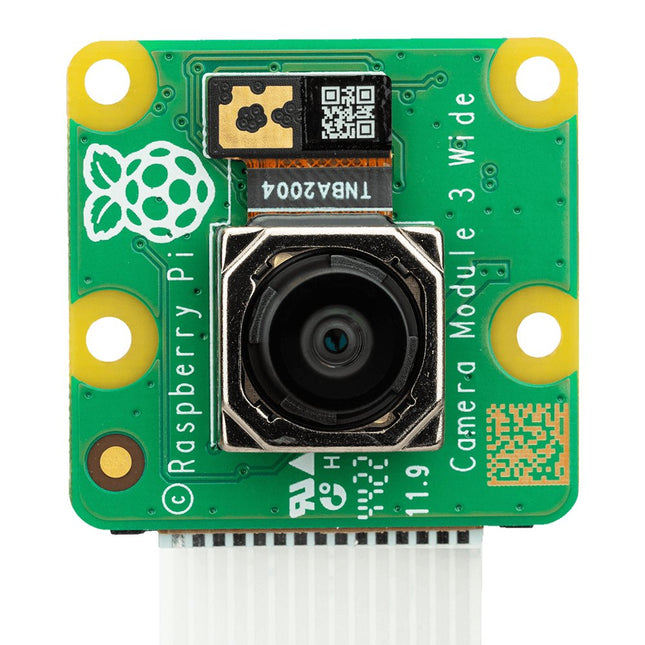
    Raspberry Pi Camera Module 3 is a compact camera from Raspberry Pi. It offers an IMX708 12-megapixel sensor with HDR, and features phase detection autofocus. Camera Module 3 is available in standard and wide-angle variants, both of which are available with or without an infrared cut filter. Camera Module 3 can be used to take full HD video as well as stills photographs, and features an HDR mode up to 3 megapixels. Its operation is fully supported by the libcamera library, including Camera Module 3’s rapid autofocus feature: this makes it easy for beginners to use, while offering plenty for advanced users. Camera Module 3 is compatible with all Raspberry Pi computers. All variants of Raspberry Pi Camera Module 3 feature: Back-illuminated and stacked CMOS 12-megapixel image sensor (Sony IMX708) High signal-to-noise ratio (SNR) Built-in 2D Dynamic Defect Pixel Correction (DPC) Phase Detection Autofocus (PDAF) for rapid autofocus QBC Re-mosaic function HDR mode (up to 3 megapixel output) CSI-2 serial data output 2-wire serial communication (supports I²C fast mode and fast-mode plus) 2-wire serial control of focus mechanism Specifications Sensor Sony IMX708 Resolution 11.9 MP Sensor size 7.4 mm sensor diagonal Pixel size 1.4 x 1.4 µm Horizontal/vertical 4608 x 2592 pixels Common video modes 1080p50, 720p100, 480p120 Output RAW10 IR cut filter Integrated in standard variants; not present in NoIR variants Autofocus system Phase Detection Autofocus Ribbon cable length 200 mm Cable connector 15 x 1 mm FPC Dimensions 25 x 24 x 11.5 mm (12.4 mm height for Wide variants) Variants of Raspberry Pi Camera Module 3 Camera Module 3 Camera Module 3 NoIR Camera Module 3 Wide Camera Module 3 Wide NoIR Focus range 10 cm - ∞ 10 cm - ∞ 5 cm - ∞ 5 cm - ∞ Focal length 4.74 mm 4.74 mm 2.75 mm 2.75 mm Diagonal field of view 75 degrees 75 degrees 120 degrees 120 degrees Horizontal field of view 66 degrees 66 degrees 102 degrees 102 degrees Vertical field of view 41 degrees 41 degrees 67 degrees 67 degrees Focal ratio (F-stop) F1.8 F1.8 F2.2 F2.2 Infrared-sensitive No Yes No Yes Downloads GitHub Documentation

    Out of stock

    € 39,95

    Best Price

  • Raspberry Pi Camera Module 3 NoIR - Elektor

    Raspberry Pi Foundation Raspberry Pi Camera Module 3 NoIR

    Out of stock

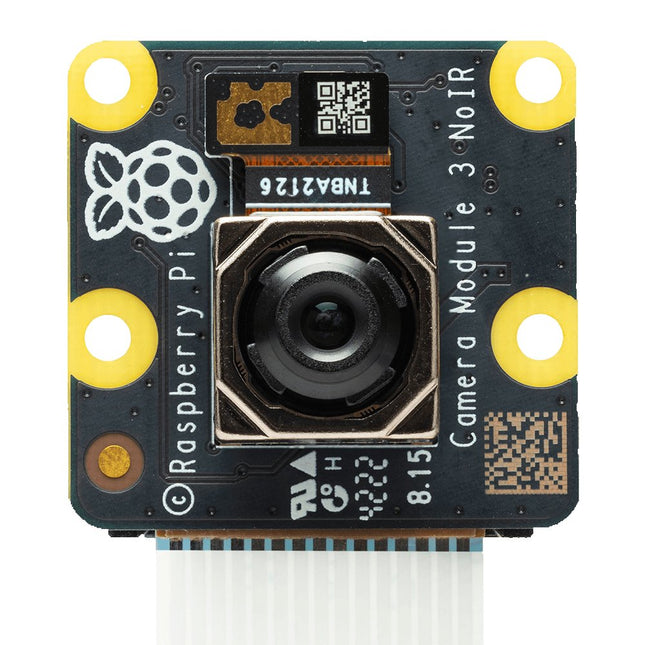
    Raspberry Pi Camera Module 3 is a compact camera from Raspberry Pi. It offers an IMX708 12-megapixel sensor with HDR, and features phase detection autofocus. Camera Module 3 is available in standard and wide-angle variants, both of which are available with or without an infrared cut filter. Camera Module 3 can be used to take full HD video as well as stills photographs, and features an HDR mode up to 3 megapixels. Its operation is fully supported by the libcamera library, including Camera Module 3’s rapid autofocus feature: this makes it easy for beginners to use, while offering plenty for advanced users. Camera Module 3 is compatible with all Raspberry Pi computers. All variants of Raspberry Pi Camera Module 3 feature: Back-illuminated and stacked CMOS 12-megapixel image sensor (Sony IMX708) High signal-to-noise ratio (SNR) Built-in 2D Dynamic Defect Pixel Correction (DPC) Phase Detection Autofocus (PDAF) for rapid autofocus QBC Re-mosaic function HDR mode (up to 3 megapixel output) CSI-2 serial data output 2-wire serial communication (supports I²C fast mode and fast-mode plus) 2-wire serial control of focus mechanism Specifications Sensor Sony IMX708 Resolution 11.9 MP Sensor size 7.4 mm sensor diagonal Pixel size 1.4 x 1.4 µm Horizontal/vertical 4608 x 2592 pixels Common video modes 1080p50, 720p100, 480p120 Output RAW10 IR cut filter Integrated in standard variants; not present in NoIR variants Autofocus system Phase Detection Autofocus Ribbon cable length 200 mm Cable connector 15 x 1 mm FPC Dimensions 25 x 24 x 11.5 mm (12.4 mm height for Wide variants) Variants of Raspberry Pi Camera Module 3 Camera Module 3 Camera Module 3 NoIR Camera Module 3 Wide Camera Module 3 Wide NoIR Focus range 10 cm - ∞ 10 cm - ∞ 5 cm - ∞ 5 cm - ∞ Focal length 4.74 mm 4.74 mm 2.75 mm 2.75 mm Diagonal field of view 75 degrees 75 degrees 120 degrees 120 degrees Horizontal field of view 66 degrees 66 degrees 102 degrees 102 degrees Vertical field of view 41 degrees 41 degrees 67 degrees 67 degrees Focal ratio (F-stop) F1.8 F1.8 F2.2 F2.2 Infrared-sensitive No Yes No Yes Downloads GitHub Documentation

    Out of stock

    € 29,95

    Best Price

  • Robotis TurtleBot3 Waffle Pi (incl. Raspberry Pi 4) - Elektor

    Robotis Robotis TurtleBot3 Waffle Pi (incl. Raspberry Pi 4)

    Pre-order

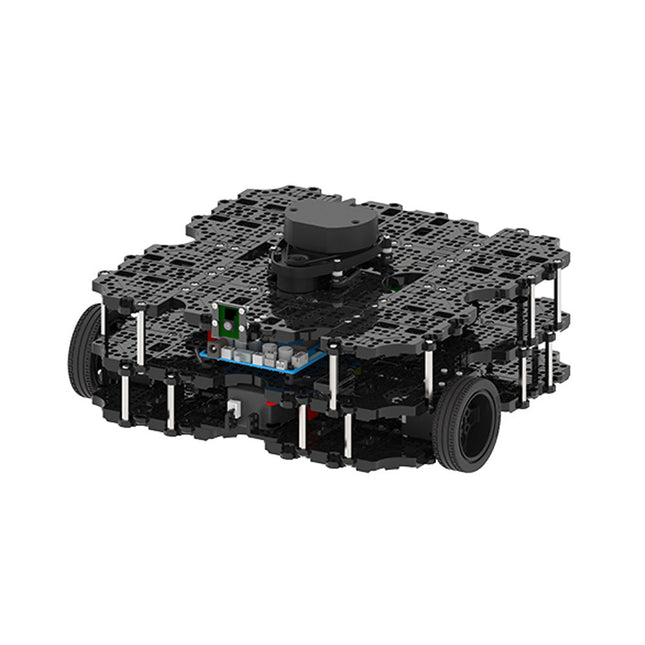
    World’s Most Popular ROS Platform TurtleBot is the most popular open source robot for education and research. The new generation TurtleBot3 is a small, low cost, fully programmable, ROS based mobile robot. It is intended to be used for education, research, hobby and product prototyping. Affordable Cost TurtleBot was developed to meet the cost-conscious needs of schools, laboratories and companies. TurtleBot3 is the most affordable robot among the SLAM-able mobile robots equipped with a 360° Laser Distance Sensor LDS-01. ROS Standard The TurtleBot brand is managed by Open Robotics, which develops and maintains ROS. Nowadays, ROS has become the go-to platform for all the roboticists around the world. TurtleBot can be integrated with existing ROS-based robot components, but TurtleBot3 can be an affordable platform for whom want to get started learning ROS. Extensibility TurtleBot3 encourages users to customize its mechanical structure with some alternative options: open source embedded board (as a control board), computer and sensors. TurtleBot3 Waffle Pi is a two-wheeled differential drive type platform but it is able to be structurally and mechanically customized in many ways: Cars, Bikes, Trailers and so on. Extend your ideas beyond imagination with various SBC, sensors and motors on a scalable structure. Modular Actuator for Mobile Robot TurtleBot3 is able to get a precise spatial data by using 2 DYNAMIXEL’s in the wheel joints. DYNAMIXEL XM series can be operated by one of 6 operating modes (XL series: 4 operating modes): Velocity control mode for wheels, Torque control mode or Position control mode for joint, etc. DYNAMIXEL can be used even to make a mobile manipulator which is light but can be precisely controlled with velocity, torque and position control. DYNAMIXEL is a core component that makes TurtleBot3 perfect. It is easy to assemble, maintain, replace and reconfigure. Open Control Board for ROS The control board is open-sourced in hardware wise and in software wise for ROS communication. The open source control board OpenCR1.0 is powerful enough to control not only DYNAMIXEL’s but also ROBOTIS sensors that are frequently being used for basic recognition tasks in cost effective way. Various sensors such as Touch sensor, Infrared sensor, Color sensor and a handful more are available. The OpenCR1.0 has an IMU sensor inside the board so that it can enhance precise control for countless applications. The board has 3.3 V, 5 V, 12 V power supplies to reinforce the available computer device lineups. Open Source The hardware, firmware and software of TurtleBot3 are open source which means that users are welcomed to download, modify and share source codes. All components of TurtleBot3 are manufactured with injection molded plastic to achieve low cost, however, the 3D CAD data is also available for 3D printing. Specifications Maximum translational velocity 0.26 m/s Maximum rotational velocity 1.82 rad/s (104.27 deg/s) Maximum payload 30 kg Size (L x W x H) 281 x 306 x 141 mm Weight (+ SBC + Battery + Sensors) 1.8 kg Threshold of climbing 10 mm or lower Expected operating time 2h Expected charging time 2h 30m SBC (Single Board Computers) Raspberry Pi 4 (2 GB RAM) MCU 32-bit ARM Cortex-M7 with FPU (216 MHz, 462 DMIPS) Remote Controller RC-100B + BT-410 Set (Bluetooth 4, BLE) Actuator XL430-W210 LDS (Laser Distance Sensor) 360 Laser Distance Sensor LDS-01 or LDS-02 Camera Raspberry Pi Camera Module v2.1 IMU Gyroscope 3 AxisAccelerometer 3 Axis Power connectors 3.3 V/800 mA5 V/4 A12 V/1 A Expansion pins GPIO 18 pinsArduino 32 pin Peripheral 3x UART, 1x CAN, 1x SPI, 1x I²C, 5x ADC, 4x 5-pin OLLO DYNAMIXEL ports 3x RS485, 3x TTL Audio Several programmable beep sequences Programmable LEDs 4x User LED Status LEDs 1x Board status LED1x Arduino LED1x Power LED Buttons and Switches 2x Push buttons, 1x Reset button, 2x Dip switch Battery Lithium polymer 11.1 V 1800 mAh / 19.98 Wh 5C PC connection USB Firmware upgrade via USB / via JTAG Power adapter (SMPS) Input: 100-240 VAC 50/60 Hz, 1.5 A @maxOutput: 12 VDC, 5 A Downloads ROS Robot Programming GitHub E-Manual Community

    Pre-order

    € 1.879,00

    Best Price

  • Clearpath Robotics TurtleBot 4 Lite - Elektor

    Clearpath Robotics Clearpath Robotics TurtleBot 4 Lite

    Pre-order

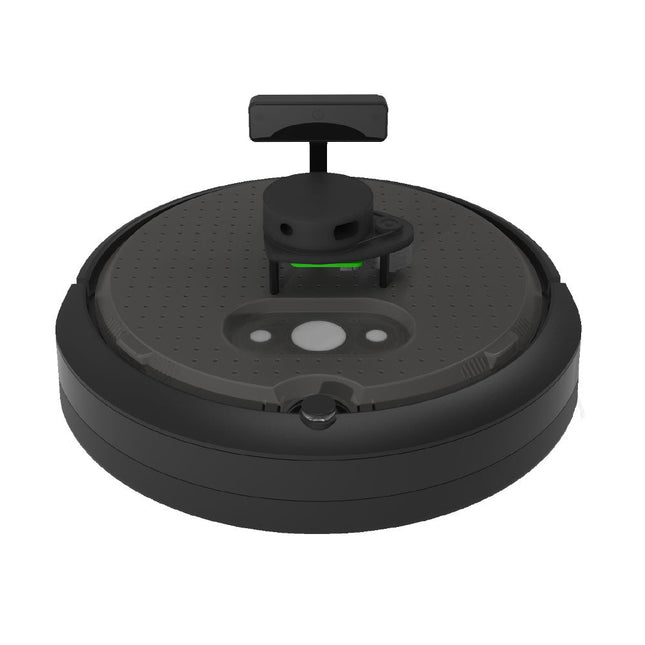
    TurtleBot 4 is the next-generation of the world’s most popular open source robotics platform for education and research, offering better computing power, better sensors and a world class user experience at an affordable price point.TurtleBot 4 Lite is equipped with an iRobot Create 3 mobile base, a powerful Raspberry Pi 4 running ROS 2, OAK-D spatial AI stereo camera, 2D LiDAR and more. All components have been seamlessly integrated to deliver an out-of-the-box development and learning platform.Specifications Base platform iRobot Create 3 Wheels (Diameter) 72 mm Ground Clearance 4.5 mm On-board Computer Raspberry Pi 4 (4 GB) Maximum linear velocity 0.31 m/s in safe mode0.46 m/s without safe mode Maximum angular velocity 1.90 rad/s Maximum payload 9 kg Operation time 2h 30m – 4h depending on load Charging time 2h 30m Lidar RPLIDAR A1M8 Camera OAK-D-Lite User Power VBAT @1.9 A5 V @ Low current3.3 V @ Low current USB Expansion 2x USB 2.0 (Type A)2x USB 3.0 (Type A) Programmable LEDs Create 3 Lightring Buttons and Switches 2x Create 3 User buttons1x Create 3 Power Button Battery 26 Wh Lithium Ion (14.4 V nominal) Charging Dock Included Size (L x W x H) 342 x 339 x 192 mm Weight 3.3 kg DownloadsUser Manual

    Pre-order

    € 1.699,00

    Best Price

  • Raspberry Pi Pico W (Book) - Elektor

    Elektor Publishing Raspberry Pi Pico W (Book)

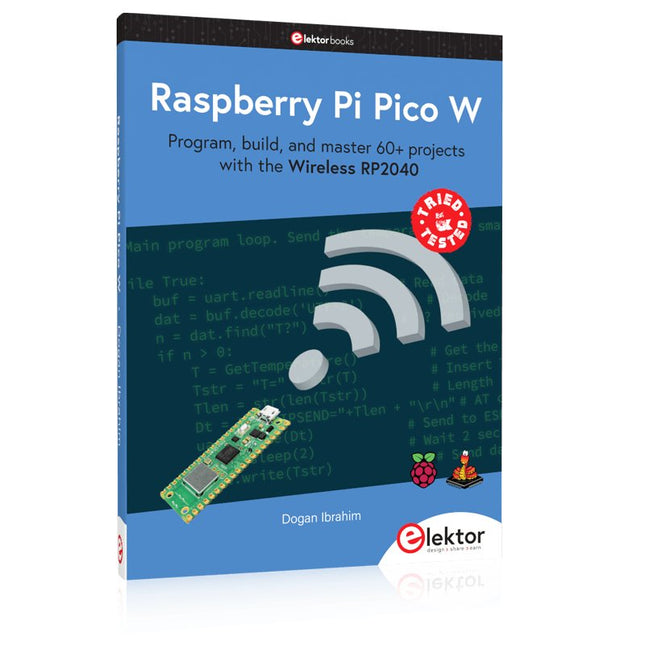
    Program, build, and master 60+ projects with the Wireless RP2040 The Raspberry Pi Pico and Pico W are based on the fast, efficient, and low-cost dual-core ARM Cortex M0+ RP2040 microcontroller chip running at up to 133 MHz and sporting 264 KB of SRAM and 2 MB of Flash memory. Besides spacious memory, the Pico and Pico W offer many GPIO pins, and popular peripheral interface modules like ADC, SPI, I²C, UART, PWM, timing modules, a hardware debug interface, and an internal temperature sensor. The Raspberry Pi Pico W additionally includes an on-board Infineon CYW43439 Bluetooth and Wi-Fi chipset. At the time of writing this book, the Bluetooth firmware was not yet available. Wi-Fi is however fully supported at 2.4 GHz using the 802.11b/g/n protocols. This book is an introduction to using the Raspberry Pi Pico W in conjunction with the MicroPython programming language. The Thonny development environment (IDE) is used in all of the 60+ working and tested projects covering the following topics: Installing the MicroPython on Raspberry Pi Pico using a Raspberry Pi or a PC Timer interrupts and external interrupts Analogue-to-digital converter (ADC) projects Using the internal temperature sensor and external sensor chips Using the internal temperature sensor and external temperature sensor chips Datalogging projects PWM, UART, I²C, and SPI projects Using Bluetooth, WiFi, and apps to communicate with smartphones Digital-to-analogue converter (DAC) projects All projects are tried & tested. They can be implemented on both the Raspberry Pi Pico and Raspberry Pi Pico W, although the Wi-Fi-based subjects will run on the Pico W only. Basic programming and electronics experience are required to follow the projects. Brief descriptions, block diagrams, detailed circuit diagrams, and full MicroPython program listings are given for all projects.

    € 44,95

    Best Price

  • PID - based Practical Digital Control with Raspberry Pi and Arduino Uno - Elektor

    Elektor Publishing PID-based Practical Digital Control with Raspberry Pi and Arduino Uno

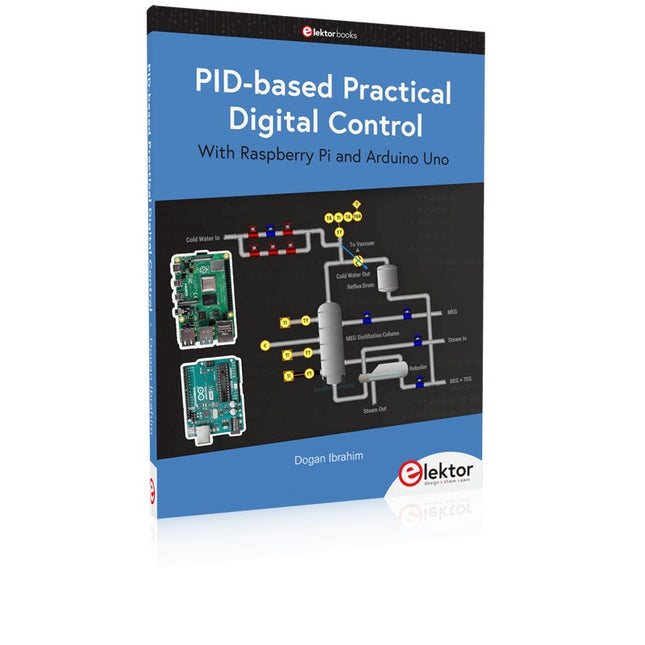
    The Arduino Uno is an open-source microcontroller development system encompassing hardware, an Integrated Development Environment (IDE), and a vast number of libraries. It is supported by an enormous community of programmers, electronic engineers, enthusiasts, and academics. The libraries in particular really smooth Arduino programming and reduce programming time. What’s more, the libraries greatly facilitate testing your programs since most come fully tested and working. The Raspberry Pi 4 can be used in many applications such as audio and video media devices. It also works in industrial controllers, robotics, games, and in many domestic and commercial applications. The Raspberry Pi 4 also offers Wi-Fi and Bluetooth capability which makes it great for remote and Internet-based control and monitoring applications. This book is about using both the Raspberry Pi 4 and the Arduino Uno in PID-based automatic control applications. The book starts with basic theory of the control systems and feedback control. Working and tested projects are given for controlling real-life systems using PID controllers. The open-loop step time response, tuning the PID parameters, and the closed-loop time response of the developed systems are discussed together with the block diagrams, circuit diagrams, PID controller algorithms, and the full program listings for both the Raspberry Pi and the Arduino Uno. The projects given in the book aim to teach the theory and applications of PID controllers and can be modified easily as desired for other applications. The projects given for the Raspberry Pi 4 should work with all other models of Raspberry Pi family. The book covers the following topics: Open-loop and closed-loop control systems Analog and digital sensors Transfer functions and continuous-time systems First-order and second-order system time responses Discrete-time digital systems Continuous-time PID controllers Discrete-time PID controllers ON-OFF temperature control with Raspberry Pi and Arduino Uno PID-based temperature control with Raspberry Pi and Arduino Uno PID-based DC motor control with Raspberry Pi and Arduino Uno PID-based water level control with Raspberry Pi and Arduino Uno PID-based LED-LDR brightness control with Raspberry Pi and Arduino Uno

    € 39,95

    Members: € 35,96

  •  -50% Raspberry Pi Pico RP2040 WH - Elektor

    Raspberry Pi Foundation Raspberry Pi Pico WH

    Out of stock

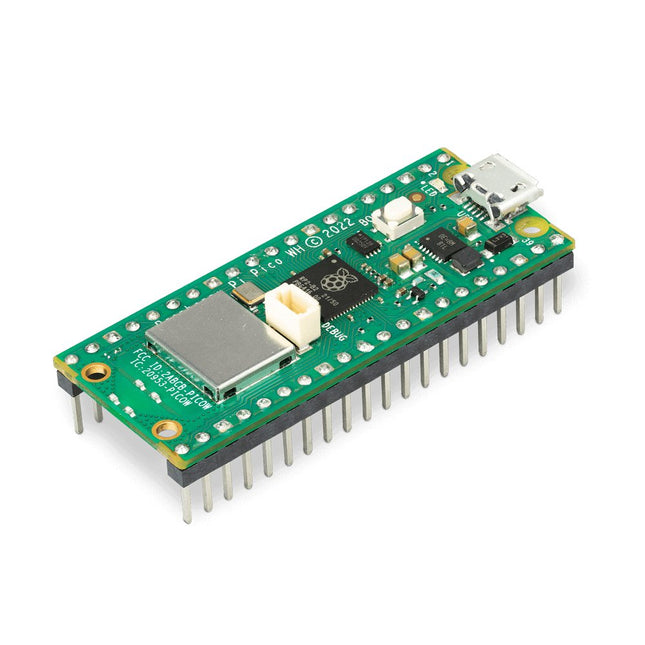
    Raspberry Pi Pico WH is a microcontroller board based on the Raspberry Pi RP2040 microcontroller chip. The RP2040 microcontroller chip ('Raspberry Silicon') offers a dual-core ARM Cortex-M0+ processor (133 MHz), 256 KB RAM, 30 GPIO pins, and many other interface options. In addition, there is 2 MB of on-board QSPI flash memory for code and data storage. Raspberry Pi Pico WH has been designed to be a low cost yet flexible development platform for RP2040 with a 2.4 GHz wireless interface using an Infineon CYW43439. The wireless interface is connected via SPI to the RP2040. Features of Pico WH RP2040 microcontroller with 2 MB of flash memory On-board single-band 2.4 GHz wireless interfaces (802.11n) Micro USB B port for power and data (and for reprogramming the flash) 40 pin 21 x 51 mm 'DIP' style 1 mm thick PCB with 0.1' through-hole pins also with edge castellations Exposes 26 multi-function 3.3 V general purpose I/O (GPIO) 23 GPIO are digital-only, with three also being ADC capable Can be surface mounted as a module 3-pin ARM serial wire debug (SWD) port Simple yet highly flexible power supply architecture Various options for easily powering the unit from micro USB, external supplies or batteries High quality, low cost, high availability Comprehensive SDK, software examples and documentation Pre-populated headers and 3-pin debug connector Features of the RP2040 microcontroller Dual-core cortex M0+ at up to 133 MHz On-chip PLL allows variable core frequency 264 kByte multi-bank high performance SRAM External Quad-SPI Flash with eXecute In Place (XIP) and 16 kByte on-chip cache High performance full-crossbar bus fabric On-board USB1.1 (device or host) 30 multi-function general purpose I/O (four can be used for ADC) 1.8-3.3 V I/O voltage 12-bit 500 ksps analogue to digital converter (ADC) Various digital peripherals 2x UART, 2x I²C, 2x SPI, 16x PWM channels 1x timer with 4 alarms, 1x real time clock 2x programmable I/O (PIO) blocks, 8 state machines in total Flexible, user-programmable high-speed I/O Can emulate interfaces such as SD card and VGA Note: Raspberry Pi Pico W I/O voltage is fixed at 3.3 V. Downloads Datasheet Specifications of 3-pin Debug Connector

    Out of stock

    € 9,95€ 4,95

    Best Price

  • Raspberry Pi Pico RP2040 W - Elektor

    Raspberry Pi Foundation Raspberry Pi Pico W

    Out of stock

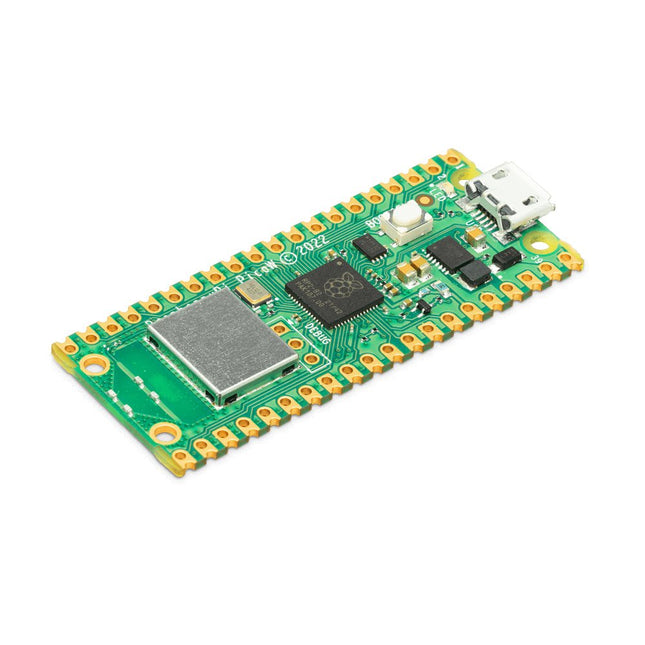
    Raspberry Pi Pico W is a microcontroller board based on the Raspberry Pi RP2040 microcontroller chip. The RP2040 microcontroller chip ('Raspberry Silicon') offers a dual-core ARM Cortex-M0+ processor (133 MHz), 256 KB RAM, 30 GPIO pins, and many other interface options. In addition, there is 2 MB of on-board QSPI flash memory for code and data storage. Raspberry Pi Pico W has been designed to be a low cost yet flexible development platform for RP2040 with a 2.4 GHz wireless interface using an Infineon CYW43439. The wireless interface is connected via SPI to the RP2040. Features of Pico W RP2040 microcontroller with 2 MB of flash memory On-board single-band 2.4 GHz wireless interfaces (802.11n) Micro USB B port for power and data (and for reprogramming the flash) 40 pin 21 x 51 mm 'DIP' style 1 mm thick PCB with 0.1' through-hole pins also with edge castellations Exposes 26 multi-function 3.3 V general purpose I/O (GPIO) 23 GPIO are digital-only, with three also being ADC capable Can be surface mounted as a module 3-pin ARM serial wire debug (SWD) port Simple yet highly flexible power supply architecture Various options for easily powering the unit from micro USB, external supplies or batteries High quality, low cost, high availability Comprehensive SDK, software examples and documentation Features of the RP2040 microcontroller Dual-core cortex M0+ at up to 133 MHz On-chip PLL allows variable core frequency 264 kByte multi-bank high performance SRAM External Quad-SPI Flash with eXecute In Place (XIP) and 16 kByte on-chip cache High performance full-crossbar bus fabric On-board USB1.1 (device or host) 30 multi-function general purpose I/O (four can be used for ADC) 1.8-3.3 V I/O voltage 12-bit 500 ksps analogue to digital converter (ADC) Various digital peripherals 2x UART, 2x I²C, 2x SPI, 16x PWM channels 1x timer with 4 alarms, 1x real time clock 2x programmable I/O (PIO) blocks, 8 state machines in total Flexible, user-programmable high-speed I/O Can emulate interfaces such as SD card and VGA Note: Raspberry Pi Pico W I/O voltage is fixed at 3.3 V. Downloads Datasheet Specifications of 3-pin Debug Connector

    Out of stock

    € 7,95

    Best Price

  • Raspberry Pi Pico RP2040 H - Elektor

    Raspberry Pi Foundation Raspberry Pi Pico H

    Out of stock

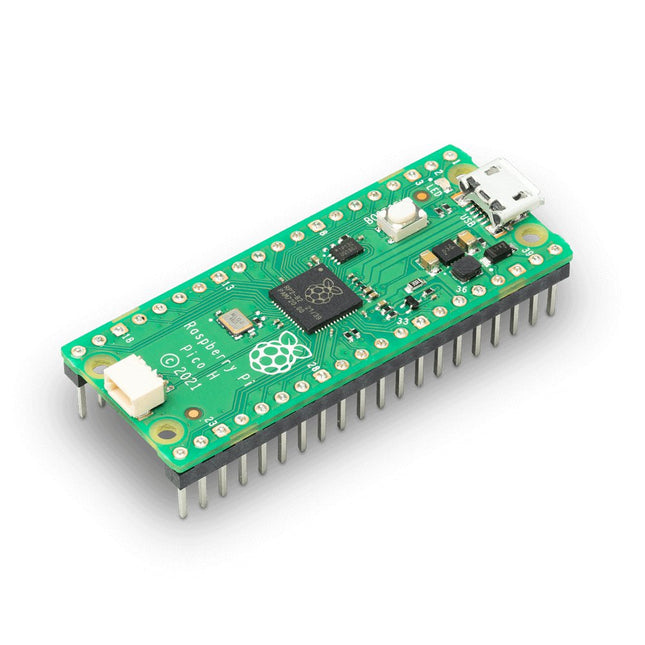
    Raspberry Pi Pico is a low-cost, high-performance microcontroller board and also the first product based on a chip developed by Raspberry Pi itself. The RP2040 microcontroller chip ('Raspberry Silicon') offers a dual-core ARM Cortex-M0+ processor (133 MHz), 256 KB RAM, 30 GPIO pins, and many other interface options. In addition, there is 2 MB of on-board QSPI flash memory for code and data storage. Specifications RP2040 microcontroller chip designed by Raspberry Pi in the UK Dual-core ARM Cortex M0+ processor, with a flexible clock running up to 133 MHz 264 kB SRAM, and 2 MB on-board Flash memory Castellated module allows soldering directly to carrier boards USB 1.1 host and device support Energy-efficient sleep and dormant modes Drag and drop programming using mass storage via USB 26x multifunction GPIO pins 2x SPI, 2x I²C, 2x UART, 3x 12-bit ADC, 16x controllable PWM channels On-chip accurate clock and timer Temperature sensor On-chip accelerated floating point libraries 8x programmable IO (PIO) state machines for custom peripherals H version of the Raspberry Pi Pico board with pre-soldered headers and 3-pin debug connector Downloads Specifications of 3-pin Debig Connector

    Out of stock

    € 5,95

    Best Price

  • PLC Programming with the Raspberry Pi and the OpenPLC Project - Elektor

    Elektor Publishing PLC Programming with the Raspberry Pi and the OpenPLC Project

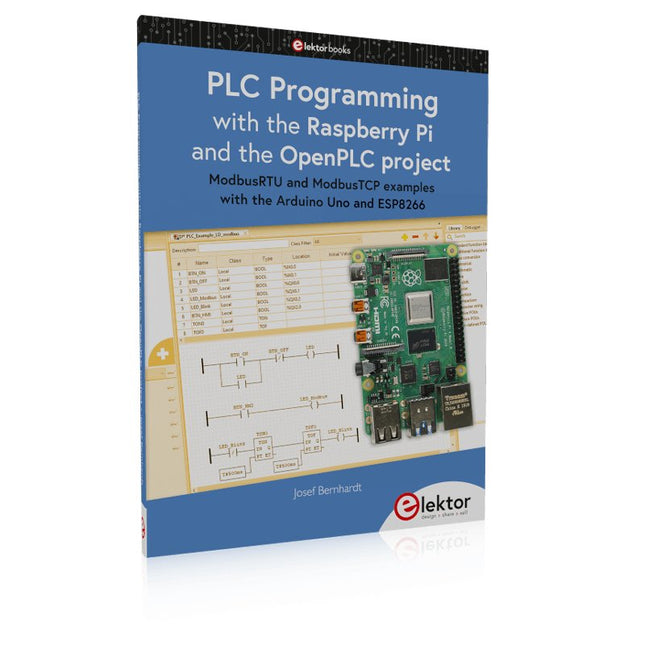
    ModbusRTU and ModbusTCP examples with the Arduino Uno and ESP8266 Introduction to PLC programming with OpenPLC, the first fully open source Programmable Logic Controller on the Raspberry Pi, and Modbus examples with Arduino Uno and ESP8266 PLC programming is very common in industry and home automation. This book describes how the Raspberry Pi 4 can be used as a Programmable Logic Controller. Before taking you into the programming, the author starts with the software installation on the Raspberry Pi and the PLC editor on the PC, followed by a description of the hardware. You'll then find interesting examples in the different programming languages complying with the IEC 61131-3 standard. This manual also explains in detail how to use the PLC editor and how to load and execute the programs on the Raspberry Pi. All IEC languages are explained with examples, starting with LD (Ladder Diagram) over ST (Structured Control Language) to SFC (Special Function Chart). All examples can be downloaded from the author's website. Networking gets thorough attention too. The Arduino Uno and the ESP8266 are programmed as ModbusRTU or ModbusTCP modules to get access to external peripherals, reading sensors and switching electrical loads. I/O circuits complying with the 24 V industry standard may also be of interest for the reader. The book ends with an overview of commands for ST and LD. After reading the book, the reader will be able to create his own controllers with the Raspberry Pi.

    € 39,95

    Members: € 35,96

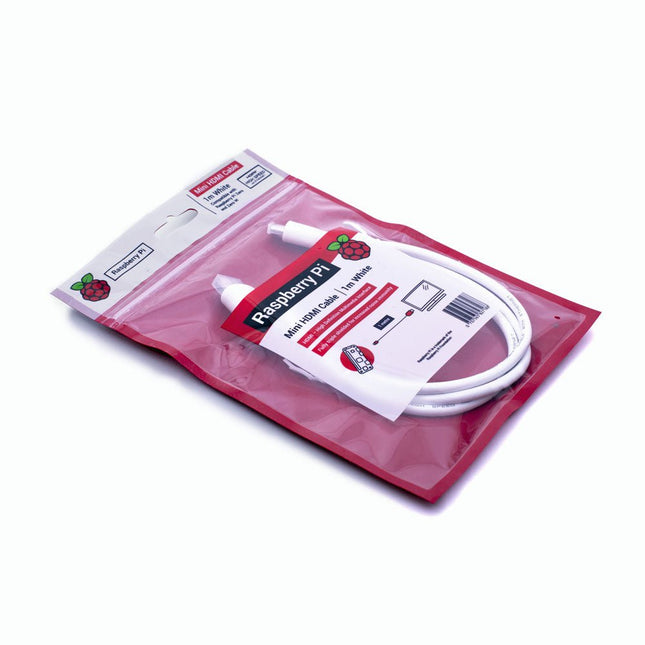
  • Official Mini - HDMI Cable for Raspberry Pi Zero - Elektor

    Raspberry Pi Foundation Official Mini-HDMI Cable for Raspberry Pi Zero

    Out of stock

    The official Raspberry Pi mini-HDMI to HDMI (A/M) cable designed for all Raspberry Pi Zero models. 19-pin HDMI Type D(M) to 19-pin HDMI Type A(M) 1 m cable (white) Nickel-plated plugs 4Kp60 compliant RoHS compliant 3 Mohm 300 VDC insulation, withstands 300 VDC for 0.1s

    Out of stock

    € 3,95

    Best Price

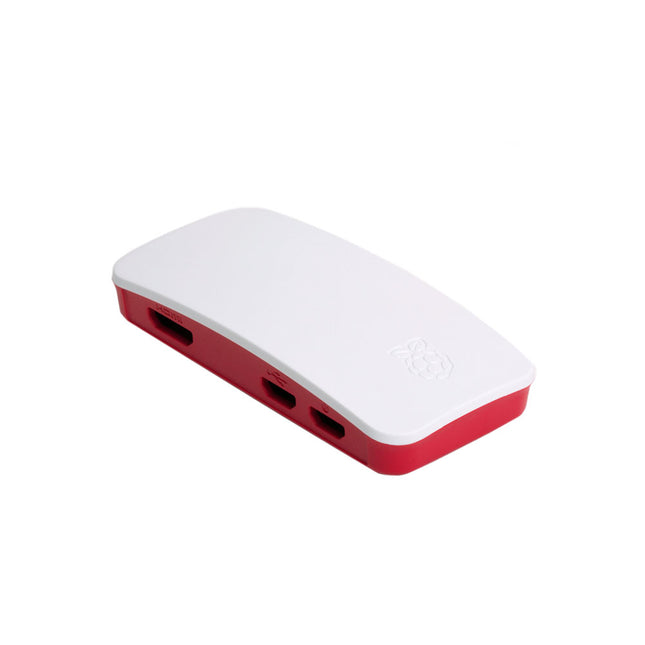
  • Official Case for Raspberry Pi Zero

    Raspberry Pi Foundation Official Case for Raspberry Pi Zero

    Out of stock

    The case consists of two parts. It has a standard base featuring a cut-out to allow access to the GPIO, and a choice of three lids: a plain lid, a GPIO lid (allowing access to the GPIO from above), and a camera lid (which, when used with the short camera cable supplied, allows the Raspberry Pi Camera or Camera Noir to be fitted neatly inside it). Included 1x base 3x lids (plain, GPIO, camera) 1x short camera cable 4x rubber feet

    Out of stock

    € 7,95

    Best Price

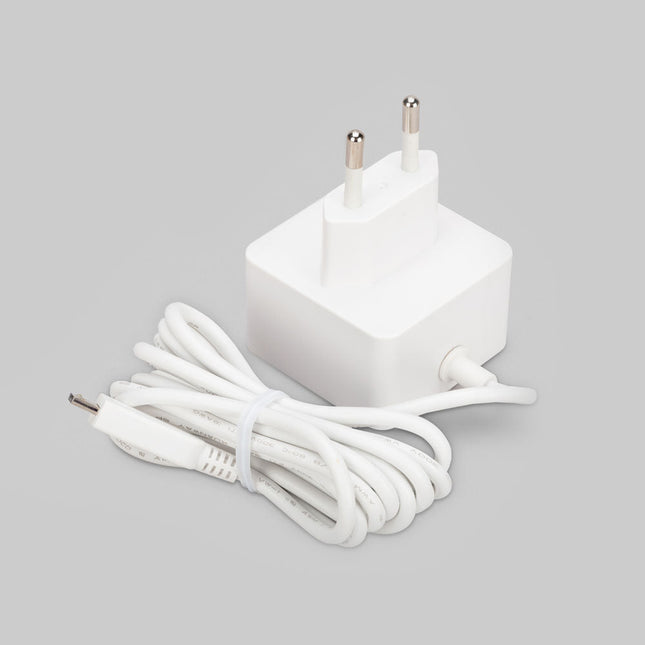
  •  -50% Official Micro - USB Power Supply for Raspberry Pi - Elektor

    Raspberry Pi Foundation Official Micro-USB Power Supply for Raspberry Pi

    Out of stock

    Official Micro-USB Power Supply for Raspberry Pi (12.5 W) Input: 100-240 VAC Output: 5.1 V / 2.5 A power supply Connector: micro USB Length: 1.5 m

    Out of stock

    € 9,95€ 4,95

    Best Price

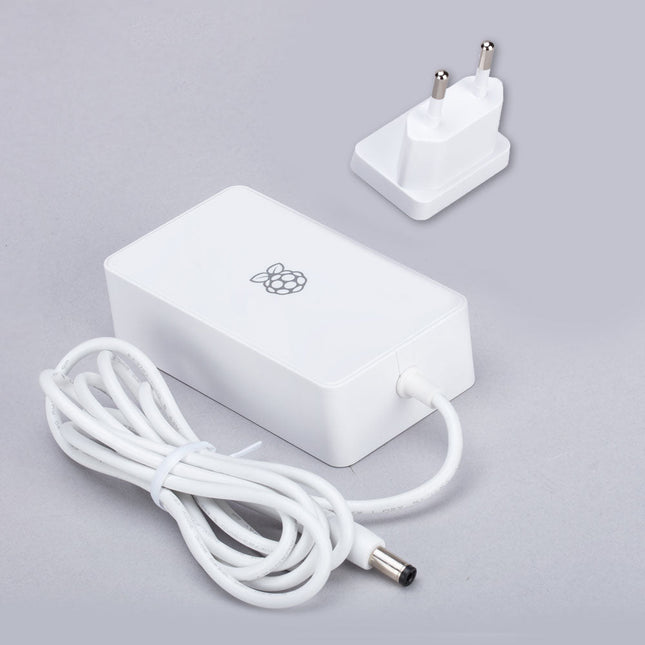
  •  -50% Power Supply for Raspberry Pi Build HAT (48 W) - Elektor

    Raspberry Pi Foundation Power Supply for Raspberry Pi Build HAT (48 W)

    Out of stock

    This 48 W (8 VDC, 6 A) power supply is designed for the use with the Raspberry Pi Build HAT. Input: 110-240 VAC Output: 8 VDC, 6 A Cable: 1.5 m, 16 awg

    Out of stock

    € 17,95€ 8,95

    Best Price

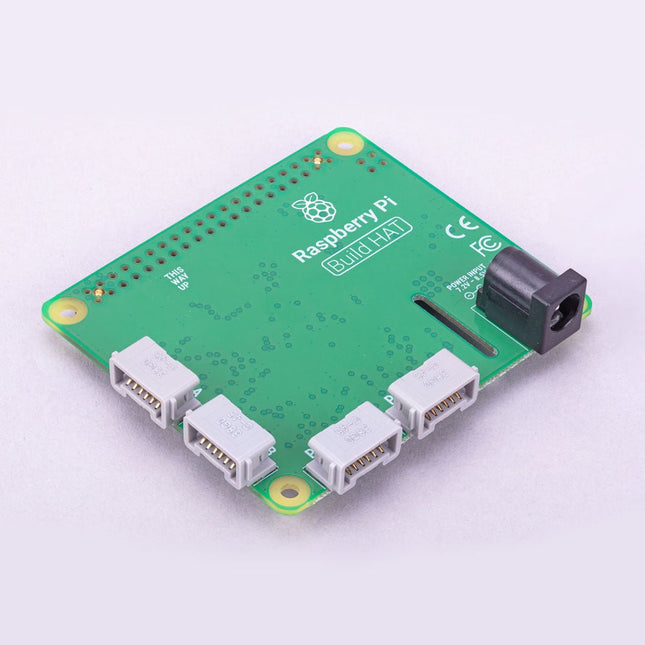
  • Raspberry Pi Build HAT - Elektor

    Raspberry Pi Foundation Raspberry Pi Build HAT

    Out of stock

    Build robust, intelligent machines that combine Raspberry Pi computing power with LEGO components. The Raspberry Pi Build HAT provides four connectors for LEGO Technic motors and sensors from the SPIKE Portfolio. The available sensors include a distance sensor, a color sensor, and a versatile force sensor. The angular motors come in a range of sizes and include integrated encoders that can be queried to find their position. The Build HAT fits all Raspberry Pi computers with a 40-pin GPIO header, including – with the addition of a ribbon cable or other extension device — Raspberry Pi 400. Connected LEGO Technic devices can easily be controlled in Python, alongside standard Raspberry Pi accessories such as a camera module. Features Controls up to 4 motors and sensors Powers the Raspberry Pi (when used with a suitable external PSU) Easy to use from Python on the Raspberry Pi

    Out of stock

    € 29,95

    Members: € 26,96

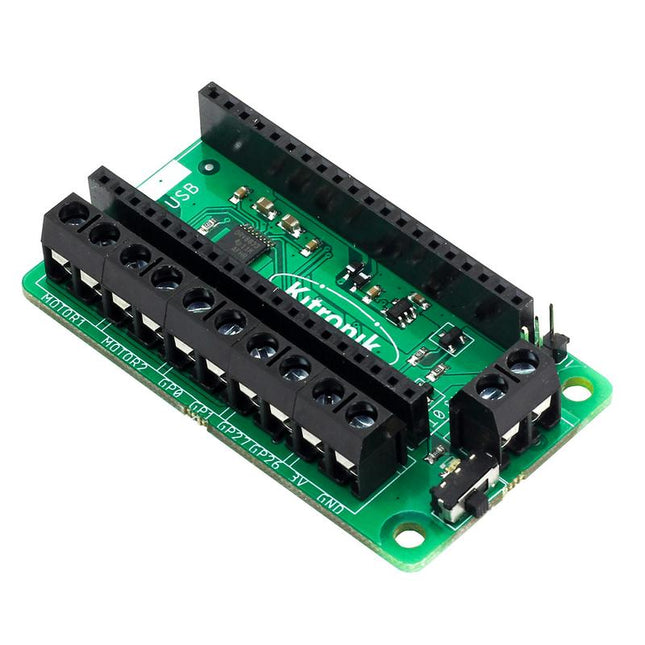
  •  -50% Kitronik Motor Driver Board for Raspberry Pi Pico - Elektor

    Kitronik Kitronik Motor Driver Board for Raspberry Pi Pico

    Out of stock

    This board allows the Raspberry Pi Pico (connected via pin header) to drive two motors simultaneously with full forward, reverse & stop control, making it ideal for Pico controlled buggy projects. Alternatively, the board can be used to power a stepper motor. The board features the DRV8833 motor driver IC, which has built-in short circuit, over current and thermal protection. The board has 4 external connections to GPIO pins and a 3 V and GND supply from the Pico. This allows for additional IO options for your buggy builds that can be read or controlled by the Pico. In addition there is an on/off switch and power status LED, allowing you to see at a glance if the board is powered up and save your batteries when your project is not in use. To use the motor driver board, the Pico should have a soldered pin header and be inserted firmly into the connector. The board produces a regulated supply that is fed into the 40-way connector to power the Pico, removing the need to power the Pico directly. The motor driver board is powered via either screw terminals or a servo style connector. Kitronik has developed a micro-python module and sample code to support the use of the Motor Driver board with the Pico. This code is available in the GitHub repo. Features A compact yet feature-packed board designed to sit at the heart of your Raspberry Pi Pico robot buggy projects. The board can drive 2 motors simultaneously with full forward, reverse, and stop control. It features the DRV8833 motor driver IC, which has built-in short circuit, over current and thermal protection. Additionally, the board features an on/off switch and power status LED. Power the board via a terminal block style connector. The 3V and GND pins are also broken out, allowing external devices to be powered. Code it with MicroPython via an editor such as the Thonny editor. Dimensions: 63 mm (L) x 35 mm (W) x 11.6 mm (H) Download Datasheet

    Out of stock

    € 15,95€ 7,95

    Best Price

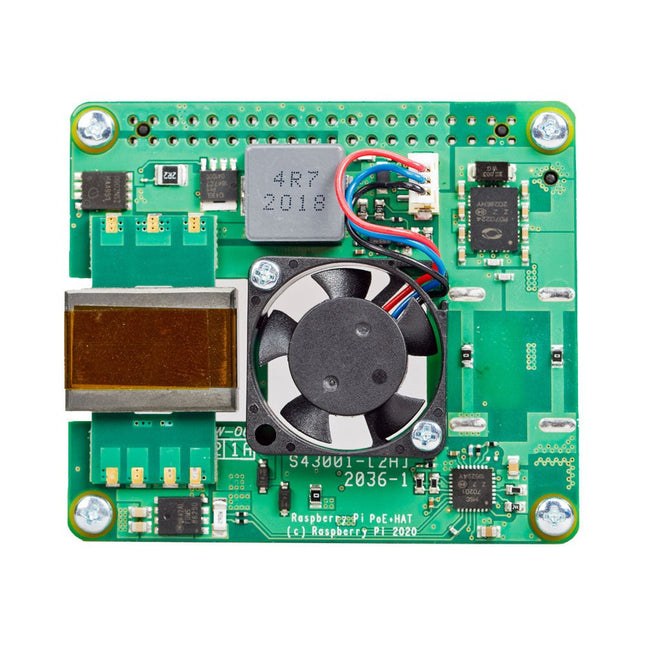
  • Raspberry Pi PoE+ HAT - Elektor

    Raspberry Pi Foundation Raspberry Pi PoE+ HAT (for Raspberry Pi 3 B+ and 4)

    Out of stock

    The Raspberry Pi PoE+ HAT is an add-on board designed for Raspberry Pi 3 B+ and Raspberry Pi 4 equipped with PoE pins. It powers the Raspberry Pi through an Ethernet cable, provided that compatible Power-Sourcing Equipment (PSE) is present on the Ethernet network. Additionally, the HAT includes an integrated fan to cool the Raspberry Pi processor. Specifications Standard IEEE 802.3at-2003 PoE Input voltage 37-57 V DC, Class 4 device Output voltage 5 V DC/4 A Cooling 25 x 25 mm brushless fan delivering 2.2 CFM for processor cooling Operating temperature 0°C to +50°C Downloads Datasheet

    Out of stock

    € 24,95

    Best Price

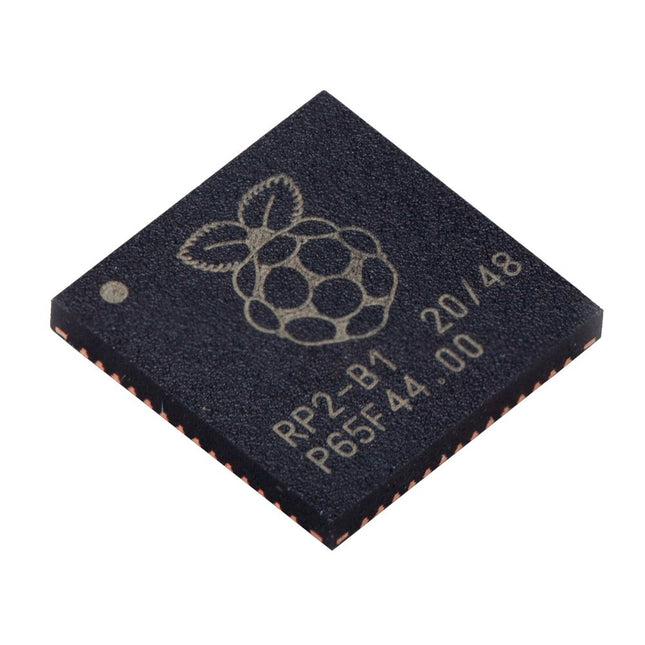
  •  -60% Raspberry Pi RP2040 Microcontroller (10 pcs) - Elektor

    Raspberry Pi Foundation Raspberry Pi RP2040 Microcontroller (10 pcs)

    Specifications Dual ARM Cortex-M0+ @ 133 MHz 264 kB on-chip SRAM in six independent banks Support for up to 16 MB of off-chip Flash memory via dedicated QSPI bus DMA controller Fully-connected AHB crossbar Interpolator and integer divider peripherals On-chip programmable LDO to generate core voltage 2x on-chip PLLs to generate USB and core clocks 30x GPIO pins, 4 of which can be used as analogue inputs Peripherals 2x UARTs 2x SPI controllers 2x I²C controllers 16x PWM channels USB 1.1 controller and PHY, with host and device support 8x PIO state machines What you'll get 10x bare RP2040 chips

    € 7,95€ 3,18

    Best Price

Buy a Raspberry Pi

What is Raspberry Pi? Why do you need a Raspberry Pi board? What are the benefits?

Raspberry Pi is a minicomputer or a so-called Single Board Computer (or SBC for short) from the Raspberry Pi Foundation from Cambridge (GB). In a single-board computer, all important components such as the processor, RAM and GPU are mounted on one board.

The foundation published the first Raspberry Pi version in 2012 with the idea of promoting computer science as a school and study subject. The main goal to achieve this was a retail price of $35 that should be affordable for everyone.

Elektor also wanted to arouse early interest in computer science and electronics among pupils and students. As an official Raspberry Pi reseller, Elektor has direct personal contact with the Raspberry Pi developers in Cambridge and with the actual intellectual father of the Raspberry Pi, Eben Upton. Elektor not only offers official Raspberry Pi hardware, but also offers its customers interesting first-hand projects, reviews, tutorials and specialist books. Elektor thus occupies a special position among all Raspberry Pi dealers.

Our Raspberry Pi range

In addition to the currently available Raspberry Pi boards Elektor offers you official Raspberry Pi accessories and a carefully selected selection tested third party products (construction kits, HATs, power supplies, cases, displays, cameras, books and miscellaneous. We also have an extensive range of RP2040 products based on the RP2040 microcontroller chip developed by the Raspberry Pi Foundation.

Buying a Raspberry Pi board: what can you do with it?

What makes the Raspberry Pi so special? This small, full-fledged, credit card-sized computer has won the hearts of software and hardware developers around the world and continues to reinvent itself with each new hardware version. With more than 20 million boards sold, Raspberry Pi has turned the electronics world upside down. It doesn't matter if you are a beginner or a professional developer, Raspberry Pi is the universal tool for every electronics technician! Use the Raspberry Pi for your own developments, control your smart home products with it or use it as a media player in the living room for streaming. Raspberry Pi cuts a fine figure in every area. The application possibilities are almost endless. The steadily growing community develops fun, but above all useful projects that are easy to make yourself.

Raspberry Pi accessories

Buying a Raspberry Pi is just the first step. As an official Raspberry Pi reseller, Elektor not only offers the Raspberry Pi, but also the necessary accessories and extensions to benefit as much as possible from the compact Raspberry Pi. At Elektor you will find power supplies, housings (with or without fans), kits, sensors, robots, cameras, displays, books, HATs and other expansion cards to help realize your projects.

Smart Home projects with Raspberry Pi

Today, a Smart Home is one of the most used applications for the Raspberry Pi. The reason for this is logical because a Smart Home provides more comfort in the home and makes saving on energy costs easy. Below you will find three of the most commonly used applications of Raspberry Pi in a Smart Home environment

Home automation system

The Raspberry Pi can be used to build a home automation system that allows you to perform tasks automatically. This includes controlling lighting, heating, entertainment and air conditioning.

Home monitoring

Home monitoring is a system that uses sensors to take measurements of your home environment and transmit this information to a central device. The system can take measurements of: temperatures, humidity, light intensity and movement. Use home monitoring to monitor your home environment, allowing you to use alarm systems, security cameras and other devices to protect your home.

A good example of this is when you close your roller shutters automatically as soon as it threatens to get too hot. This way you can easily restore the heat in your home.

Smart switches

A smart switch is a device used to turn electrical appliances on and off remotely. It is a wireless device that is connected to your home network and can be controlled with a mobile app, a remote control or a voice assistant.

A good example of smart switches combined with Raspberry Pi is turning off lights when you watch a movie via Kodi. You can even go so far that when you pause the movie, the lights come back on.

Buy your Raspberry Pi from Elektor

Elektor is an official reseller approved by the Raspberry Pi Foundation. We only obtain the Raspberry Pi directly from the manufacturer/developer and not from a distributor. New products are immediately available from stock on the day of publication. By eliminating the middleman, we can offer the Raspberry Pi and other official accessories at the lowest possible price.

Login

Forgot password?

Don't have an account yet?
Create account