
Raspberry Pi Accessories
-

SunFounder Universal Maker Sensor Kit (for Raspberry Pi, Pico W, Arduino, ESP32)
Discover endless creativity with the Universal Maker Sensor Kit, designed for use with Raspberry Pi, Pico W, Arduino, and ESP32. This versatile kit offers compatibility across popular development platforms, including Arduino Uno R4 Minima/WiFi, Uno R3, Mega 2560, Raspberry Pi 5, 4, 3B+, 3B, Zero, Pico W, and ESP32. Featuring over 35 sensors, actuators, and displays, it's perfect for projects ranging from environmental monitoring and smart home automation to robotics and interactive gaming. Step-by-step tutorials in C/C++, Python, and MicroPython guide beginners and experienced makers alike through 169 exciting projects. Features Wide Compatibility: Fully supports Arduino (Uno R3, Uno R4 Minima/WiFi, Mega 2560), Raspberry Pi (5, 4, 3B+, 3B, Zero, Pico W), and ESP32, enabling extensive flexibility across numerous development platforms. Includes instructions for building 169 projects. Comprehensive Components: Features more than 35 sensors, actuators, and display modules suitable for diverse projects such as environmental monitoring, smart home automation, robotics, and interactive game controllers. Detailed Tutorials: Provides clear, step-by-step tutorials covering Arduino, Raspberry Pi, Pico W, ESP32, and each included component. Tutorials are available in C/C++, Python, and MicroPython, catering effectively to both beginners and experienced makers. Suitable for All Skill Levels: Offers structured projects designed to guide users seamlessly from beginner to advanced proficiency in electronics and programming, enhancing creativity and technical expertise. Included Breadboard Button Module Capacitive Soil Moisture Module Flame Sensor Module Gas/Smoke Sensor Module (MQ2) Gyroscope & Accelerometer Module (MPU6050) Hall Sensor Module Infrared Speed Sensor Module IR Obstacle Avoidance Sensor Module Joystick Module PCF8591 ADC DAC Converter Module Photoresistor Module PIR Motion Module (HC-SR501) Potentiometer Module Pulse Oximeter and Heart Rate Sensor Module (MAX30102) Raindrop Detection Module Real Time Clock Module (DS1302) Rotary Encoder Module Temperature Sensor Module (DS18B20) Temperature and Humidity Sensor Module (DHT11) Temperature, Humidity & Pressure Sensor (BMP280) Time of Flight Micro-LIDAR Distance Sensor (VL53L0X) Touch Sensor Module Ultrasonic Sensor Module (HC-SR04) Vibration Sensor Module (SW-420) Water Level Sensor Module I²C LCD 1602 OLED Display Module (SSD1306) RGB LED Module Traffic Light Module 5 V Relay Module Centrifugal Pump L9110 Motor Driver Module Passive Buzzer Module Servo Motor (SG90) TT Motor ESP8266 Module JDY-31 Bluetooth Module Power Supply Module Documentation Online Tutorial
€ 69,95
Members: € 62,96
-

Raspberry Pi Foundation Raspberry Pi SSD (512 GB)
The Raspberry Pi SSD unlocks outstanding performance for I/O intensive applications on Raspberry Pi 5 and other devices, including super-fast startup when booting from SSD. It is a reliable, responsive, and high-performance PCIe Gen 3-compliant SSD capable of fast data transfer, available also with 256 GB capacity. Features 50k IOPS (4 kB random reads) 90k IOPS (4 kB random writes) Downloads Datasheet
-

Raspberry Pi Foundation Raspberry Pi SSD (256 GB)
The Raspberry Pi SSD unlocks outstanding performance for I/O intensive applications on Raspberry Pi 5 and other devices, including super-fast startup when booting from SSD. It is a reliable, responsive, and high-performance PCIe Gen 3-compliant SSD capable of fast data transfer, available also with 512 GB capacity. Features 40k IOPS (4 kB random reads) 70k IOPS (4 kB random writes) Downloads Datasheet
-

Raspberry Pi Foundation Raspberry Pi SSD Kit for Raspberry Pi 5 (512 GB)
The Raspberry Pi SSD Kit bundles a Raspberry Pi M.2 HAT+ with a Raspberry Pi NVMe SSD. It unlocks outstanding performance for I/O intensive applications on Raspberry Pi 5, including super-fast startup when booting from SSD. The Raspberry Pi SSD Kit is also available with 256 GB capacity. Features 50k IOPS (4 kB random reads) 90k IOPS (4 kB random writes) Conforms to the Raspberry Pi HAT+ specification Included 512 GB NVMe SSD M.2 HAT+ for Raspberry Pi 5 16 mm GPIO stacking header Mounting hardware kit (spacers, screws) Downloads Datasheet
-

Raspberry Pi Foundation Raspberry Pi SSD Kit for Raspberry Pi 5 (256 GB)
The Raspberry Pi SSD Kit bundles a Raspberry Pi M.2 HAT+ with a Raspberry Pi NVMe SSD. It unlocks outstanding performance for I/O intensive applications on Raspberry Pi 5, including super-fast startup when booting from SSD. The Raspberry Pi SSD Kit is also available with 512 GB capacity. Features 40k IOPS (4 kB random reads) 70k IOPS (4 kB random writes) Conforms to the Raspberry Pi HAT+ specification Included 256 GB NVMe SSD M.2 HAT+ for Raspberry Pi 5 16 mm GPIO stacking header Mounting hardware kit (spacers, screws) Downloads Datasheet
-

Raspberry Pi Foundation Raspberry Pi AI HAT+ (26 TOPS)
The Raspberry Pi AI HAT+ is an expansion board designed for the Raspberry Pi 5, featuring an integrated Hailo AI accelerator. This add-on offers a cost-effective, efficient, and accessible approach to incorporating high-performance AI capabilities, with applications spanning process control, security, home automation, and robotics. Available in models offering 13 or 26 tera-operations per second (TOPS), the AI HAT+ is based on the Hailo-8L and Hailo-8 neural network accelerators. The 13 TOPS model efficiently supports neural networks for tasks like object detection, semantic and instance segmentation, pose estimation, and more. This 26 TOPS variant accommodates larger networks, enables faster processing, and is optimized for running multiple networks simultaneously. The AI HAT+ connects via the Raspberry Pi 5’s PCIe Gen3 interface. When the Raspberry Pi 5 is running a current version of the Raspberry Pi OS, it automatically detects the onboard Hailo accelerator, making the neural processing unit (NPU) available for AI tasks. Additionally, the rpicam-apps camera applications included in Raspberry Pi OS seamlessly support the AI module, automatically using the NPU for compatible post-processing functions. Included Raspberry Pi AI HAT+ (26 TOPS) Mounting hardware kit (spacers, screws) 16 mm GPIO stacking header Downloads Datasheet
-
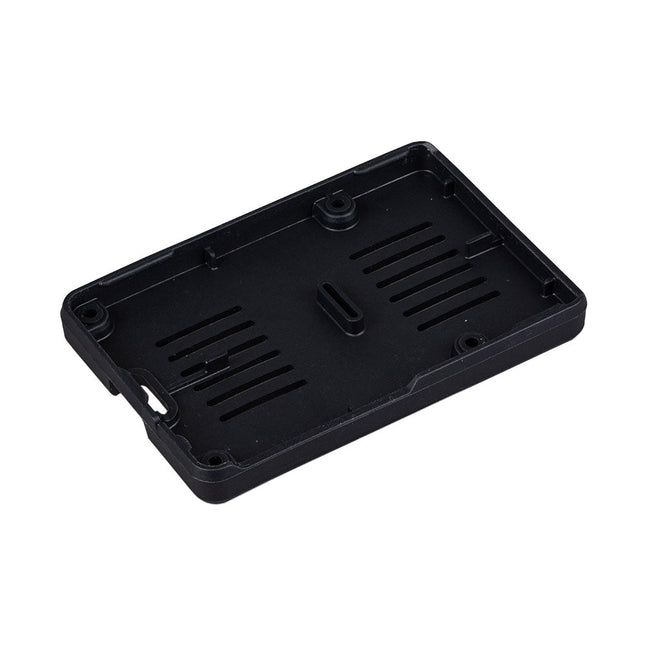
Raspberry Pi Foundation Bumper for Raspberry Pi 5
The Raspberry Pi Bumper is a snap-on silicone cover that protects the bottom and edges of the Raspberry Pi 5. Features One-piece flexible silicone rubber bumper Enables easy access to the power button Mounting holes remain accessible underneath the bumper Downloads Datasheet
€ 3,50€ 1,40Best Price
-

Raspberry Pi Foundation Raspberry Pi USB 3.0 Hub
The Raspberry Pi USB 3 Hub expands your device connectivity by converting a single USB-A port into four USB 3.0 ports. With an optional external USB-C power input, it can support high-power peripherals, while lower-power peripherals work without additional power. The USB 3 Hub is fully tested for seamless compatibility with all Raspberry Pi products. Features Single Upstream Connection: USB 3.0 Type-A connector with an 8 cm captive cable Four Downstream Ports: USB 3.0 Type-A ports for multiple device connections High-Speed Data Transfer: Supports speeds up to 5 Gbps Compatibility: Works with USB 3.0 Type-A host ports and is backward-compatible with USB 2.0 ports Downloads Datasheet
-

Raspberry Pi Foundation Raspberry Pi A2 SD Card pre-installed with Raspberry Pi OS (64 GB)
SD card quality is crucial for a good Raspberry Pi experience. Raspberry Pi's A2 microSD cards support higher bus speeds and command queuing, improving random read performance and narrowing the gap with NVMe SSDs. These cards are rigorously tested for optimal performance with Raspberry Pi models. Features Capacity: 64 GB Support for DDR50 and SDR104 bus speeds and command queueing (CQ) extension Speed Class: C10, U3, V30, A2 Random 4 KB read performance: 3,200 IOPS (Raspberry Pi 4, DDR50) 5,000 IOPS (Raspberry Pi 5, SDR104) Random 4 K write performance: 1,200 IOPS (Raspberry Pi 4, DDR50) 2,000 IOPS (Raspberry Pi 5, SDR104) Shock-proof, X-ray–proof, and magnet-proof microSDHC/microSDXC formats Downloads Datasheets
-
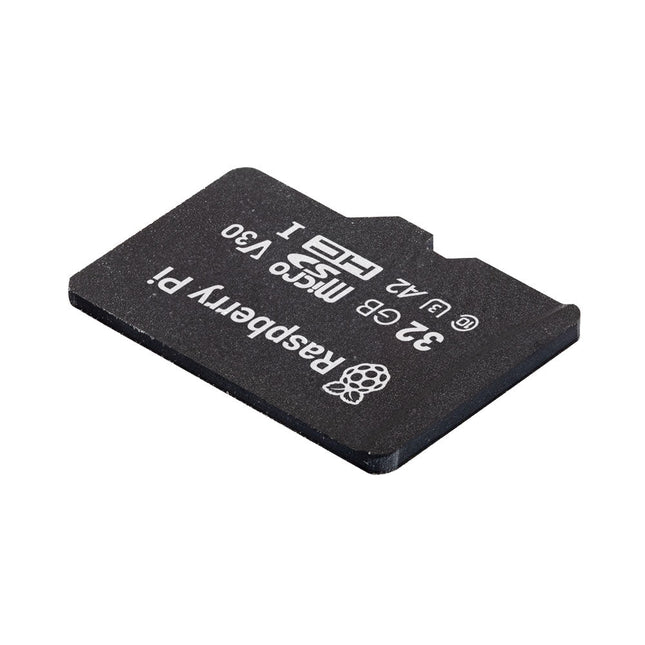
Raspberry Pi Foundation Raspberry Pi A2 SD Card pre-installed with Raspberry Pi OS (32 GB)
SD card quality is crucial for a good Raspberry Pi experience. Raspberry Pi's A2 microSD cards support higher bus speeds and command queuing, improving random read performance and narrowing the gap with NVMe SSDs. These cards are rigorously tested for optimal performance with Raspberry Pi models. Features Capacity: 32 GB Support for DDR50 and SDR104 bus speeds and command queueing (CQ) extension Speed Class: C10, U3, V30, A2 Random 4 KB read performance: 3,200 IOPS (Raspberry Pi 4, DDR50) 5,000 IOPS (Raspberry Pi 5, SDR104) Random 4 K write performance: 1,200 IOPS (Raspberry Pi 4, DDR50) 2,000 IOPS (Raspberry Pi 5, SDR104) Shock-proof, X-ray–proof, and magnet-proof microSDHC/microSDXC formats Downloads Datasheets
-

Raspberry Pi Foundation Raspberry Pi 5 M.2 HAT+
The Raspberry Pi M.2 HAT+ enables you to connect M.2 peripherals such as NVMe drives and AI accelerators to Raspberry Pi 5’s PCIe 2.0 interface, supporting fast (up to 500 MB/s) data transfer to and from NVMe drives and other PCIe accessories. Raspberry Pi M.2 HAT+ supports devices that have the M.2 M key edge connector, in the 2230 and 2242 form factors. It is capable of supplying up to 3 A to connected M.2 devices. Features Supports single-lane PCIe 2.0 interface (500 MB/s peak transfer rate) Supports devices that use the M.2 M key edge connector Supports devices with the 2230 or 2242 form factor Capable of supplying up to 3 A to connected M.2 devices Power and activity LEDs Included 1x Raspberry Pi 5 M.2 HAT+ 1x Ribbon cable 1x GPIO stacking header 4x Spacers 8x Screws Downloads Datasheet Schematics Assembly instructions
-

Raspberry Pi Foundation Raspberry Pi Debug Probe
The Raspberry Pi Debug Probe is an all-in-one USB-to-debug kit that provides all the necessary hardware and cables for easy, solderless, plug-and-play debugging. It features both a processor serial debug interface (by default the ARM Serial Wire Debug interface, but other interfaces can be supported) and an industry-standard UART interface. Both interfaces use the Raspberry Pi 3-pin debug connector. It is designed to make it easy to debug and program Raspberry Pi Pico and RP2040 with a range of host platforms including Windows, Mac, and typical Linux computers. While designed for use with Raspberry Pi products, the Debug Probe provides standard UART and CMSIS-DAP interfaces over USB, so it can also be used with other processors, or even just as a USB-to-UART cable. It works with OpenOCD and other tools that support CMSIS-DAP. The Debug Probe is based on Raspberry Pi Pico hardware and runs the open source Raspberry Pi Pico Probe software. The firmware is updated in the same way as Raspberry Pi Pico firmware, so it is easy to keep the unit up to date with the latest firmware, or to use custom firmware. Features USB to ARM Serial Wire Debug (SWD) port USB to UART bridge Compatible with the CMSIS-DAP standard Works with OpenOCD and other tools supporting CMSIS-DAP Open source, easily upgradeable firmware Specifications Dimensions: 22 x 32 mm Nominal I/O voltage: 3.3 V Operating temperature: -20°C to +70°C Included 1x Raspberry Pi Debug Probe 1x Plastic case 1x USB cable 3x Debug cables 3-pin JST connector to 3-pin JST connector cable 3-pin JST connector to 0.1-inch header (female) 3-pin JST connector to 0.1-inch header (male) Downloads Datasheet 3-pin Debug Connector Schematics Diagram Latest Firmware
-
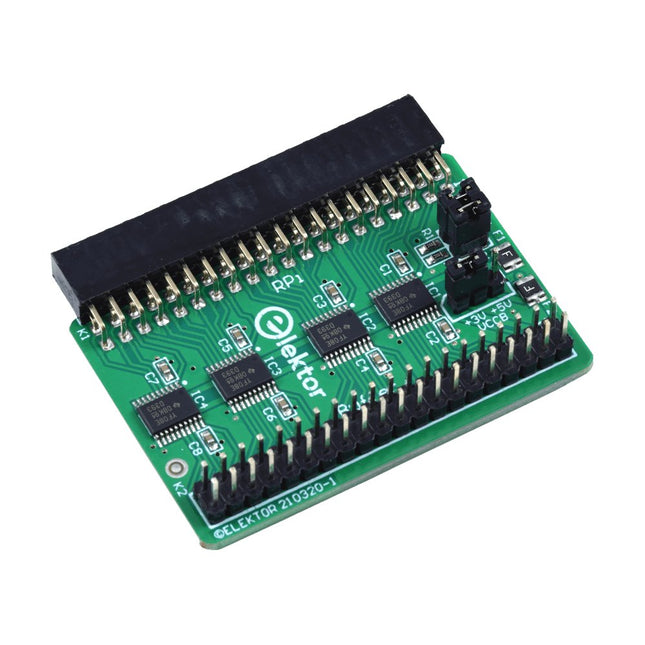
Elektor Labs Elektor Raspberry Pi Buffer Board
When you experiment with the Raspberry Pi on a regular basis and you connect a variety of external hardware to the GPIO port via the header you may well have caused some damage in the past. The Elektor Raspberry Pi Buffer Board is there to prevent this! The board is compatible with Raspberry Pi Zero, Zero 2 (W), 3, 4, 5, 400 and 500. All 26 GPIOs are buffered with bi-directional voltage translators to protect the Raspberry Pi when experimenting with new circuits. The PCB is intended to be inserted in the back of Raspberry Pi 400/500. The connector to connect to the Raspberry Pi is a right angled 40-way receptacle (2x20). The PCB is only a fraction wider. A 40-way flat cable with appropriate 2x20 headers can be connected to the buffer output header to experiment for instance with a circuit on a breadboard or PCB. The circuit uses 4x TXS0108E ICs by Texas Instruments. The PCB can also be put upright on a Raspberry Pi. Downloads Schematics Layout
€ 34,95
Members: € 31,46
-
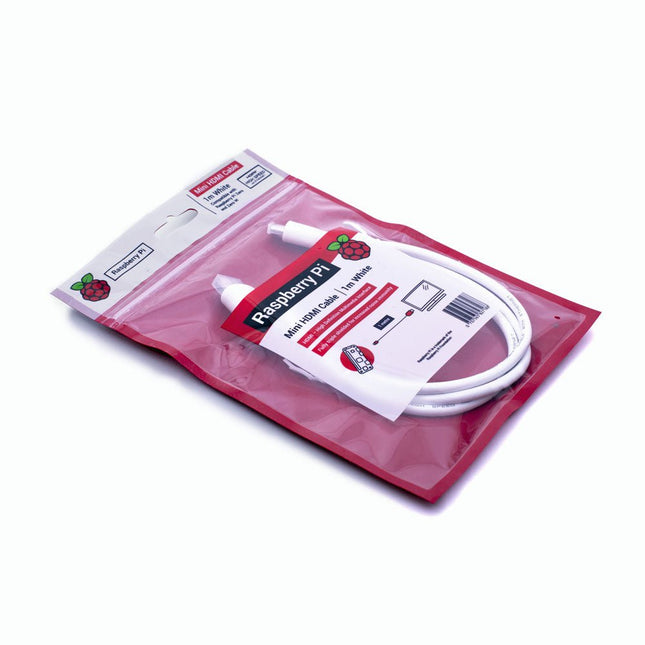
Raspberry Pi Foundation Official Mini-HDMI Cable for Raspberry Pi Zero
The official Raspberry Pi mini-HDMI to HDMI (A/M) cable designed for all Raspberry Pi Zero models. 19-pin HDMI Type D(M) to 19-pin HDMI Type A(M) 1 m cable (white) Nickel-plated plugs 4Kp60 compliant RoHS compliant 3 Mohm 300 VDC insulation, withstands 300 VDC for 0.1s
-
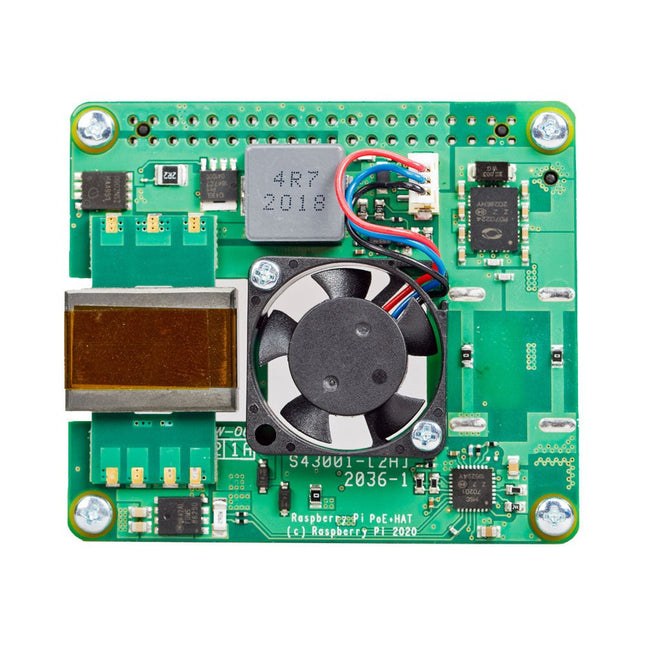
Raspberry Pi Foundation Raspberry Pi PoE+ HAT (for Raspberry Pi 3 B+ and 4)
The Raspberry Pi PoE+ HAT is an add-on board designed for Raspberry Pi 3 B+ and Raspberry Pi 4 equipped with PoE pins. It powers the Raspberry Pi through an Ethernet cable, provided that compatible Power-Sourcing Equipment (PSE) is present on the Ethernet network. Additionally, the HAT includes an integrated fan to cool the Raspberry Pi processor. Specifications Standard IEEE 802.3at-2003 PoE Input voltage 37-57 V DC, Class 4 device Output voltage 5 V DC/4 A Cooling 25 x 25 mm brushless fan delivering 2.2 CFM for processor cooling Operating temperature 0°C to +50°C Downloads Datasheet
-
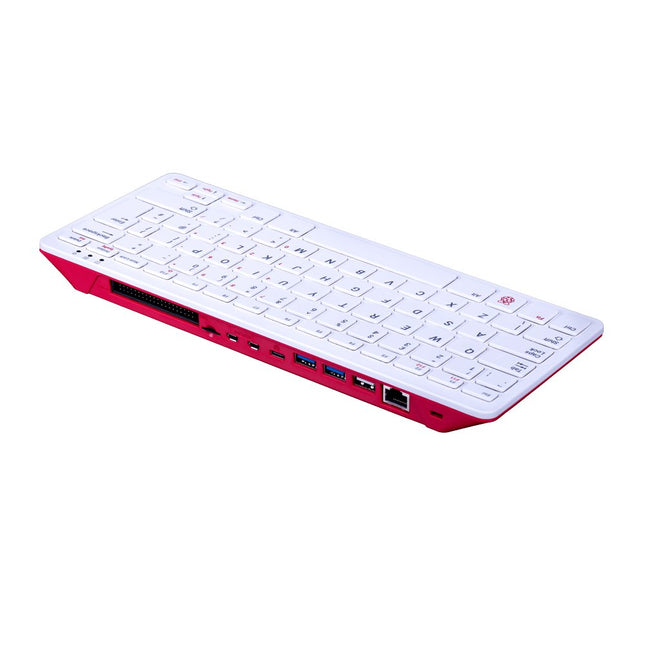
Raspberry Pi Foundation Raspberry Pi 400 (US)
The Raspberry Pi 400 offers a quad-core 64-bit processor, 4 GB RAM, wireless networking, dual-display output, 4K video playback, and a 40-pin GPIO header. It's a powerful, compact computer built into a portable keyboard. Specifications Processor Broadcom BCM2711 quad-core Cortex-A72 (ARM v8) 64-bit SoC @ 1.8 GHz RAM 4 GB LPDDR4-3200 Connectivity Dual-band (2.4 GHz and 5.0 GHz) IEEE 802.11b/g/n/ac wireless LANBluetooth 5.0, BLEGigabit Ethernet2x USB 3.0 and 1x USB 2.0 ports GPIO Horizontal 40-pin GPIO header Video & Sound 2 × micro HDMI ports (supports up to 4Kp60) Multimedia H.265 (4Kp60 decode)H.264 (1080p60 decode, 1080p30 encode)OpenGL ES 3.0 graphics SD card support MicroSD card slot for operating system and data storage Keyboard US keyboard Power 5 V DC via USB connector Operating temperature 0°C to +40°C Dimensions 286 x 122 x 23 mm (maximum)
-
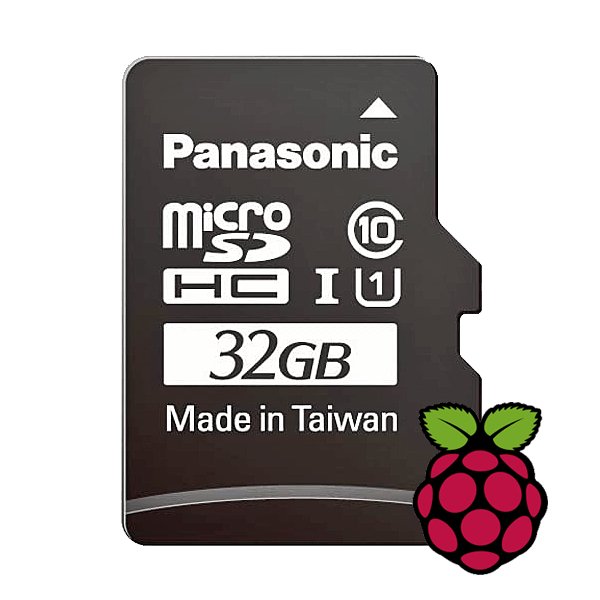
Raspberry Pi Foundation microSD Card pre-installed with Raspberry Pi OS (32 GB)
With this microSD (32 GB) with pre-installed Raspberry Pi OS you can start using your Raspberry Pi right away. Just plug it in and get started!
-

Raspberry Pi Foundation Official HDMI Cable for Raspberry Pi (black, 1 m)
The official Raspberry Pi micro HDMI to HDMI (A/M) cable (black, 1 m) designed for the Raspberry Pi 4 and 5. 19-pin HDMI Type D(M) to 19-pin HDMI Type A(M) 1 m cable (black) Nickel-plated plugs 4Kp60 compliant RoHS compliant 3 Mohm 300 VDC insulation, withstands 300 VDC for 0.1s
-
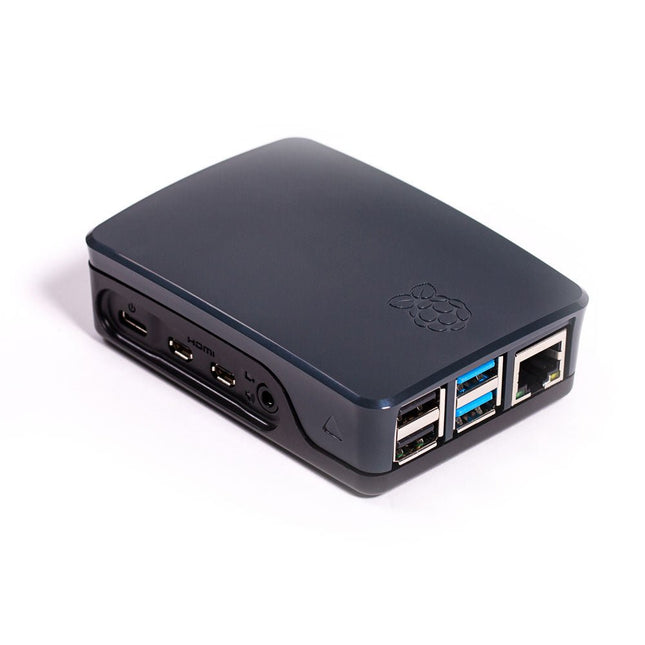
Raspberry Pi Foundation Official Case for Raspberry Pi 4 (black/gray)
Official Case for Raspberry Pi 4 (black/gray)
-
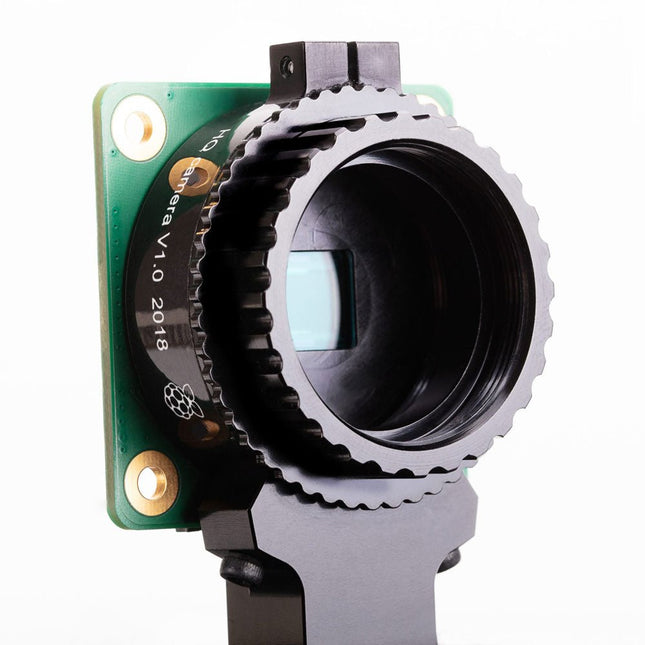
Raspberry Pi Foundation Raspberry Pi High Quality Camera Module
The Raspberry Pi High Quality Camera offers higher resolution (12 megapixels, compared to 8 megapixels), and sensitivity (approximately 50% greater area per pixel for improved low-light performance) than the existing Camera Module v2, and is designed to work with interchangeable lenses in both C and CS Mount form factors. Other lens form factors can be accommodated using third-party lens adapters. Specifications Sensor Sony IMX477R stacked, back-illuminated sensor12.3 megapixels7.9 mm sensor diagonal1.55 x 1.55 μm pixel size Output RAW12/10/8, COMP8 Back focus Adjustable (12.5–22.4 mm) Lens standards CS MountC Mount (C/CS adapter included) IR cut filter Integrated Ribbon cable length 200 mm Tripod mount 1/4”-20 Included 1x Circuit board carrying a Sony IMX477 sensor 1x FPC cable for connection to a Raspberry Pi 1x Milled aluminium lens mount with integrated tripod mount and focus adjustment ring 1x C/CS Mount adapter Required C/CS Mount Lens
-

Raspberry Pi Foundation Official Raspberry Pi Mouse (white/red)
The official Raspberry Pi mouse is a three-button optical mouse which connects via a USB type A connector either to one of the USB ports on the keyboard or directly to a compatible computer. Three-button optical mouse Scroll wheel USB type A connector Ergonomic design for comfortable use Compatible with all Raspberry Pi products
-

Raspberry Pi Foundation Official Raspberry Pi US Keyboard (white/red)
The official Raspberry Pi keyboard and hub is a standard 78-key US keyboard that includes an additional three USB 2.0 type A ports to power other peripherals. The keyboard is available in different language/country options as detailed below. 78-key US keyboard Three USB 2.0 type A ports for powering other peripherals Automatic keyboard language detection USB type A to micro USB type B cable included for connection to compatible computer Ergonomic design for comfortable use Compatible with all Raspberry Pi products
-

Raspberry Pi Foundation Official Raspberry Pi USB-C Adapter (black)
This small adapter allows you to convert an existing micro USB power supply into a USB-C power supply.
-

Raspberry Pi Foundation Official Raspberry Pi USB-C Adapter (white)
This small adapter allows you to convert an existing micro USB power supply into a USB-C power supply.


