Raspberry Pi Pico

25 products

  • Raspberry Pi Pico Essentials - Elektor

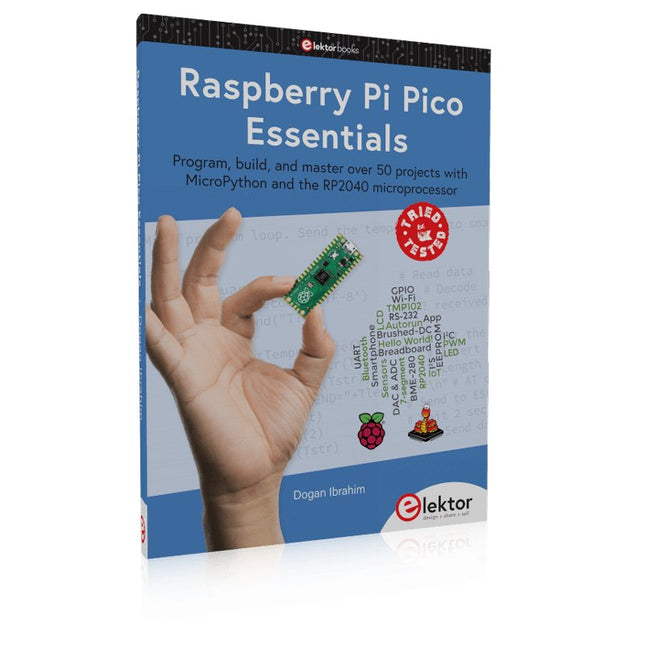
    Elektor Publishing Raspberry Pi Pico Essentials

    Program, build, and master over 50 projects with MicroPython and the RP2040 microprocessor The Raspberry Pi Pico is a high-performance microcontroller module designed especially for physical computing. Microcontrollers differ from single-board computers, like the Raspberry Pi 4, in not having an operating system. The Raspberry Pi Pico can be programmed to run a single task very efficiently within real-time control and monitoring applications requiring speed. The ‘Pico’ as we call it, is based on the fast, efficient, and low-cost dual-core ARM Cortex-M0+ RP2040 microcontroller chip running at up to 133 MHz and sporting 264 KB of SRAM, and 2 MB of Flash memory. Besides its large memory, the Pico has even more attractive features including a vast number of GPIO pins, and popular interface modules like ADC, SPI, I²C, UART, and PWM. To cap it all, the chip offers fast and accurate timing modules, a hardware debug interface, and an internal temperature sensor. The Raspberry Pi Pico is easily programmed using popular high-level languages such as MicroPython and or C/C++. This book is an introduction to using the Raspberry Pi Pico microcontroller in conjunction with the MicroPython programming language. The Thonny development environment (IDE) is used in all the projects described. There are over 50 working and tested projects in the book, covering the following topics: Installing the MicroPython on Raspberry Pi Pico using a Raspberry Pi or a PC Timer interrupts and external interrupts Analogue-to-digital converter (ADC) projects Using the internal temperature sensor and external temperature sensor chips Datalogging projects PWM, UART, I²C, and SPI projects Using Wi-Fi and apps to communicate with smartphones Using Bluetooth and apps to communicate with smartphones Digital-to-analogue converter (DAC) projects All projects given in the book have been fully tested and are working. Only basic programming and electronics experience is required to follow the projects. Brief descriptions, block diagrams, detailed circuit diagrams, and full MicroPython program listings are given for all projects described. Readers can find the program listings on the Elektor web page created to support the book.

    € 39,95

    Members € 35,96

  •  -50% Get Started with MicroPython on Raspberry Pi Pico - Elektor

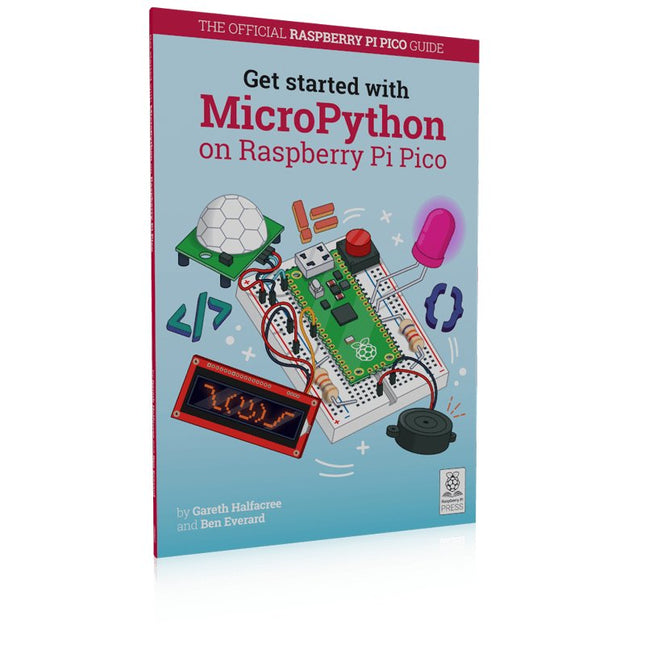
    Raspberry Pi Foundation Get Started with MicroPython on Raspberry Pi Pico

    In Get Started with MicroPython on Raspberry Pi Pico, you will learn how to use the beginner-friendly language MicroPython to write programs and connect up hardware to make your Raspberry Pi Pico interact with the world around it. Using these skills, you can create your own electro‑mechanical projects, whether for fun or to make your life easier. Microcontrollers, like RP2040 at the heart of Raspberry Pi Pico, are computers stripped back to their bare essentials. You don’t use monitors or keyboards, but program them to take their input from, and send their output to the input/output pins. Using these programmable connections, you can light lights, make noises, send text to screens, and much more. In Get Started with MicroPython on Raspberry Pi Pico, you will learn how to use the beginner-friendly language MicroPython to write programs and connect up hardware to make your Raspberry Pi Pico interact with the world around it. Using these skills, you can create your own electro‑mechanical projects, whether for fun or to make your life easier. The robotic future is here – you just have to build it yourself. We’ll show you how. About the authors Gareth Halfacree is a freelance technology journalist, writer, and former system administrator in the education sector. With a passion for open-source software and hardware, he was an early adopter of the Raspberry Pi platform and has written several publications on its capabilities and flexibility. Ben Everard is a geek who has stumbled into a career that lets him play with new hardware. As the editor of HackSpace magazine, he spends more time than he really should experimenting with the latest (and not-solatest) DIY tech.

    € 19,95€ 9,95

    Members identical

  •  -50%Last Stock! WIZnet W5100S - EVB - Pico - Elektor

    WIZnet WIZnet W5100S-EVB-Pico

    2 in stock

    Features RP2040 microcontroller with 2 MB Flash Dual-core cortex M0+ at up to 133 MHz 264 KB multi-bank high performance SRAM External Quad-SPI Flash with eXecute In Place (XIP) High performance full-crossbar bus fabric 30 multi-function General Purpose IO (4 can be used for ADC) 1.8-3.3 V IO Voltage (NOTE. Pico IO voltage is fixed at 3.3 V) 12-bit 500 ksps Analogue to Digital Converter (ADC) Various digital peripherals 2× UART, 2× I²C, 2× SPI, 16× PWM channels 1× Timer with 4 alarms, 1× Real Time Counter 2× Programmable IO (PIO) blocks, 8 state machines total Flexible, user-programmable high-speed IO Can emulate interfaces such as SD Card and VGA Includes W5100S Supports Hardwired Internet Protocols: TCP, UDP, WOL over UDP, ICMP, IGMPv1/v2, IPv4, ARP, PPPoE Supports 4 Independent Hardware SOCKETs simultaneously Internal 16 KB Memory for TX/ RX Buffers SPI Interface Micro-USB B port for power and data (and for reprogramming the Flash) 40 pin 21x51 'DIP' style 1mm thick PCB with 0.1' through-hole pins also with edge castellations 3-pin ARM Serial Wire Debug (SWD) port 10 / 100 Ethernet PHY embedded Supports Auto Negotiation Full / Half Duplex 10 / 100 Based Built-in RJ45 (RB1-125BAG1A) Built-in LDO (LM8805SF5-33V) Downloads RP2040 Datasheet W5100S Datasheet Schematic & Part list & Gerber File C/C++ Examples CircuitPython Examples

    2 in stock

    € 14,95€ 7,50

    Members identical

  •  -50% Raspberry Pi RP2040 Microcontroller (10 pcs) - Elektor

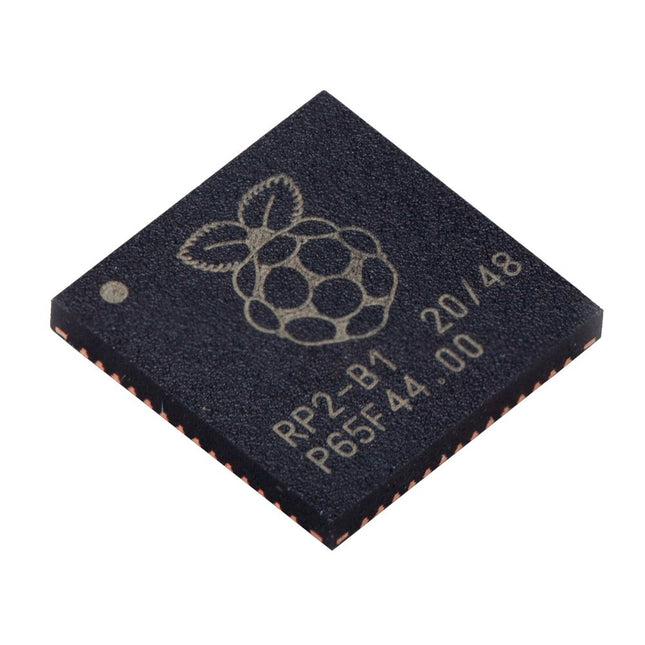
    Raspberry Pi Foundation Raspberry Pi RP2040 Microcontroller (10 pcs)

    Specifications Dual ARM Cortex-M0+ @ 133 MHz 264 kB on-chip SRAM in six independent banks Support for up to 16 MB of off-chip Flash memory via dedicated QSPI bus DMA controller Fully-connected AHB crossbar Interpolator and integer divider peripherals On-chip programmable LDO to generate core voltage 2x on-chip PLLs to generate USB and core clocks 30x GPIO pins, 4 of which can be used as analogue inputs Peripherals 2x UARTs 2x SPI controllers 2x I²C controllers 16x PWM channels USB 1.1 controller and PHY, with host and device support 8x PIO state machines What you'll get 10x bare RP2040 chips

    € 7,95€ 3,95

    Members identical

  •  -50% Adafruit Feather RP2040 - Elektor

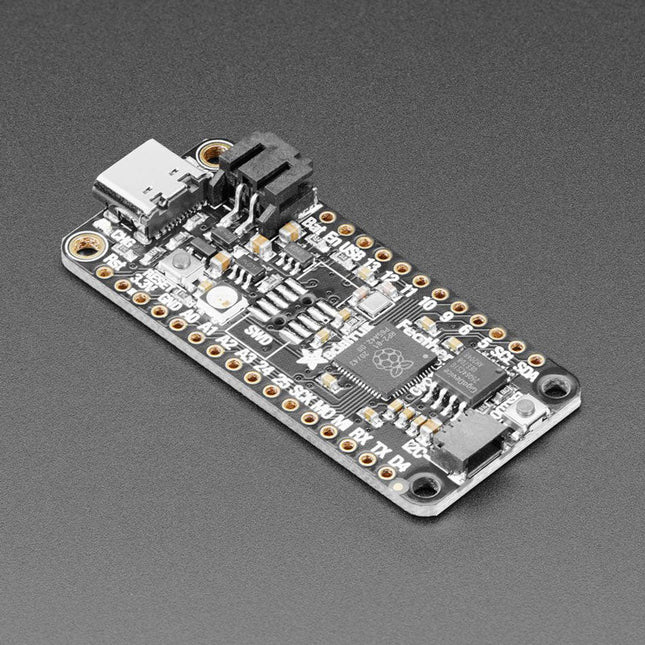
    Adafruit Adafruit Feather RP2040

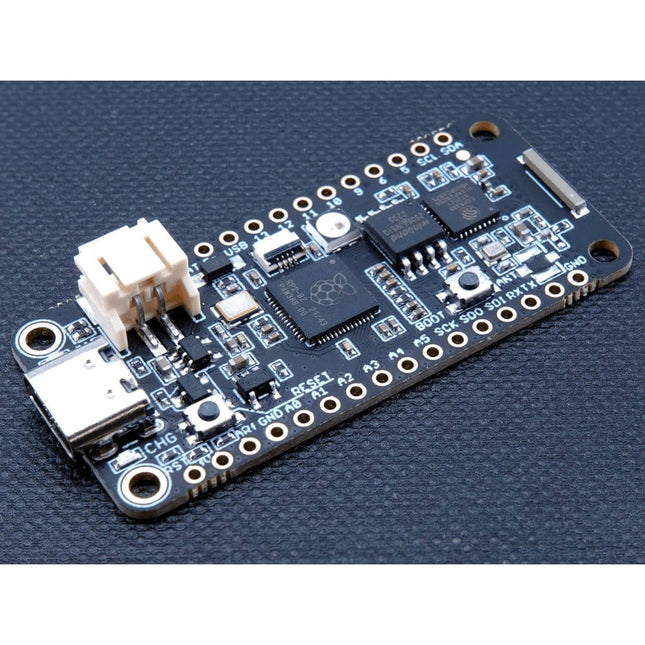
    Inside the RP2040 is a 'permanent ROM' USB UF2 bootloader. What that means is when you want to program new firmware, you can hold down the BOOTSEL button while plugging it into USB (or pulling down the RUN/Reset pin to ground) and it will appear as a USB disk drive you can drag the firmware onto. Folks who have been using Adafruit products will find this very familiar – Adafruit uses the technique on all thier native-USB boards. Just note you don't double-click reset, instead hold down BOOTSEL during boot to enter the bootloader! The RP2040 is a powerful chip, which has the clock speed of our M4 (SAMD51), and two cores that are equivalent to our M0 (SAMD21). Since it is an M0 chip, it does not have a floating point unit, or DSP hardware support – so if you're doing something with heavy floating-point math, it will be done in software and thus not as fast as an M4. For many other computational tasks, you'll get close-to-M4 speeds! For peripherals, there are two I²C controllers, two SPI controllers, and two UARTs that are multiplexed across the GPIO – check the pinout for what pins can be set to which. There are 16 PWM channels, each pin has a channel it can be set to (ditto on the pinout). Specifications Measures 2.0 x 0.9 x 0.28' (50.8 x 22.8 x 7 mm) without headers soldered in Light as a (large?) feather – 5 grams RP2040 32-bit Cortex M0+ dual core running at ~125 MHz @ 3.3 V logic and power 264 KB RAM 8 MB SPI FLASH chip for storing files and CircuitPython/MicroPython code storage. No EEPROM Tons of GPIO! 21 x GPIO pins with following capabilities: Four 12 bit ADCs (one more than Pico) Two I²C, Two SPI and two UART peripherals, one is labeled for the 'main' interface in standard Feather locations 16 x PWM outputs - for servos, LEDs, etc The 8 digital 'non-ADC/non-peripheral' GPIO are consecutive for maximum PIO compatibility Built in 200 mA+ lipoly charger with charging status indicator LED Pin #13 red LED for general purpose blinking RGB NeoPixel for full color indication. On-board STEMMA QT connector that lets you quickly connect any Qwiic, STEMMA QT or Grove I²C devices with no soldering! Both Reset button and Bootloader select button for quick restarts (no unplugging-replugging to relaunch code) 3.3 V Power/enable pin Optional SWD debug port can be soldered in for debug access 4 mounting holes 24 MHz crystal for perfect timing. 3.3 V regulator with 500mA peak current output USB Type C connector lets you access built-in ROM USB bootloader and serial port debugging RP2040 Chip Features Dual ARM Cortex-M0+ @ 133 MHz 264 kB on-chip SRAM in six independent banks Support for up to 16 MB of off-chip Flash memory via dedicated QSPI bus DMA controller Fully-connected AHB crossbar Interpolator and integer divider peripherals On-chip programmable LDO to generate core voltage 2 on-chip PLLs to generate USB and core clocks 30 GPIO pins, 4 of which can be used as analog inputs Peripherals 2 UARTs 2 SPI controllers 2 I²C controllers 16 PWM channels USB 1.1 controller and PHY, with host and device support 8 PIO state machines Comes fully assembled and tested, with the UF2 USB bootloader. Adafruit also tosses in some header, so you can solder it in and plug it into a solderless breadboard.

    € 16,95€ 8,50

    Members identical

  •  -50% Kitronik Motor Driver Board for Raspberry Pi Pico - Elektor

    Kitronik Kitronik Motor Driver Board for Raspberry Pi Pico

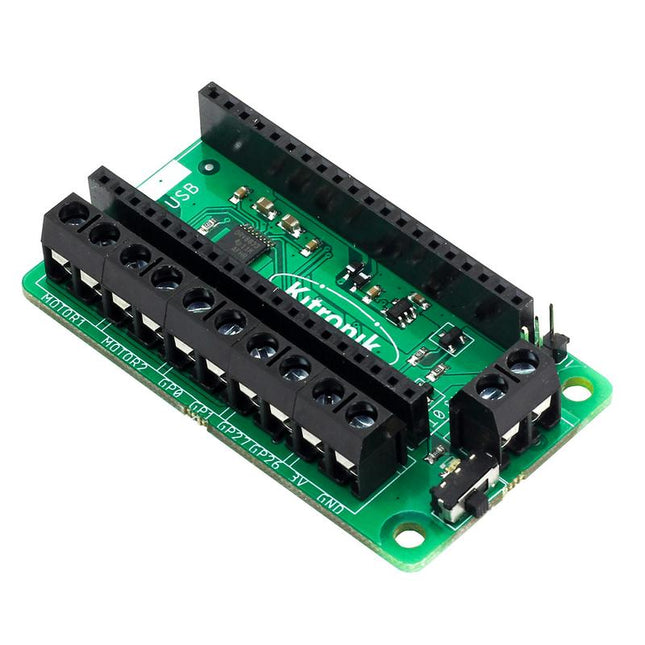
    This board allows the Raspberry Pi Pico (connected via pin header) to drive two motors simultaneously with full forward, reverse & stop control, making it ideal for Pico controlled buggy projects. Alternatively, the board can be used to power a stepper motor. The board features the DRV8833 motor driver IC, which has built-in short circuit, over current and thermal protection. The board has 4 external connections to GPIO pins and a 3 V and GND supply from the Pico. This allows for additional IO options for your buggy builds that can be read or controlled by the Pico. In addition there is an on/off switch and power status LED, allowing you to see at a glance if the board is powered up and save your batteries when your project is not in use. To use the motor driver board, the Pico should have a soldered pin header and be inserted firmly into the connector. The board produces a regulated supply that is fed into the 40-way connector to power the Pico, removing the need to power the Pico directly. The motor driver board is powered via either screw terminals or a servo style connector. Kitronik has developed a micro-python module and sample code to support the use of the Motor Driver board with the Pico. This code is available in the GitHub repo. Features A compact yet feature-packed board designed to sit at the heart of your Raspberry Pi Pico robot buggy projects. The board can drive 2 motors simultaneously with full forward, reverse, and stop control. It features the DRV8833 motor driver IC, which has built-in short circuit, over current and thermal protection. Additionally, the board features an on/off switch and power status LED. Power the board via a terminal block style connector. The 3V and GND pins are also broken out, allowing external devices to be powered. Code it with MicroPython via an editor such as the Thonny editor. Dimensions: 63 mm (L) x 35 mm (W) x 11.6 mm (H) Download Datasheet

    € 15,95€ 7,95

    Members identical

  •  -50% Pimoroni Raspberry Pi Pico Wireless Pack - Elektor

    Pimoroni Pimoroni Raspberry Pi Pico Wireless Pack

    Raspberry Pi Pico Wireless Pack attaches to the back of your Pico and uses an ESP32 chip to let your Pico connect to 2.4 GHz wireless networks and transfer data. There's a microSD card slot for if you want to store lots of data locally as well as a RGB LED (for status updates) and a button (useful for things like enabling/disabling Wi-Fi). Great for quickly adapting an existing Pico project to have wireless functionality, Raspberry Pi Pico Wireless Pack would come in handy for sending sensor data into home automation systems or dashboards, for hosting a web page from a matchbox or for letting your Pico interact with online APIs. Features ESP32-WROOM-32E module for wireless connectivity (connected via SPI) (datasheet) 1x Tactile button RGB LED Micro-SD card slot Pre-soldered female headers for attaching your Raspberry Pi Pico Fully assembled No soldering required (as long as your Pico has header pins attached) Compatible with Raspberry Pi Pico Dimensions: approx 53 x 25 x 11 mm (L x W x H, including headers and components) C++ and MicroPython libraries

    € 17,95€ 8,95

    Members identical

  •  -50% SparkFun Thing Plus (RP2040) - Elektor

    SparkFun SparkFun Thing Plus (RP2040)

    The RP2040 contains two ARM Cortex-M0+ processors (up to 133 MHz) and features: 264 kB of embedded SRAM in six banks 6 dedicated IO for SPI Flash (supporting XIP) 30 multifunction GPIO: Dedicated hardware for commonly used peripherals Programmable IO for extended peripheral support Four 12-bit ADC channels with internal temperature sensor (up to 0.5 MSa/s) USB 1.1 Host/Device functionality The RP2040 is supported with C/C++ and MicroPython cross-platform development environments, including easy access to runtime debugging. It has a UF2 boot and floating-point routines baked into the chip. While the chip has a large internal RAM, the board includes an additional 16 MB of external QSPI flash memory to store program code. Features Raspberry Pi Foundation's RP2040 microcontroller 16MB QSPI Flash Memory JTAG PTH Pins Thing Plus (or Feather) Form-Factor: 18x Multifunctional GPIO Pins Four available 12-bit ADC channels with an internal temperature sensor (500 kSa/s) Up to eight 2-channel PWM Up to two UARTs Up to two I²C buses Up to two SPI buses USB-C Connector: USB 1.1 Host/Device functionality 2-pin JST Connector for a LiPo Battery (not included): 500 mA charging circuit Qwiic Connector Buttons: Boot Reset LEDs: PWR - Red 3.3 V power indicator CHG - Yellow battery charging indicator 25 - Blue status/test LED (GPIO 25) WS2812 - Addressable RGB LED (GPIO 08) Four Mounting Holes: 4-40 screw compatible Dimensions: 2.3' x 0.9' RP2040 Features Dual Cortex M0+ processors, up to 133 MHz 264 kB of embedded SRAM in 6 banks 6 dedicated IO for QSPI flash, supporting execute in place (XIP) 30 programmable IO for extended peripheral support SWD interface Timer with 4 alarms Real-time counter (RTC) USB 1.1 Host/Device functionality Supported programming languages MicroPython C/C++

    € 19,95€ 9,95

    Members identical

  •  -50% SparkFun MicroMod RP2040 - Elektor

    SparkFun SparkFun MicroMod RP2040

    The RP2040 utilizes dual ARM Cortex-M0+ processors (up to 133MHz): 264kB of embedded SRAM in six banks 6 dedicated IO for SPI Flash (supporting XIP) 30 multifunction GPIO: Dedicated hardware for commonly used peripherals Programmable IO for extended peripheral support Four 12-bit ADC channels with internal temperature sensor (up to 0.5 MSa/s) USB 1.1 Host/Device functionality The RP2040 is supported with C/C++ and MicroPython cross-platform development environments, including easy access to runtime debugging. It has a UF2 boot and floating-point routines baked into the chip. The built-in USB can act as both device and host. It has two symmetric cores and high internal bandwidth, making it useful for signal processing and video. While the chip has a large internal RAM, the board includes an additional external flash chip. Features Dual Cortex M0+ processors, up to 133 MHz 264 kB of embedded SRAM in 6 banks 6 dedicated IO for QSPI flash, supporting execute in place (XIP) 30 programmable IO for extended peripheral support SWD interface Timer with 4 alarms Real-time counter (RTC) USB 1.1 Host/Device functionality Supported programming languages MicroPython C/C++

    € 12,95€ 6,50

    Members identical

  •  -50% DiP - Pi Pico PIoT for Raspberry Pi Pico - Elektor

    Pi Modules DiP-Pi Pico PIoT for Raspberry Pi Pico

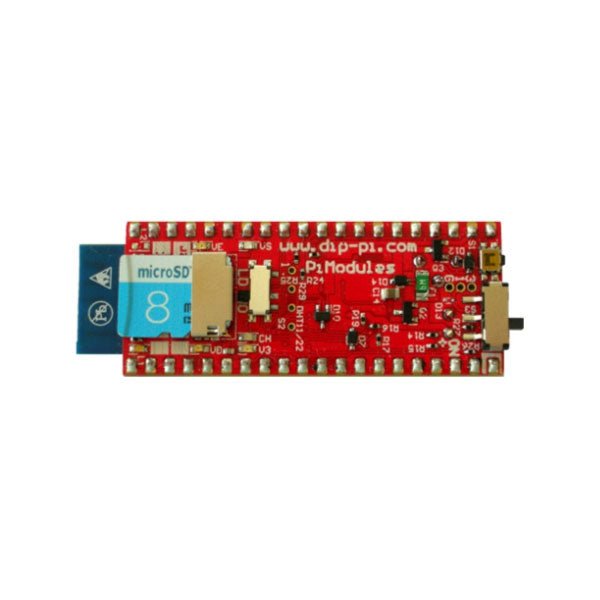
    The DiP-Pi PIoT is an Advanced Powered, WiFi connectivity System with sensors embedded interfaces that cover most of possible needs for IoT application based on Raspberry Pi Pico. It can supply the system with up to 1.5 A @ 4.8 V delivered from 6-18 VDC on various powering schemes like Cars, Industrial plant etc., additionally to original micro-USB of the Raspberry Pi Pico. It supports LiPo or Li-Ion Battery with Automatic Charger as also automatic switching from cable powering to battery powering or reverse (UPS functionality) when cable powering lost. Extended Powering Source (EPR) is protected with PPTC Resettable fuse, Reverse Polarity, as also ESD. The DiP-Pi PIoT contains Raspberry Pi Pico embedded RESET button as also ON/OFF Slide Switch that is acting on all powering sources (USB, EPR or Battery). User can monitor (via Raspberry Pi Pico A/D pins) battery level and EPR Level with PICO’s A/D converters. Both A/D inputs are bridged with 0402 resistors (0 OHM) therefore if for any reason user needs to use those Pico pins for their own application can be easy removed. The charger is automatically charging connected battery (if used) but in addition user can switch charger ON/OFF if their application needs it. DiP-Pi PIoT can be used for cable powered IoT systems, but also for pure Battery Powered System with ON/OFF. Each powering source status is indicated by separate informative LEDs (VBUS, VSYS, VEPR, CHGR, V3V3). User can use any capacity of LiPo or Li-Ion type; however, must take care to use PCB protected batteries with max discharge current allowed of 2 A. The embedded battery charger is set to charge battery with 240 mA current. This current is set by resistor so if user need more/less can himself to change it. The DiP-Pi PIoT is also equipped with WiFi ESP8266 Clone module with embedded antenna. This feature open a wide range of IoT applications based on it. In Addition to all above features DiP-Pi PIoT is equipped with embedded 1-wire, DHT11/22 sensors, and micro–SD Card interfaces. Combination of the extended powering, battery, and sensors interfaces make the DiP-Pi PIoT ideal for IoT applications like data logger, plants monitoring, refrigerators monitoring etc. DiP-Pi PIoT is supported with plenty of ready to use examples written in Micro Python or C/C++. Specifications General Dimensions 21 x 51 mm Raspberry Pi Pico pinout compatible Independent Informative LEDs (VBUS, VSYS, VEPR, CHGR, V3V3) Raspberry Pi Pico RESET Button ON/OFF Slide Switch acting on all powering sources (USB, EPR, Battery) External Powering 6-18 VDC (Cars, Industrial Applications etc.) External Power (6-18 VDC) Level Monitoring Battery Level Monitoring Inverse Polarity Protection PPTC Fuse Protection ESD Protection Automatic Battery Charger (for PCB protected LiPo, Li-Ion – 2 A Max) Automatic/User Control Automatic Switch from Cable Powering to Battery Powering and reverse (UPS Functionality) Various powering schemes can be used at the same time with USB Powering, External Powering and Battery Powering 1.5 A @ 4.8 V Buck Converter on EPR Embedded 3.3 V @ 600 mA LDO ESP8266 Clone WiFi Connectivity ESP8266 Firmware Upload Switch Embedded 1-wire Interface Embedded DHT-11/22 Interface Powering Options Raspberry Pi Pico micro-USB (via VBUS) External Powering 6-18 V (via dedicated Socket – 3.4/1.3 mm) External Battery Supported Battery Types LiPo with protection PCB max current 2A Li-Ion with protection PCB max current 2A Embedded Peripherals and Interfaces Embedded 1-wire interface Embedded DHT-11/22 Interface Micro SD Card Socket Programmer Interface Standard Raspberry Pi Pico C/C++ Standard Raspberry Pi Pico Micro Python Case Compatibility DiP-Pi Plexi-Cut Case System Monitoring Battery Level via Raspberry Pi Pico ADC0 (GP26) EPR Level via Raspberry Pi Pico ADC1 (GP27) Informative LEDs VB (VUSB) VS (VSYS) VE (VEPR) CH (VCHR) V3 (V3V3) System Protection Direct Raspberry Pi Pico Hardware Reset Button ESD Protection on EPR Reverse Polarity Protection on EPR PPTC 500 mA @ 18 V fuse on EPR EPR/LDO Over Temperature protection EPR/LDO Over Current protection System Design Designed and Simulated with PDA Analyzer with one of the most advanced CAD/CAM Tools – Altium Designer Industrial Originated PCB Construction 2 ozcopper PCB manufactured for proper high current supply and cooling 6 mils track/6 mils gap technology 2 layers PCB PCB Surface Finishing – Immersion Gold Multi-layer Copper Thermal Pipes for increased System Thermal Response and better passive cooling Downloads Datasheet Manual

    € 21,95€ 10,95

    Members identical

  •  -50% Pimoroni Raspberry Pi Pico Proto - Elektor

    Pimoroni Pimoroni Raspberry Pi Pico Proto

    With a 6x20 grid of 2.54 mm spaced holes for easy soldering and labelled Pico pins so you know what's what, Pico Proto is perfect for when you're happy with your breadboard project and want to give it a secure, smart and compact long-term home. Pico Proto doesn't come with any headers attached, so you will need to either solder it directly to your Pico's male header pins (for a permanent, but super slim sandwich) or solder it to some female header. Features 40 2.54 mm spaced holes for attaching to your Pico. 120 2.54 mm spaced holes (6x20 grid) for attaching other things Compatible with Raspberry Pi Pico. Dimensions: approx 51 x 25 x 1 mm (L x W x H)

    € 6,95€ 3,50

    Members identical

  •  -50% Pimoroni Automation 2040 W (incl. Pico W) - Elektor

    Pimoroni Pimoroni Automation 2040 W (incl. Pico W)

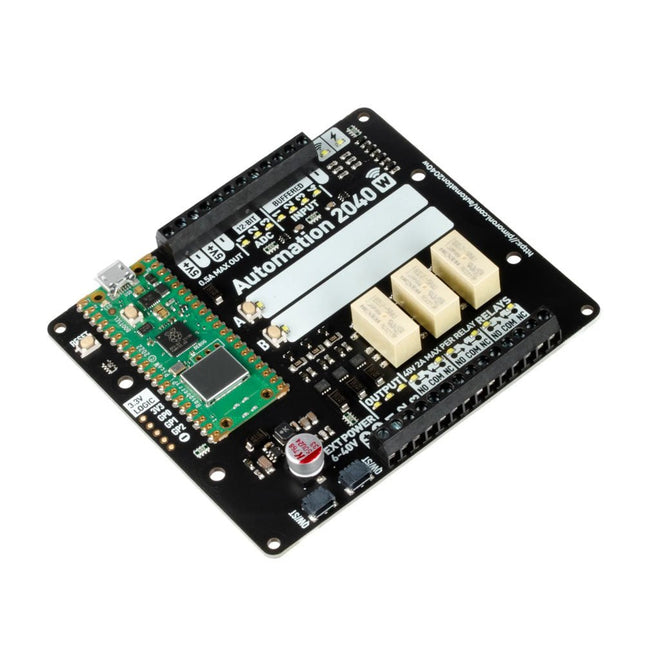
    An all-in-one, Pico W powered industrial/automation controller with 2.46 GHz wireless connectivity, relays and a plethora of inputs and outputs. Compatible with 6 V to 40 V systems. Automation 2040 W is a Pico W / RP2040 powered monitoring and automation board. It contains all the great features from the Automation HAT (relays, analog channels, powered outputs and buffered inputs) but now in a single compact board and with an extended voltage range so you can use it with more devices. Great for controlling fans, pumps, solenoids, chunky motors, electronic locks or static LED lighting (up to 40 V). All the channels (and the buttons) have an associated indicator LED so you can see at a glance what's happening with your setup, or test your programs without having hardware connected. Features Raspberry Pi Pico W Aboard Dual Arm Cortex M0+ running at up to 133 Mhz with 264 kB of SRAM 2 MB of QSPI flash supporting XiP Powered and programmable by USB micro-B 2.4 GHz wireless 3x 12-bit ADC inputs up to 40 V 4x digital inputs up to 40 V 3x digital sourcing outputs at V+ (supply voltage) 4 A max continuous current 2 A max current at 500 Hz PWM 3x relays (NC and NO terminals) 2 A up to 24 V 1 A up to 40 V 3.5 mm screw terminals for connecting inputs, outputs and external power 2x tactile buttons with LED indicators Reset button 2x Qw/ST connectors for attaching breakouts M2.5 mounting holes Fully assembled No soldering required. C/C++ and MicroPython libraries Schematic Dimensional drawing Power Board is compatible with 12 V, 24 V and 36 V systems Requires supply 6-40 V Can provide 5 V up to 0.5 A for lower voltage applications Software Pirate-brand MicroPython Getting Started with Raspberry Pi Pico MicroPython examples MicroPython function reference C++ examples C++ function reference Getting Started with Automation 2040 W

    € 84,95€ 42,50

    Members identical

  •  -50% Pimoroni Raspberry Pi Pico DV Demo Base - Elektor

    Pimoroni Pimoroni Raspberry Pi Pico DV Demo Base

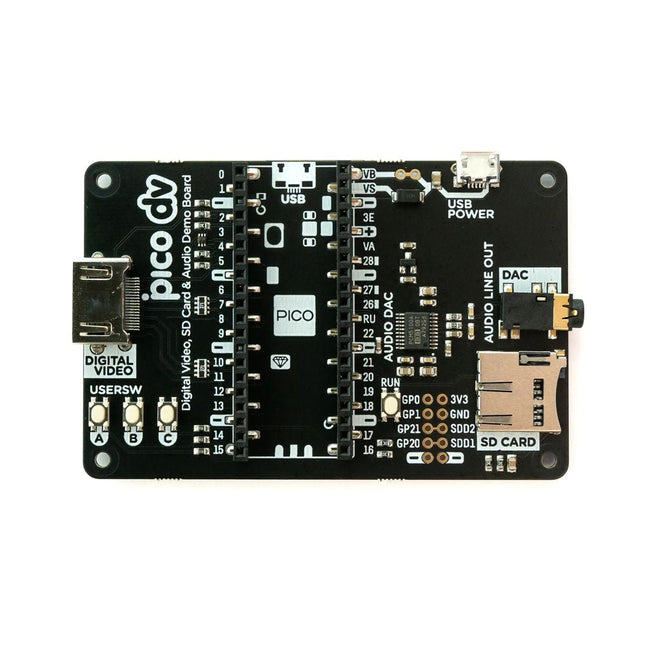
    This board is an all-digital conversion of Raspberry Pi's VGA reference design, great for if you want to start hacking on video and/or audio output from a Raspberry Pi Pico and piping it straight into a modern monitor.Features HDMI connector PCM5100A DAC for line out audio over I²S (datasheet) SD card slot Reset button Socket headers to install your Raspberry Pi Pico Three user-controllable switches Rubber feet Compatible with Raspberry Pi Pico No soldering required (as long as your Pico has header pins attached) Programmable with C/C++ Note: Raspberry Pi Pico is not included. Your Pico will need to have pin headers soldered to it (with the pins pointing downwards) to attach to our add-on boards.Downloads Schematic GitHub

    € 24,95€ 12,50

    Members identical

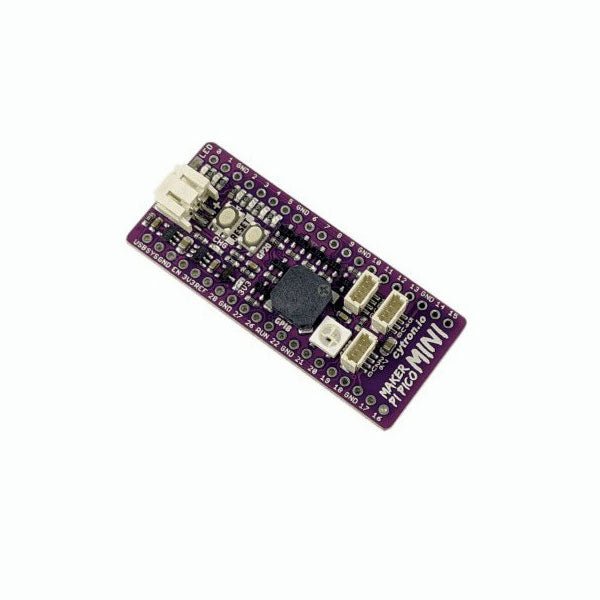
  •  -50% Cytron Maker Pi Pico Mini W (with pre - soldered Raspberry Pi Pico W & preloaded CircuitPython) - Elektor

    Cytron Cytron Maker Pi Pico Mini W (with pre-soldered Raspberry Pi Pico W & preloaded CircuitPython)

    Love the Cytron Maker Pi Pico (SKU 19706) but can't fit it into your project? Now there is the Cytron Maker Pi Pico Mini W. Powered by the awesome Raspberry Pi Pico W, it also inherited most of the useful features from its bigger sibling such as GPIO status LEDs, WS2812B Neopixel RGB LED, passive piezo buzzer, and not forget the user button and reset button. Features Powered by Raspberry Pi Pico W Single-cell LiPo connector with overcharge / over-discharge protection circuit, rechargeable via USB. 6x Status indicator LEDs for GPIOs 1x Passive piezo buzzer (Able to play musical tone or melody) 1x Reset button 1x User programmable button 1x RGB LEDs (WS2812B Neopixel) 3x Maker Ports, compatible with Qwiic, STEMMA QT, and Grove (via conversion cable) Support Arduino IDE, CircuitPython and MicroPython Dimension: 23.12 x 53.85 mm Included 1x Maker Pi Pico Mini W (pre-soldered Raspberry Pi Pico W with preloaded CircuitPython) 3x Grove to JST-SH (Qwiic / STEMMA QT) Cable Downloads Maker Pi Pico Mini Datasheet Maker Pi Pico Mini Schematic Maker Pi Pico Mini Pinout Diagram Official Raspberry Pi Pico Page Getting started with Raspberry Pi Pico CircuitPython for Raspberry Pi Pico Raspberry Pi Pico Datasheet RP2040 Datasheet Raspberry Pi Pico Python SDK Raspberry Pi Pico C/C++ SDK

    € 19,95€ 9,95

    Members identical

  •  -50% WIZnet W6100 - EVB - Pico - Elektor

    WIZnet WIZnet W6100-EVB-Pico

    W6100-EVB-Pico is a microcontroller evaluation board based on the Raspberry Pi RP2040 and fully hardwired TCP/IP controller W6100 – and basically works the same as Raspberry Pi Pico board but with additional Ethernet via W6100. Features RP2040 microcontroller with 2 MByte Flash Dual-core cortex M0+ at up to 133 MHz 264 kByte multi-bank high performance SRAM External Quad-SPI Flash with eXecute In Place (XIP) High performance full-crossbar bus fabric 30 multi-function General Purpose I/O (4 can be used for ADC) 1.8-3.3 V I/O voltage (Note: Pico I/O voltage is fixed at 3.3 V) 12-bit 500 ksps Analogue to Digital Converter (ADC) Various digital peripherals 2x UART, 2x I²C, 2x SPI, 16x PWM channels 1x Timer with 4 alarms, 1x Real Time Counter 2x Programmable IO (PIO) blocks, 8 state machines total Flexible, user-programmable high-speed I/O Can emulate interfaces such as SD card and VGA Includes W6100 Supports Hardwired Internet Protocols: TCP, UDP, IPv6, IPv4, ICMPv6, ICMPv4, IGMP, MLDv1, ARP, PPPoE Supports 8 independent SOCKETs simultaneously with 32 KB memory Internal 16 Kbytes Memory for TX/RX Buffers SPI Interface Micro-USB B port for power and data (and for reprogramming the Flash) 40-pin 21x51 ‘DIP’ style 1 mm thick PCB with 0.1' through-hole pins also with edge castellations 3-pin ARM Serial Wire Debug (SWD) port 10 / 100 Ethernet PHY embedded Supports Auto Negotiation Full / Half Duplex 10 / 100 Based Built-in RJ45 (RB1-125BAG1A) Built-in LDO (LM8805SF5-33V) Downloads Documents Getting started on GitHub Firmware

    € 21,95€ 10,95

    Members identical

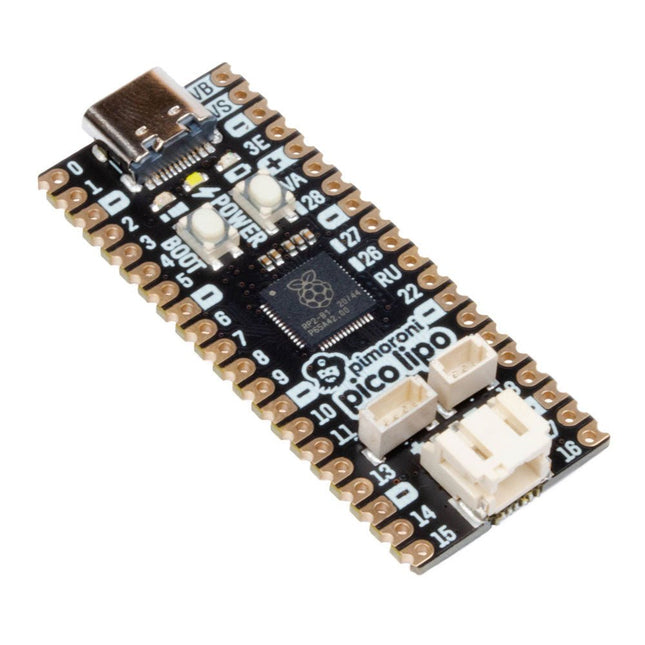
  •  -50%Last Stock! Pimoroni Pico LiPo - Elektor

    Pimoroni Pimoroni Pico LiPo

    1 in stock

    Pimoroni Pico LiPo is powered and programmable via USB-C and comes with 16 MB of QSPI (XiP) flash. With the Qwiic/STEMMA QT connector you can hook up a whole host of different sensors and breakouts, and a debug connector for if you want to do your programming using a SWD debugger. There is an on/off button and a BOOTSEL button, which can also be used as a user switch.Pimoroni Pico LiPo also has onboard LiPo/LiIon battery management – the inbuilt charging circuitry means charging your battery is as easy as plugging your Pimoroni Pico Lipo in via USB. Two indicator LEDs connected to the battery circuit keep you informed of on/off state and charging status and it's compatible with any of our LiPo, LiIon and high capacity LiPo batteries.Programmable with C++, MicroPython or CircuitPython, Pimoroni Pico LiPo is the perfect powerhouse for your portable projects.Features Powered by RP2040 Dual ARM Cortex M0+ running at up to 133 Mhz 264 kB of SRAM 16 MB of QSPI flash supporting XiP MCP73831 charger with 215 mA charging current (datasheet) XB6096I2S battery protector (datasheet) USB-C connector for power, programming, and data transfer 4 pin Qw-ST (Qwiic / STEMMA QT) connector 3 pin debug connector (JST-SH) 2-pole JST PH battery connector, with polarity marked on the board Switch for basic input (doubles up as DFU select on boot) Power button Power, charging and user LED indicators On-board 3V3 regulator (max regulator current output 600mA) Input voltage range 3 - 5.5 V Compatible with Raspberry Pi Pico add-ons Measurements: approx 53 x 21 x 8 mm (L x W x H, including connectors) Downloads CircuitPython Getting started with CircuitPython guide

    1 in stock

    € 19,95€ 9,95

    Members identical

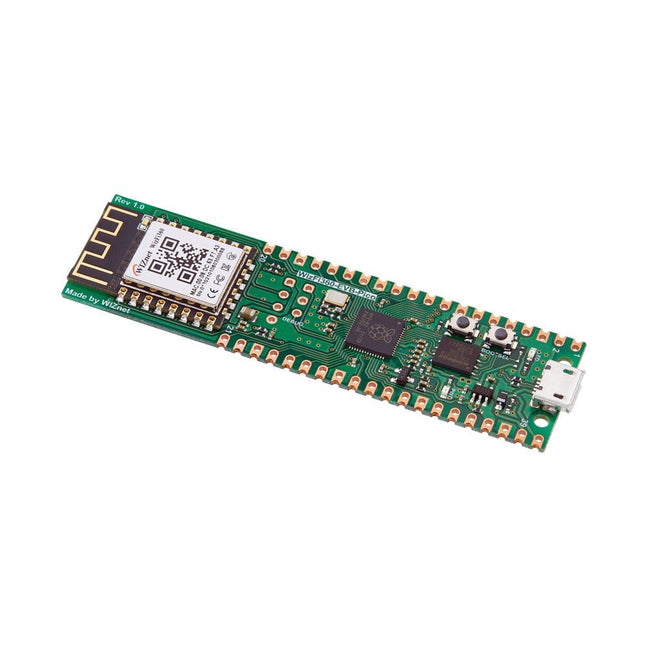
  •  -50% WIZnet WizFi360 - EVB - Pico - Elektor

    WIZnet WIZnet WizFi360-EVB-Pico

    Raspberry Pi Pico EVB combined with the WizFi360-PAWizFi360-EVB-Pico is based on Raspberry Pi RP2040 and adds Wi-Fi connectivity using WizFi360. It is pin-compatible with Raspberry Pi Pico board and can be used for IoT Solution development.Specifications RP2040 microcontroller with 2 MByte Flash Dual-core cortex M0+ at up to 133 MHz 264 kByte multi-bank high performance SRAM External Quad-SPI Flash with eXecute In Place (XIP) Includes WizFi360-PA Supports Hardwired Internet Protocols: TCP, UDP, WOL over UDP, ICMP, IGMPv1/v2, IPv4, ARP, PPPoE WiFi 2.4G, 802.11 b/g/n Support Station / SoftAP / SoftAP+Station operation modes Support “Data pass-through” and “AT command data transfer” mode Support serial AT command configuration Support TCP Server / TCP Client / UDP operating mode Support configuration of operating channel 0 ~ 13 Support auto 20 MHz / 40 MHz bandwidth Support WPA_PSK / WPA2_PSK encryption Support built-in unique MAC address and user configurable Industrial grade (operating temperature range: -40°C ~ 85°C) CE, FCC certification Includes 16 Mbit Flash Memory Micro-USB B port for power and data (and for reprogramming the Flash) 40 pin 21×51 ‘DIP’ style 1mm thick PCB with 0.1' through-hole pins also with edge castellations 3-pin ARM Serial Wire Debug (SWD) port Built-in LDO DownloadsDocumentation

    € 12,95€ 6,50

    Members identical

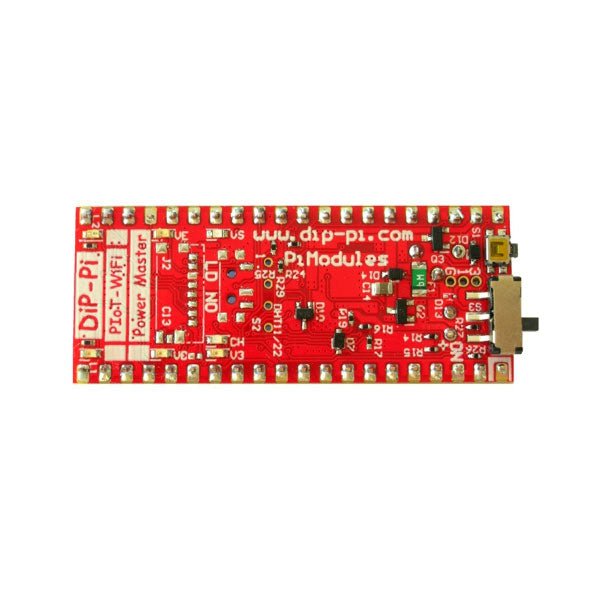
  •  -50% DiP - Pi Pico Power Master for Raspberry Pi Pico - Elektor

    Pi Modules DiP-Pi Pico Power Master for Raspberry Pi Pico

    The DiP-Pi Power Master is an Advanced Powering System with embedded sensors interfaces that cover most of possible needs for application based on Raspberry Pi Pico. It can supply the system with up to 1.5 A @ 4.8 V delivered from 6-18 VDC on various powering schemes like Cars, Industrial plant etc., additionally to original micro-USB of the Raspberry Pi Pico. It supports LiPo or Li-Ion Battery with Automatic Charger as also automatic switching from cable powering to battery powering or reverse (UPS functionality) when cable powering lost. Extended Powering Source (EPR) is protected with PPTC Resettable fuse, Reverse Polarity, as also ESD. The DiP-Pi Power Master contains Raspberry Pi Pico embedded RESET button as also ON/OFF Slide Switch that is acting on all powering sources (USB, EPR or Battery). User can monitor (via Raspberry Pi Pico A/D pins) battery level and EPR Level with PICO’s A/D converters. Both A/D inputs are bridged with 0402 resistors (0 OHM) therefore if for any reason user needs to use those Pico pins for their own application can be easy removed. The charger is automatically charging connected battery (if used) but in addition user can switch charger ON/OFF if their application needs it. DiP-Pi Power Master can be used for cable powered systems, but also for pure Battery Powered System with ON/OFF. Each powering source status is indicated by separate informative LEDs (VBUS, VSYS, VEPR, CHGR, V3V3). User can use any capacity of LiPo or Li-Ion type; however, must take care to use PCB protected batteries with max discharge current allowed of 2 A. The embedded battery charger is set to charge battery with 240 mA current. This current is set by resistor so if user need more/less can himself to change it. In Addition to all above features DiP-Pi Power Master is equipped with embedded 1-wire and DHT11/22 sensors interfaces. Combination of the extended powering, battery, and sensors interfaces make the DiP-Pi Power Master ideal for applications like data logger, plants monitoring, refrigerators monitoring etc. DiP-Pi Power Master is supported with plenty of ready to use examples written in Micro Python or C/C++. Specifications General Dimensions 21 x 51 mm Raspberry Pi Pico pinout compatible Independent Informative LEDs (VBUS, VSYS, VEPR, CHGR, V3V3) Raspberry Pi Pico RESET Button ON/OFF Slide Switch acting on all powering sources (USB, EPR, Battery) External Powering 6-18 V DC (Cars, Industrial Applications etc.) External Power (6-18 VDC) Level Monitoring Battery Level Monitoring Inverse Polarity Protection PPTC Fuse Protection ESD Protection Automatic Battery Charger (for PCB protected LiPo, Li-Ion – 2 A Max) Automatic/User Control Automatic Switch from Cable Powering to Battery Powering and reverse (UPS Functionality) Various powering schemes can be used at the same time with USB Powering, External Powering and Battery Powering 1.5 A @ 4.8 V Buck Converter on EPR Embedded 3.3 V @ 600mA LDO Embedded 1-wire Interface Embedded DHT-11/22 Interface Powering Options Raspberry Pi Pico micro-USB (via VBUS) External Powering 6-18 V (via dedicated Socket – 3.4/1.3 mm) External Battery Supported Battery Types LiPo with protection PCB max current 2A Li-Ion with protection PCB max current 2A Embedded Peripherals and Interfaces Embedded 1-wire interface Embedded DHT-11/22 Interface Programmer Interface Standard Raspberry Pi Pico C/C++ Standard Raspberry Pi Pico Micro Python Case Compatibility DiP-Pi Plexi-Cut Case System Monitoring Battery Level via Raspberry Pi Pico ADC0 (GP26) EPR Level via Raspberry Pi Pico ADC1 (GP27) Informative LEDs VB (VUSB) VS (VSYS) VE (VEPR) CH (VCHR) V3 (V3V3) System Protection Direct Raspberry Pi Pico Hardware Reset Button ESD Protection on EPR Reverse Polarity Protection on EPR PPTC 500 mA @ 18 V fuse on EPR EPR/LDO Over Temperature protection EPR/LDO Over Current protection System Design Designed and Simulated with PDA Analyzer with one of the most advanced CAD/CAM Tools – Altium Designer Industrial Originated PCB Construction 2 ozcopper PCB manufactured for proper high current supply and cooling 6 mils track/6 mils gap technology 2 layers PCB PCB Surface Finishing – Immersion Gold Multi-layer Copper Thermal Pipes for increased System Thermal Response and better passive cooling Downloads Datasheet Datasheet

    € 17,95€ 8,95

    Members identical

  •  -50% Pimoroni Inventor 2040 W (incl. Pico W) - Elektor

    Pimoroni Pimoroni Inventor 2040 W (incl. Pico W)

    Inventor 2040 W is a multi-talented board that does (almost) everything you might want a robot, prop or other mechanical thing to do. Drive a couple of fancy motors with encoders attached? Yep! Add up to six servos? Sure? Attach a little speaker so you can make noise? No problem! It's also got a battery connector so you can power your inventions from AA/AAA or LiPo batteries and carry your miniature automaton/animated top hat/treasure chest that growls at your enemies around with you untethered. You also get a ton of options for hooking up sensors and other gubbins – there's two Qw/ST connectors (and an unpopulated Breakout Garden slot) for attaching breakouts, three ADC pins for analog sensors, photoresistors and such, and three spare digital GPIO you could use for LEDs, buttons or digital sensors. Speaking of LEDs, the board features 12 addressable LEDs (AKA Neopixels) – one for each servo and GPIO/ADC channel. Features Raspberry Pi Pico W Aboard Dual Arm Cortex M0+ running at up to 133 Mhz with 264 kB of SRAM 2 MB of QSPI flash supporting XiP Powered and programmable by USB micro-B 2.4 GHz wireless 2 JST-SH connectors (6 pin) for attaching motors Dual H-Bridge motor driver (DRV8833) Per motor current limiting (425 mA) Per motor direction indicator LEDs 2 pin (Picoblade-compatible) connector for attaching speaker JST-PH (2 pin) connector for attaching battery (input voltage 2.5-5.5 V) 6 sets of header pins for connecting 3 pin hobby servos 6 sets of header pins for GPIO (3 of which are ADC capable) 12x addressable RGB LEDs/Neopixels User button Reset button 2x Qw/ST connectors for attaching breakouts Unpopulated headers for adding a Breakout Garden slot Fully assembled No soldering required (unless you want to add the Breakout Garden slot). C/C++ and MicroPython libraries Schematic Downloads Download pirate-brand MicroPython Getting Started with Raspberry Pi Pico Motor function reference Servo function reference MicroPython examples C++ examples

    € 44,95€ 22,50

    Members identical

  •  -50% SparkFun RP2040 mikroBUS Development Board - Elektor

    SparkFun SparkFun RP2040 mikroBUS Development Board

    The SparkFun RP2040 mikroBUS Development Board is a low-cost, high performance platform with flexible digital interfaces featuring the Raspberry Pi Foundation's RP2040 microcontroller. Besides the Thing Plus or Feather PTH pin layout, the board also includes a microSD card slot, 16 MB (128 Mbit) flash memory, a JST single cell battery connector (with a charging circuit and fuel gauge sensor), an addressable WS2812 RGB LED, JTAG PTH pins, four (4-40 screw) mounting holes, our signature Qwiic connectors, and a mikroBUS socket. The mikroBUS standard was developed by MikroElektronika. Similar to Qwiic and MicroMod interfaces, the mikroBUS socket provides a standardized connection for add-on Click boards to be attached to a development board and is comprised of a pair of 8-pin female headers with a standardized pin configuration. The pins consist of three groups of communications pins (SPI, UART and I²C), six additional pins (PWM, Interrupt, Analog input, Reset and Chip select), and two power groups (3.3 V and 5 V). The RP2040 is supported with both C/C++ and MicroPython cross-platform development environments, including easy access to runtime debugging. It has UF2 boot and floating-point routines baked into the chip. While the chip has a large amount of internal RAM, the board includes an additional 16 MB of external QSPI flash memory to store program code. The RP2040 contains two ARM Cortex-M0+ processors (up to 133 MHz) and features: 264 kB of embedded SRAM in six banks 6 dedicated IO for SPI Flash (supporting XIP) 30 multifunction GPIO: Dedicated hardware for commonly used peripherals Programmable IO for extended peripheral support Four 12-bit ADC channels with internal temperature sensor (up to 0.5 MSa/s) USB 1.1 Host/Device functionality Features (SparkFun RP2040 mikroBUS Dev. Board) Raspberry Pi Foundation's RP2040 microcontroller 18 Multifunctional GPIO Pins Four available 12-bit ADC channels with internal temperature sensor (500kSa/s) Up to eight 2-channel PWM Up to two UARTs Up to two I²C buses Up to two SPI buses Thing Plus (or Feather) Pin Layout: 28 PTH Pins USB-C Connector: USB 1.1 Host/Device functionality 2-pin JST Connector for a LiPo Battery (not included): 500mA charging circuit 4-pin JST Qwiic Connector LEDs: PWR - Red 3.3V power indicator CHG - Yellow battery charging indicator 25 - Blue status/test LED (GPIO 25) WS2812 - Addressable RGB LED (GPIO 08) Buttons: Boot Reset JTAG PTH Pins 16MB QSPI Flash Memory µSD Card Slot mikroBUS Socket Dimensions: 3.7' x 1.2' Four Mounting Holes: 4-40 screw compatible Downloads Schematic Eagle Files Board Dimensions Hookup Guide Qwiic Info Page GitHub Hardware Repository

    € 19,95€ 9,95

    Members identical

  •  -50% iLabs Challenger RP2040 WiFi/BLE MkII with Chip Antenna - Elektor

    iLabs iLabs Challenger RP2040 WiFi/BLE MkII with Chip Antenna

    The Challenger RP2040 WiFi is a small embedded computer equipped with a WiFi module, in the popular Adafruit Feather form factor. It is based on an RP2040 microcontroller chip from the Raspberry Pi Foundation which is a dual-core Cortex-M0 that can run on a clock up to 133 MHz. The RP2040 is paired with a 8 MB high-speed flash capable of supplying data up to the max speed. The flash memory can be used both to store instructions for the microcontroller as well as data in a file system and having a file system available makes it easy to store data in a structured and easy to program approach. The device can be powered from a Lithium Polymer battery connected through a standard 2.0 mm connector on the side of the board. An internal battery charging circuit allows you to charge your battery safely and quickly. The device is shipped with a programming resistor that sets the charging current to 250 mA. This resistor can be exchanged by the user to either increase or decrease the charging current, depending on the battery that is being used. The WiFi section on this board is based on the Espressif ESP8285 chip which basically is a ESP8266 with 1 MB flash memory integrated onto the chip making it a complete WiFi only requiring very few external components. The ESP8285 is connected to the microcontroller using a UART channel and the operation is controlled using a set of standardized AT-commands. Specifications Microcontroller RP2040 from Raspberry Pi (133 MHz dual-core Cortex-M0) SPI One SPI channel configured I²C One I²C channel configured UART One UART channel configured (second UART is for the WiFi chip) Analog inputs 4 analog input channels WLAN controller ESP8285 from Espressif (160 MHz single-core Tensilica L106) Flash memory 8 MByte, 133 MHz SRAM memory 264 KByte (divided into 6 banks) USB 2.0 controller Up to 12 MBit/s full speed (integrated USB 1.1 PHY) JST Battery connector 2.0 mm pitch Onboard LiPo charger 250 mA standard charge current Onboard NeoPixel LED RGB LED Dimensions 51 x 23 x 3,2 mm Weight 9 g Downloads Datasheet Design files Product errata

    € 17,95€ 8,95

    Members identical

  •  -50% SparkFun Pro Micro (RP2350) - Elektor

    SparkFun SparkFun Pro Micro (RP2350)

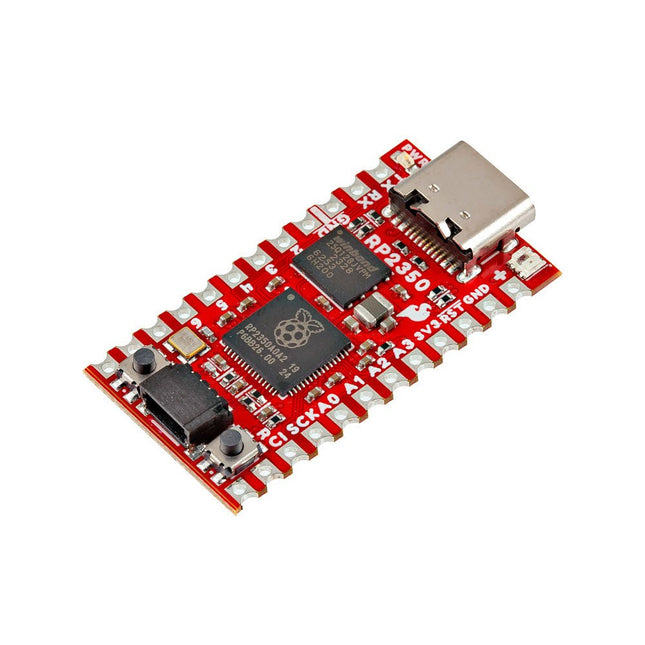
    The SparkFun RP2350 Pro Micro provides a powerful development platform, built around the RP2350 microcontroller. This board uses the updated Pro Micro form factor. It includes a USB-C connector, Qwiic connector, WS2812B addressable RGB LED, Boot and Reset buttons, resettable PTC fuse, and PTH and castellated solder pads. The RP2350 is a unique dual-core microcontroller with two ARM Cortex-M33 processors and two Hazard3 RISC-V processors, all running at up to 150 MHz! Now, this doesn't mean the RP2350 is a quad-core microcontroller. Instead, users can select which two processors to run on boot instead. You can run two processors of the same type or one of each. The RP2350 also features 520 kB SRAM in ten banks, a host of peripherals including two UARTs, two SPI and two I²C controllers, and a USB 1.1 controller for host and device support. The Pro Micro also includes two expanded memory options: 16 MB of external Flash and 8 MB PSRAM connected to the RP2350's QSPI controller. The RP2350 Pro Micro works with C/C++ using the Pico SDK, MicroPython, and Arduino development environments. Features RP2350 Microcontroller 8 MB PSRAM 16 MB Flash Supply Voltage USB: 5 V RAW: 5.3 V (max.) Pro Micro Pinout 2x UART 1x SPI 10x GPIO (4 used for UART1 and UART0) 4x Analog USB-C Connector USB 1.1 Host/Device Support Qwiic Connector Buttons Reset Boot LEDs WS2812 Addressable RGB LED Red Power LED Dimensions: 33 x 17.8 mm Downloads Schematic Eagle Files Board Dimensions Hookup Guide RP2350 MicroPython Firmware (Beta 04) SparkFun Pico SDK Library Arduino Pico Arduino Core Datasheet (RP2350) Datasheet (APS6404L PSRAM) RP2350 Product Brief Raspberry Pi RP2350 Microcontroller Documentation Qwiic Info Page GitHub Repository

    € 24,95€ 12,50

    Members identical

  •  -50% iLabs Challenger RP2040 NFC - Elektor

    iLabs iLabs Challenger RP2040 NFC

    The Challenger RP2040 NFC is a small embedded computer, equipped with an advanced on-board NFC controller (NXP PN7150), in the popular Adafruit Feather form factor. It is based on an RP2040 microcontroller chip from the Raspberry Pi Foundation which is a dual-core Cortex-M0 that can run on a clock up to 133 MHz. NFC The PN7150 is a full featured NFC controller solution with integrated firmware and NCI interface designed for contactless communication at 13.56 MHz. It is fully compatible with NFC forum requirements and is greatly designed based on learnings from previous NXP NFC device generation. It is the ideal solution for rapidly integrating NFC technology in any application, especially small embedded systems reducing Bill of Material (BOM). The integrated design with full NFC forum compliancy gives the user all the following features: Embedded NFC firmware providing all NFC protocols as pre-integrated feature. Direct connection to the main host or microcontroller, by I²C-bus physical and NCI protocol. Ultra-low power consumption in polling loop mode. Highly efficient integrated power management unit (PMU) allowing direct supply from a battery. Specifications Microcontroller RP2040 from Raspberry Pi (133 MHz dual-core Cortex-M0) SPI One SPI channels configured I²C Two I²C channel configured (dedicated I²C for the PN7150) UART One UART channel configured Analog inputs 4 analog input channels NFC module PN7150 from NXP Flash memory 8 MB, 133 MHz SRAM memory 264 KB (divided into 6 banks) USB 2.0 controller Up to 12 MBit/s full speed (integrated USB 1.1 PHY) JST Battery connector 2.0 mm pitch On board LiPo charger 450 mA standard charge current Dimensions 51 x 23 x 3,2 mm Weight 9 g Note: Antenna is not included. Downloads Datasheet Quick start example

    € 22,95€ 11,50

    Members identical

  •  -50% Pimoroni Raspberry Pi Pico Breakout Garden Base - Elektor

    Pimoroni Pimoroni Raspberry Pi Pico Breakout Garden Base

    Pico Breakout Garden Base sits underneath your Pico and lets you connect up to six of our extensive selection of Pimoroni breakouts to it. Whether it's environmental sensors so you can keep track of the temperature and humidity in your office, a whole host of little screens for important notifications and readouts, and, of course, LEDs. Scroll down for a list of breakouts that are currently compatible with our C++/MicroPython libraries!As well as a labelled landing area for your Pico, there's also a full set of broken out Pico connections, in case you need to attach even more sensors, wires, and circuitry. We've thrown in some rubber feet to keep the base nice and stable and to stop it from scratching your desk, or there are M2.5 mounting holes at the corners so that you can bolt it onto a solid surface if you prefer.The six sturdy black slots are edge connectors that connect the breakouts to the pins on your Pico. There's two slots for SPI breakouts, and four slots for I²C breakouts. Because I²C is a bus, you can use multiple I²C devices at the same time, providing they don't have the same I²C address (we've made sure that all of our breakouts have different addresses, and we print them on the back of the breakouts so they're easy to find).As well as being a handy way to add functionality to your Pico, Breakout Garden is also very useful for prototyping projects without the need for complicated wiring, soldering, or breadboards, and you can grow or change up your setup at any time.Features Six sturdy edge-connector slots for breakouts 4x I²C slots (5 pins) 2x SPI slot (7 pins) Landing area with female headers for Raspberry Pi Pico 0.1” pitch, 5 or 7 pin connectors Broken-out pins Reverse polarity protection (built into breakouts) 99% assembled – just need to stick on the feet! Compatible with Raspberry Pi Pico

    € 17,95€ 8,95

    Members identical

Features of the Raspberry Pi Pico

Raspberry Pis are small, versatile mini computers that you can use for all kinds of different projects. Whether it's simple tasks like streaming media or more advanced applications like building a Raspberry Pi-powered robot, the possibilities are endless! One of the latest additions to the Raspberry Pi family is the Pico RP2040

The Raspberry Pi Pico is easy to program with popular high-level languages such as MicroPython and or C/C++. The Pico is small in size and no less than twice as fast as its predecessor, the Raspberry Pi Zero. In addition, it is also a formidable Arduino competitor.

Raspberry Pi Pico is a cost-effective and versatile controller that is perfect for a wide variety of projects. The Pico RP2040 has two powerful Cortex M0+ cores that can be clocked up to 133 MHz and has 264 KB SRAM and 2 MB Flash memory.

Our Raspberry Pico products: From boards to modules & books!

Mastering the Raspberry Pi Pico can be done using 50 projects with Micropython in our Raspberry Pi Pico Essentials book. This book gives you a practical introduction to the world of Raspberry Pi Pico in combination with this programming language.

Or choose a 3.5-inch Waveshare touch display module with a smoother touch effect than AD-driven solutions. This touchscreen comes with development resources and manual (examples Raspberry Pi Pico C/C++ and MicroPython)

The official Raspberry Pi Pico products are available thanks to an official partnership with Raspberry Pi, directly from the manufacturer's factory. This means that when Raspberry launches a new product, it can be delivered on the launch day.

Other applications for your Raspberry Pi

In the offer on Elektor Store you will find various other applications for the Raspberry Pi Pico with which you can give your projects a new dimension. Some of the most popular other applications come from Waveshare and Pimoroni. Both are suppliers and manufacturers of educational, industrial and hobbyist electronics.

Login

Forgot password?

Don't have an account yet?
Create account