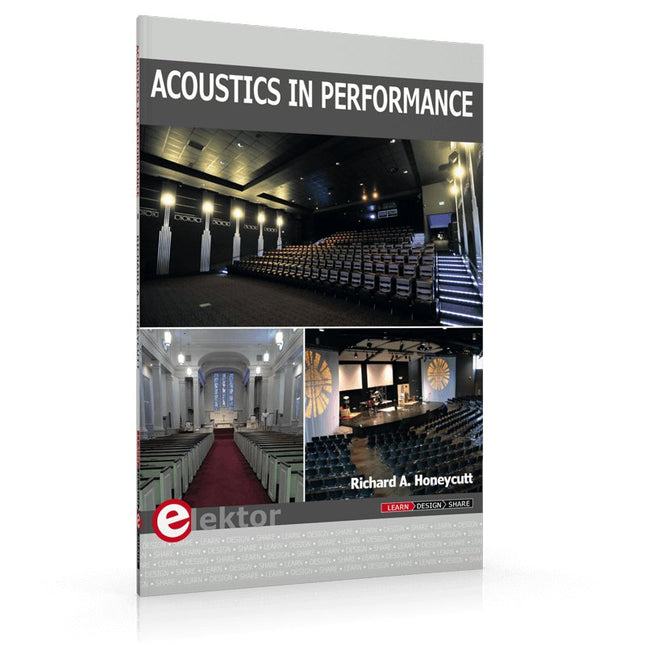
All you need to know about good acoustics and sound systems in performance and worship spaces!
Everyone knows that the ability to hear music in balance and to understand speech is essential in any space used for performance or worship. Unfortunately, in the early 21st century, we find that buildings with good acoustics are the exception rather than the rule. Much of the fault leading to this result can be traced to the widespread perception that acoustics is a black art. In fact, scientific acoustics as developed in the last century is a well-defined engineering practice that can lead to predictable excellent results.
A basic, non-engineering understanding of acoustics will help building owners, theater managers, ministers and teachers of music, performers, and other professionals to achieve their goals of excellent acoustics in venues with which they work. Performers having a basic understanding of acoustics will be able to make the most of the acoustics of the venue in which they perform.
This book helps those responsible for providing good acoustics in performance and worship spaces to understand the variables and choices entailed in proper acoustic design for performance and worship. Practicing acoustical consultants will find the book a useful reference as well. The level of presentation is comfortable and straightforward without being simplistic. If correct acoustical principles are incorporated into the design, renovation, and maintenance of performance and worship venues, good acoustics will be the result.
Elektor GREEN and GOLD members can download their digital edition here.
Not a member yet? Click here.
Low-Noise Lab Power Supply (1)A Quiet Source for Sensitive Circuits
STM32 Edge AI Contest 2025: The Winners
Batteries TodayTechnology and Differences in Lithium Batteries
Adjustable Electronic LoadStatic + Dynamic DC Load
Step-Down Converter from 48 V to 5 VThe Story of Circuit Development
Autonomous Sensor Node v2.0Part 2: Hardware Validation and Power Optimizations
VaristorsPeculiar Parts, the Series
Graphical Grid Frequency MeterMonitor Grid Quality
Starting Out in Electronics……Brings Its Own End
Peak Current Load SMD FerritesMore Resilient Against Current Peaks
Elektor Live! Expert Day 2025
Energy Harvesting Set to Accelerate IoT and IIoT Use CasesHow Energy Harvesting Frees IoT from the Grid
Fnirsi DPS-150Compact and Portable Power Supply and Converter
Adjustable USB-C Power SourceTurn Your USB-C Charger Into an Adjustable Power Supply
Simple Charger and Capacity TesterWith Two Cheap “Off-the-Shelf” Modules
Smart Color Detector with AI Voice and Playback
PbMonitor v2.0Introduction to the Updated Battery Monitoring System
A Fan for the Mini Reflow PlateSmart Modifications That Improve Results
From Life’s ExperienceThe Tsunami of Indulgence
Err-lectronicsCorrections, Updates, and Readers’ Letters
2026: An AI OdysseyWhen Models Start Dictating the Hardware
Precision Picoammeter (2)Assembling, Calibration, and Test
Wireless Device Poweringwith Inductive Technology
AI-Based Autonomous DrivingThe RDW’s Self Driving Challenge 2024
Sound Card as Signal GeneratorPC as DCF77 Test Transmitter
Le téléchargement intégral de ce numéro est disponible pour nos membres GOLD et GREEN sur le site Elektor Magazine !
Pas encore membre ? Cliquez ici.
outils d'IA pour le prototypage matérielCe qui est utile, ce qui ne l’est pas, et ce qui reste du ressort de l’ingénieur
ZSWatch : de l'idée au produitPartie 1 : une montre connectée entièrement open source
correcteur de tonalité à trois voiesHaut de gamme – pour une touche supplémentaire
electronica Fast Forward 202610 années d'innovation
prototypage avec des microcontrôleursUn aperçu des cartes de développement les plus populaires
plaques d'essai pour prototypageDrôles de composants, la série
concevoir pour l'orbiteGuide du maker pour la sélection de composants, la résilience aux rayonnements et l'architecture de mission
gestion thermique pour des systèmes électroniques fiablesQuand chaque degré compte
du concept au produit finiConcevoir des systèmes embarqués prêts à la commercialisation
Lusight : écrans électroniques souples commandés avec votre téléphoneDécouvrez ce que cache le badge sur la couverture de l’édition electronica d’Elektor
apprendre à un bras robotique à voir et à se déplacerManipulation d'objets par IA avec un bras robotique imprimé en 3D
Elektor à 65 ansProjets des numéros de novembre et décembre
antenne en boucle avec blocs RFPartie 2 : traitement du signal
du prototype à la productionLeçons pratiques de la communauté Elektor
projet 2.0Retours, idées, corrections
générateur audio portableUne source de signal de référence pour la configuration rapide des systèmes audio
audiotroniquePlus sur la distorsion, et un ampli d'adaptation de niveau
2026 : une odyssée de l'IAQuand l'IA contribue a son propre développement
atelier sans fil (2)Modules radio expliqués : émetteur-récepteur nRF24L01P à 2,4 GHz
La voie du numérique
construction d'une montre connectée open sourceDaniel Kampert avec la ZSWatch, le matériel libre et les compromis techniques
comment se préparer pour l'assemblage SMD professionnel
l’ingénierie au-delà de l’établiIntégration des systèmes, dépannage et essais en conditions réelles.
simulateur d'instruments avioniquesESP32-S3, avec écran HMI ron
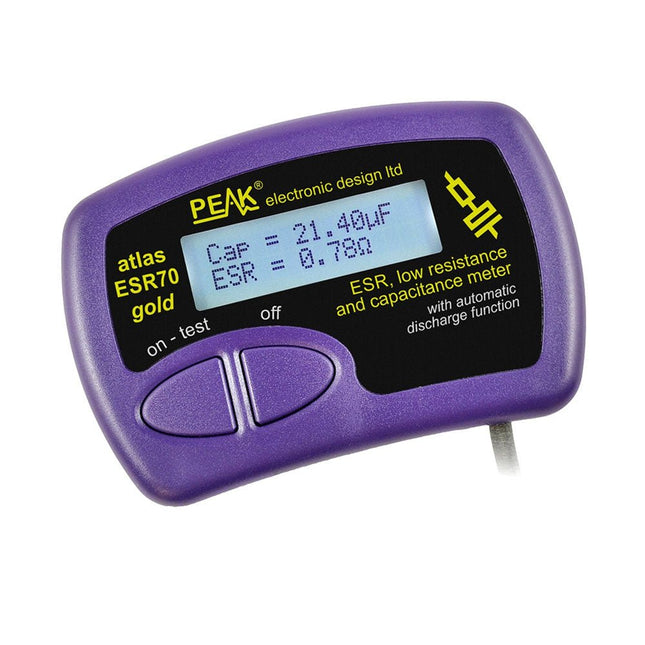
The Peak Atlas ESR70 gold is an enhanced version of the previous Peak Atlas ESR70 Plus. It does everything that the ESR70 Plus did but better.
It now measures capacitance up to 10x faster, and over a wider range, thanks to new test algorithms. The capacitance measurement is also much less influenced by parallel resistances or leakage current thanks to our new Triple-Slope measurement system.
Using the supplied gold plated probes (removable), the Atlas ESR70 gold can measure ESR down to a resolution of 0.01 ohms, up to 40 ohms. It can even measure ESR for capacitors that are in-circuit. Probes are removable, allowing 2 mm compatible probes to be fitted. Audible alerts are produced for various ESR levels allowing you to perform many tests in succession without having to look at the display. The ESR70 automatically takes capacitive reactance into account, so even low value capacitors (down to 0.3 uF) can have the ESR measured accurately.
Features
Uses a single AAA Alkaline cell (included)
Alphanumeric LCD with backlight
Automatic analysis-start when you apply the probes
Automatic capacitor discharge using controlled discharge function
ESR (and low DC resistance) measurement (even in-circuit)
Capacitive reactance automatically taken into account to ensure accurate ESR
Capacitance measurement (if testing out-of-circuit)
Audible alerts for various ESR levels
Extended ESR measurement range up to 40 Ohms
Optional probe alternatives easily fitted
New gold Features
Improved LCD with better backlight
10x faster capacitance measurement for large capacitors
Enhanced user options system
New triple-slope measurement system to vastly reduce the influence of parallel resistance and/or leakage current on capacitance measurements
Much wider capacitance measurement range now 0.3 uF to 90,000 uF (was 1uF to 22,000uF)
Specifications
Analyzer type
ESR and Capacitance
Component types
Capacitors (>0.3 uF)
ESR range
0.00 Ohms to 40.0 Ohms
ESR resolution
From 0.01 Ohms
In-circuit use
ESR only
Capacitance range
0.3 uF to 90000 uF
Battery type
1.5 V Alkaline AAA Cell (supplied). Life typically 1500 ops
Display type
Alphanumeric LCD (with backlight)
Included
Peak Atlas ESR70 gold
Extra-long and extra-flexible test cables (450 mm of Silicone covered cable)
2 mm gold plated plugs and sockets with removeable gold plated crocodile clips
Comprehensive illustrated user guide
AAA Alkaline cell
Downloads
Datasheet (EN)
User Guide (EN)
User Guide (FR)
User Guide (IT)
Elektor GREEN and GOLD members can download their digital edition here.
Not a member yet? Click here.
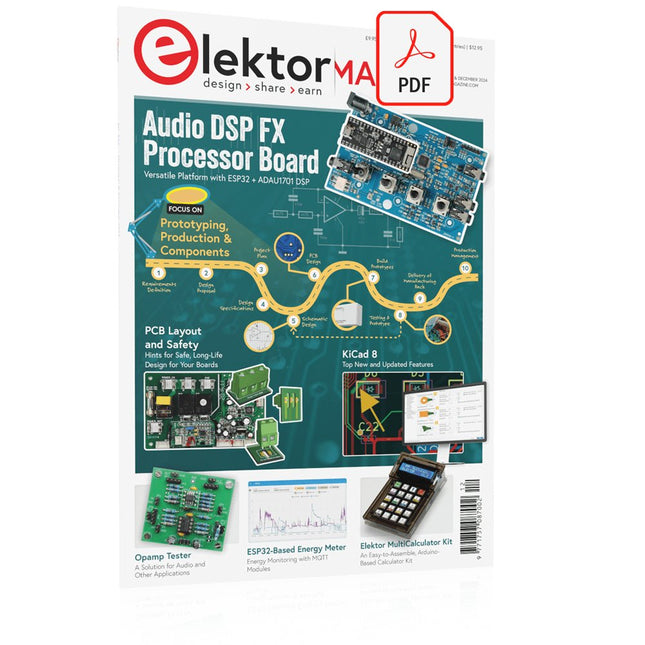
Audio DSP FX Processor BoardPart 1: Features and Design
50 Years of Elektor in English
KiCad 8Top New and Updated Features
Elektor MultiCalculator KitAn Arduino-Based Calculator Kit for Electronic Purposes
Low-Cost GNSS RTK SystemsWith Centimeter-Level Degree of Accuracy
PCB Layout and SafetyHints for a Safe, Long-Life Design of Your Boards
Opamp TesterFor Audio and Other Applications
Project Update #4: ESP32-Based Energy MeterEnergy Monitoring with MQTT
Real-Time Spectrum Analyzer with Waveguide Technology and Multi-Interface PCsAaronia Establishes New Product Segment and Presents First Prototypes at Electronica in Munich
Applications of Ynvisible’s E-paper DisplaysTransform Businesses and Shape the Future
SMT InductorsCoils and Ferrites — Selection Made Easy
Arrow Electronics to Showcase Innovative Technologies at electronica 2024
Using EMI Shielding to Achieve Electromagnetic Compatibility Compliance
The Ultimate Tool for Every Electronics EnthusiastUnlock Endless Possibilities with Red Pitaya and 1,000+ Click Boards™
V-LD1 Distance Radar Module
Siglent Presents Its New Vector Network Analyzer Platform SNA6000A
HDI in the MiddleA New Cost-Effective PCB Pooling Service for Tiny BGAs
Remote Access IoT LabOne and Only Solution for Remote Learning and Development in Embedded Industry
Challenges of DFM Analysis for Flex and Rigid-Flex Design
From Life's ExperienceMicrotechnophobia
3D Christmas TreeA 3D PCB with a Low-Cost, 32-bit Microcontroller
Starting Out in Electronics……Continues with the Opamp!
An Autonomous Sensor Node (Project Update #1)Reducing Idle Power Consumption with External RTC and Power Switch
2024: An AI OdysseyA Look Back at the Future
LED Displays with the MAX7219A Hands-On Approach to a Great Chip
Err-lectronicsCorrections, Updates, and Readers’ Letters
VibroTactile GlovesA Breakthrough for Parkinson’s Patients
Elektor GREEN and GOLD members can download their digital edition here.
Not a member yet? Click here.
High-End from the Elektor Lab
Fortissimo-100 High-End AmplifierFully symmetrical audio output stage and 100/190 W
Checking the Frequency of Tuned Circuits and CrystalsTips & Tricks, Best Practices and Other Useful Information
PCB Tips and Tricks
Soldering – So What?A Closer Look at Current Soldering Technology
Low-Latency Bluetooth Garage Door ControlTake Control with Short BLE Messages from a Smartphone
Ideal Diode ControllerDiode Circuits with Low Power Dissipation
LED Garlands with ESP32 and FreeRTOSFlashing and Variable Brightness
Starting Out in Electronics……Cheerfully Continues Zenering
FM/DAB+ ReceiverThe Best of Both Worlds
From Life’s ExperienceElectronica Obscura
Tracing the Cause of Software Bugs WirelesslyCircular Buffer and Webserver on the ESP32
Did Covid Cause a Boost in Engineering Innovation?Innovative Components and Solutions from 2022
Ersa i-CON TRACE – The IoT Soldering Station for Makers
Infographics
What Are We Going to Do with All This Compute?
How to Drive Ynvisible’s E-Paper Display
All-Time Innovation with InnoFaithQ&A with Walter Arkesteijn
Industrial AutomationEasy and scalable IoT-Retrofitting
Next Generation Oscilloscopes for Accelerated InsightRohde & Schwarz introduces the R&S MXO 4 series
Low Profile Linear Connectors Solve Multi-Signal Data Management
Smart – Innovative – Cost-EfficientGateMate FPGAs Developed and Manufactured in Germany
Tools to Support Low-Cost Sensor Development
PolyfusesPeculiar Parts, the Series
Isolated Analog Output for Arduino Uno
HomeLab Tours... Discovers the Theremin
electronica fast forward 2022 - powered by ElektorLineup and Timetable
Radio Direction FindingTracking Down Lost Wireless Weather Sensors
Estimate an IC's Internal NoiseA Simple Method
Ethics in ActionPowered by WEEF
No Ethics, No Sustainable BusinessAn Interview with Professor Stefan Heinemann
The 2023 WEEF Index
Filter SoftwareDesign Tools for Analog Filters
TV-B-Gone!... Or At Least B-OFF
RP2040-Based Air Quality Measurement
elekterminal
Kickstart to Python 3Sample Chapter: Digital Image Processing and Wand Library
SOLARPUNKA Brighter Future Ahead
Hexadoku
Mein eigener RISC-V-ControllerErste Schritte mit dem NEORV32 RISC-V Softcore für preiswerte FPGAs
Wie man den Seriellen Plotter der Arduino-IDE nutztEinfaches Plotten von Kurven mit Arduino
CLUE - ein Clou von Adafruit?Angriff auf den micro:bit
Puffer-Board für den Raspberry Pi 400Schützen Sie die I/Os!
FrühjahrskollektionInteressante Raspberry Pi RP2040 Boards
Ein DIY-Handbuch zu elektronischer Sicherheit und E-SpionageSRAM erhitzt oder tiefgefroren
Identifizierung von BauteilenTipps & Tricks, Best Practices und andere nützliche Informationen
Ein Touch-Schalter ohne TouchKonzeption und Umsetzung eines berührungslosen Lichtschalters
Aller Anfang...ist gar nicht schwer: Anpassen und Transformieren
Was gibt's Neues in der Embedded-Entwicklung?Rust und die Aktualisierung von IoT-Implementierungen
Infografiken Elektor Industry
Neue Wege für Industrie und Automobilbranche mit 5G
DrehspulrelaisBemerkenswerte Bauteile
Zutritt für Unbefugte verbotenAlles dreht sich um die Werkzeuge...
Die Neuronen in neuronalen Netzen verstehenTeil 4: Eingebettete Neuronen
Magnetische Levitation auf die sehr sehr einfache ArtDie dritte und kompakteste Version
SPS-Programmierung mit dem Raspberry Pi und dem OpenPLC-ProjektVisualisierung von SPS-Programmen mit AdvancedHMI
Aus dem Leben gegriffenEinpacken und weg damit
Unter dem RadarUnbekannte Mikrocontroller, über die Sie Bescheid wissen sollten
Drahtloses Monitoring und DebuggenSerielle Funk-Schnittstelle für Arduino, ESP32 und Co.
Tragbares Temperatur- und FeuchtemessgerätGebaut mit vorgefertigten Modulen
Lithium-Akkus reparierenGeld sparen + mehr Power!
GUIs mit PythonMeme-Generator
Die drei FragezeichenWarum? Was? Wer?
Hexadoku
Diese Ausgabe steht allen GOLD- und GREEN-Mitgliedern auf der ElektorMagazine-Website zum Download bereit!
Sie sind noch kein Mitglied? Hier klicken!
PbMonitor v1.0Ein Batterieüberwachungssystem für USV und Energiespeicher
Solarladeregler mit MPP-TrackingTeil 1: Grundlagen eines Solarreglers für Insel-Anlagen
B-Feld-Integrationsmagnetometer mit selbstgebauten Sensoren
Präzise, richtig oder genau?Ihre Messgeräte müssen alles sein!
AD7124 – Ein Präzisions-ADC in der PraxisHinweise für die Sensor-Signalaufbereitung
PID-RegelungswerkzeugOptimieren Sie ganz einfach Ihre Parameter
embedded world 2025
Aller Anfang ......muss nicht schwer sein: Klangeinstellung!
Academy Pro BoxBook + Online Course + Hardware
Milliohmmeter-AdapterNutzen Sie die Präzision Ihres Multimeters!
Der nächste Meilenstein bei HalbleiternWeiter in Richtung 1,4 nm
Steckverbinder in DurchstecktechnikDas Beste aus zwei Welten: THR
FrequenzzählerPortabel und mit automatischer GPS-Kalibrierung
Analoge MessgeräteBemerkenswerte Bauteile
Stand-alone-QuarztesterWie genau ist Ihre Taktquelle?
Preiswerter I²C-TesterSchließen Sie I²C-Chips direkt an Ihren PC an
Aus dem Leben gegriffenWer das Kleine nicht ehrt...
2025: Eine Odyssee in die KIDie transformativen Auswirkungen auf die Softwareentwicklung
Projekt 2.0Korrekturen, Updates und Leserbriefe
Standalone-MIDI-Synthesizer mit Raspberry PiTeil 2: Setup mit Intelligenz aufwerten
Nortonisierter Wien-Brücken-OszillatorKleine Änderungen führen zu bedeutenden Verbesserungen
10-Cent-Controller in der PraxisRISC-V-Mikrocontroller CH32V003 und MounRiver Studio ausprobiert
Audio-Player mit FPGA und EqualizerTeil 2: Lautstärkeregelung, erweitertes Mischen und ein Web-Interface
Preiswerter Audio-MessplatzMit PC-Software und USB-Audio-Interface
Netzspannungs-FrequenzmessgerätNetzfrequenz und -spannung überwachen
Kleines InduktivitätsmessgerätEine erschwingliche Lösung für Ihr Heimlabor
Reiten auf der SchallwelleEin Blick auf das Makerfabs Acoustic Levitation Kit
Aller Anfang...muss nicht schwer sein: Dioden als Gleichrichter
E-FFWD: Der Blick wieder nach vorn gerichtet!
Erste Schritte mit dem OszilloskopFinden Sie den Weg durch den Knopf-und-Tasten-Dschungel
Raspberry Pi Pico als Software Defined RadioFür das MSF-Zeitsignal
Feuchtigkeitssensoren für GießanlagenAutomatische Bewässerung
Umbruch in der Mess- und PrüftechnikInnovationen kleinerer Akteure
Infografik 7-8/2022
Inspiration: Was wirklich wichtig istInterview mit dem Unternehmer Walter Arkesteijn von InnoFaith Beauty Sciences
EMV-Störungen durch Speicherdrosseln minimieren
Grafische Benutzeroberflächen mit Python:Tic-Tac-Toe
Reed-RelaisBemerkenswerte Bauteile
Einfaches analoges ESR-Messgerätmit Drehspulinstrument-Genauigkeit
CO2-Ampel mit Sigfox-InterfaceVom WLAN unabhängig!
Frauen in der Technik„Es geht nur so lange um Leistung, bis diese Leistung Titten hat.“
Low-Budget Tablet-Oszilloskop ADS1013DGutes Preis-/Leistungsverhältnis?
Aufgeschraubt und reingeschaut: Wireless Smart PlugsSmarte Funksteckdosen mit ESP8266 & Co.
Hautwiderstand und HautkapazitätKleine Experimente mit der menschlichen Hülle
Aus dem Leben gegriffenDer Prophet gilt nichts im Vaterland
Messgerät Pokit – die eierlegende Wollmilchsau?Klein und mit vielen Messmöglichkeiten
HexadokuSudoku für Elektroniker
Diese Ausgabe steht allen GOLD- und GREEN-Mitgliedern auf der ElektorMagazine-Website zum Download bereit!
Sie sind noch kein Mitglied? Hier klicken!
MultiRF-EntwicklungsboardEine Plattform zur Evaluierung drahtloser Protokolle für kurze und lange Reichweiten
Elektor wird 65Elektronik im Wandel seit 1961
WLAN-basierte Personenerkennung mit dem ESP32Wenn der Router zum Bewegungsmelder wird
Drahtlose WaagenVier kleine Waagen = eine große Waage
Walter, das kompakte IoT-ModulESP32-S3-SoC, LTE-M/NB-IoT-5G-Modem und GNSS-Receiver
3- und 4-Draht-RTD-Sensoren konditionierenMit Vollbereichsabgleich und Kabelkompensation
Drei in einem: 2-Kanal-Oszilloskop/Generator/MultimeterEin Test des Fnirsi 2D15P
electronica Fast Forward 2026 für Start-ups und Industriepartner
EcologgingEine modulare IoT-Messstation für Umweltdaten
Drahtlos-Anbindung für MedizingeräteImmer am Puls mit Bluetooth LE
AudiotronicsBrummunterdrückung
Mehr Effizienz in der Landwirtschaft durch KI-Modelle und SensorenSteigerung der landwirtschaftlichen Produktivität
OPC UA – ein ÜberblickPlattformunabhängiger Datenaustausch
Redox-Meter
Instrumentenverstärker für Physik- und Engineering-Experimente
Aktive differentielle Audio-FilterFür professionelle Frequenzweichen und mehr
Elektor-Community-Tipps zu IoT und Sensoren
Telegram-gesteuerter WarmwasserbereiterEine Lösung mit ESP32 und Arduino-Software
2026: Eine KI-OdysseeWas wurde eigentlich aus der Fuzzy-Logik?
Projekt 2.0
Alarmsignalinjektor + PowerTools zum Suchen verdeckt verlegter Leitungen
Elektor GREEN en GOLD leden kunnen deze uitgave hier downloaden.
Nog geen lid? Klik hier om een lidmaatschap af te sluiten.
OBD2-sensordashboardOude meters vormden het startpunt van een zoektocht naar echte gegevens
OBD2: voeg een toerenteller en schakelindicator toe aan je autoRetro, maar uiterst nuttig
LiDAR- en Visiesensoren voor Robotica
Sensor+Test 2025 en PCIM 2025
Contactloze E-Veldmetingen (1)Een Trillende Membraan voor het Detecteren van Gelijkspanningen of Statische Elektrische Velden
Draadloze brievenbusmeldervan optische sensoren tot radar: enkele mogelijkheden
Elektor Mini-Wheelieeen zelfbalancerende robot
ZonnecellenVreemde onderdelen, de serie
Aan de slag met een moderne radarsensorStaat een nauwkeurige meting op uw radar?
Uit het leven gegrepenpapierfabriek
CybersecurityZware tijden voor hackers
Infographics: IoT en sensoren 2025
Bluetooth 6.0 brengt verbeterde toepassingen voor afstandsbepalingNieuwe versie biedt betere apparaatpositionerings- en -locatieservices
Draadloze communicatie verkennen met BeagleY-AI
Err-lectronicsCorrecties, updates en lezerspost
Alle begin......sluit het thema opamps af
Een krachtige AI-codeerassistentsneller ontwikkelen met Continue en Visual Studio Code
Zonne-laadregelaar met MPPT (2)Het schema
Ultrasone obstakeldetectoreen eenvoudig project om slechtzienden te helpen
2025: Een AI-odysseeHalfjaaroverzicht
Raspberry Pi Standalone MIDI-synthesizer (3)Het slimmer maken en een gebruikersinterface toevoegen
Meshtastic: een demonstratieprojectEen slim netwerk van LoRa-radio's
Analoge audio-frequentiegeneratorHoogwaardige sinusgenerator met instelbare frequentie
Elektor GREEN and GOLD members can download their digital edition here.
Not a member yet? Click here.
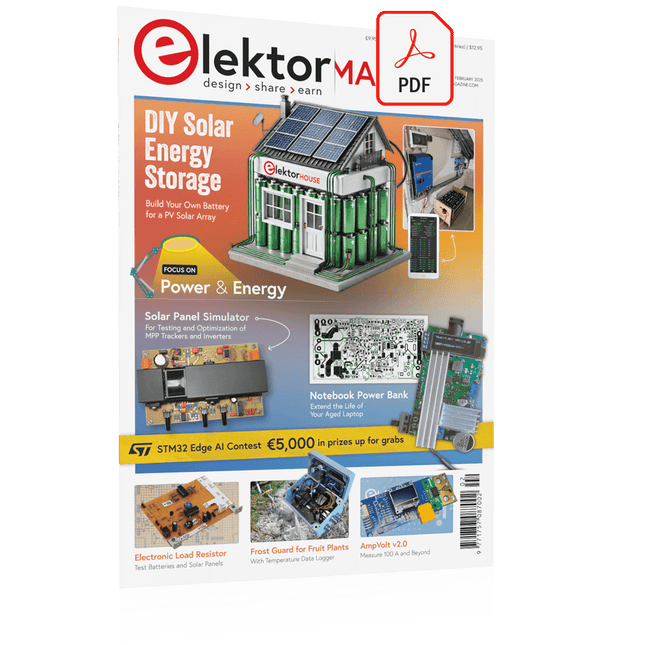
DIY Solar Energy StorageBuild Your Own Energy Store for a PV Solar Array
Solar Module SimulatorA Solution for Testing and Optimizing MPP Trackers and Inverters
The STM32 Edge AI ContestExplore the new STM32N6 and Compete for a Share of €5,000 in Prizes!
Widening the BandgapWhy There Is So Much Interest in SiC and GaN
Notebook Power BankExtend the Life of Your Aged Laptop
Medical RobotsOvercoming Technical and Regulatory Hurdles
Frost Guard for Fruit Plants With Temperature Data Logger
The Analog ThingThe Arduino of Analog Computing?
Energy Saving Relay DriverSaves 90% of Relay Drive Power
Improving the ET5410A+ DC loadKeep Cool and Be Quiet, Please
electronica 2024 in Review
Electromagnetic CompatibilityEMC in a Nutshell!
Starting Out in Electronics……Filters Actively
Reducing Power Dissipation With Dropping CapacitorsA Clever Use of Capacitive Reactance
The Affordable MCP4725 12-Bit Digital-to-Analog ConverterAn EEPROM Feature Enables Safe Switch-On Behavior
Fnirsi LCR-ST1 Smart LCR SMD Tweezers
Raspberry Pi-Based Private Test & Measurement LabFirst Things First: The ADC
Electronic Load ResistorAn Out-of-the-Box Project
2025: An AI OdysseySome Projects to See in the New Year
AmpVolt v2.0 Project Update100 Amps and Beyond!
Err-lectronicsCorrections, Updates, and Readers’ Letters
Unveiling Ethical TransparencyInsights from Ethics in Electronics’s 2024 Survey
Elektor Audio DSP FX Processor Board (2)Creating Applications