SMA Straight Plug to SMA Straight Plug, 76.2 mm
Specifications
Frequency range
0 to 18 GHz VSWR (≤1.35)
Insertion loss
≤0,22 db
Body
Brass Nickel
Centre contact
Brass Gold
Insulator
PTFE
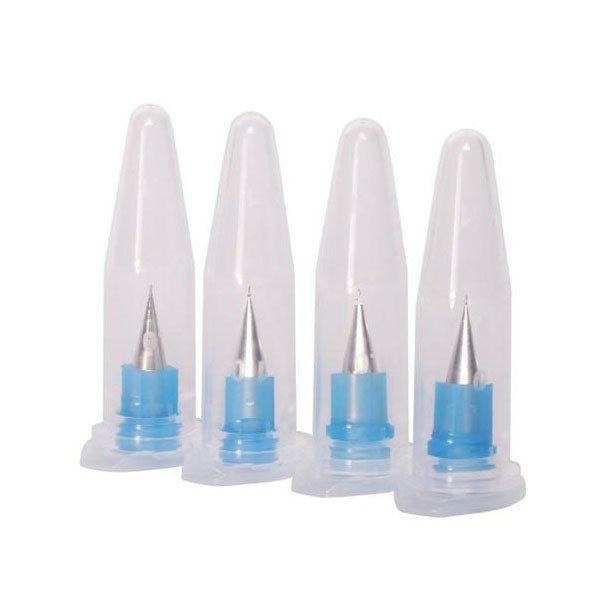
If you want to push the resolution limits of the V-One, these dispensing tips will help enable your experimental projects. This pack contains 4 extra fine nozzles with an internal diameter of 0.150 mm (6 mil).
Do not use with solder paste! It will clog!
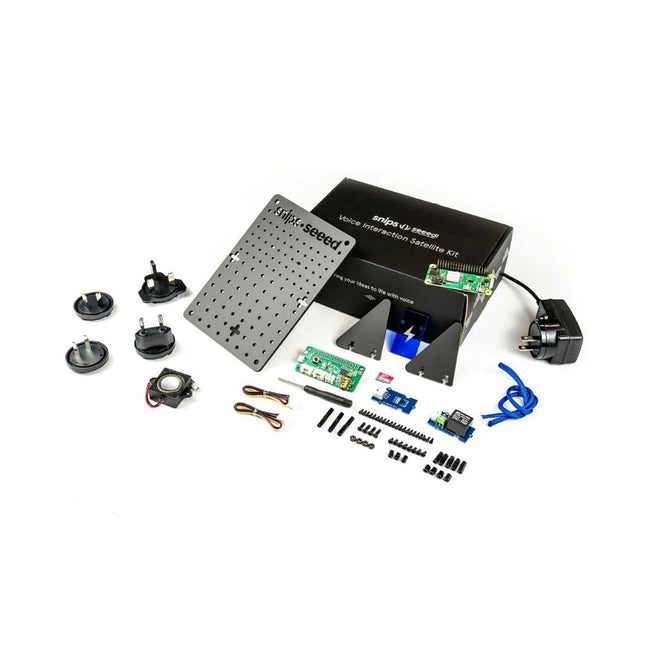
The Voice Interaction Satellite Kit can extend the reach of your base station to each room in your house and enable you to interact with the hardware based on where you issue your commands! You can arrange multiple Satellite Kits throughout your home to add new functionality to Base kit or any other smart speaker, extending your voice control across several rooms.
The Voice Interaction Satellite Kit is powered by a Raspberry Pi Zero W and the ReSpeaker 2-Mics Pi HAT. Along with the kit comes a speaker, a Grove - Temperature Humidity Sensor (SHT31) sensor, a Grove Relay, and a pegboard to hang it on a wall or create a nifty stand.
Note
All Satellite Kits require a Base kit or Raspberry Pi in order to operate as intended.
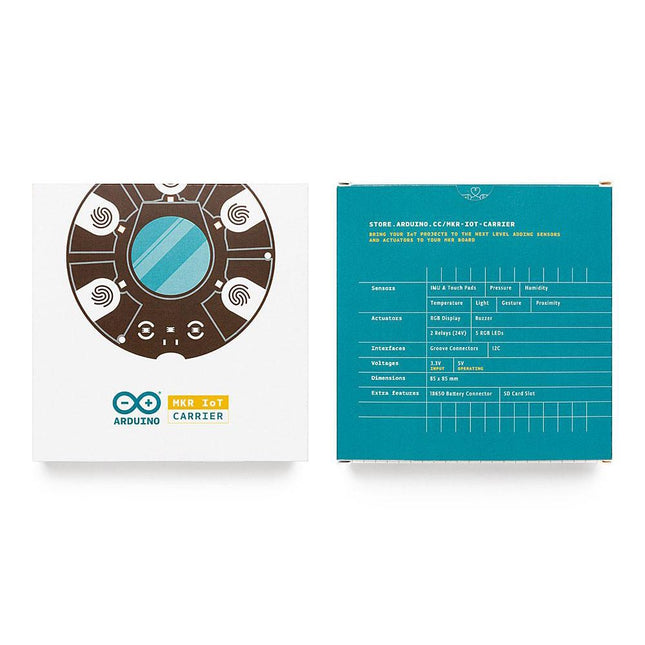
The MKR IoT Carrier comes equipped with 5 RGB LEDs, 5 capacitive touch buttons, a colored display, IMU and a variety of quality sensors. It also features a battery holder for a 18650 Li-Ion battery, SD card holder and Grove connectors.
Data Capture: Map the environment around the carrier using the integrated temperature, humidity, and pressure sensors and collect data about movement using the 6 axis IMU and light, gesture, and proximity sensors. Easily add more external sensors to capture more data from more sources via the on-board Grove connectors (x3).
Data Storage: Capture and store all the data locally on an SD card, or connect to the Arduino IoT Cloud for real-time data capture, storage, and visualization.
Data Visualisation: Locally view real-time sensor readings on the built-in OLED Color Display and create visual or sound prompts using the embedded LEDs and buzzer.
Total Control: Directly control small-voltage electronic appliances using the onboard relays and the five tactile buttons, with the integrated display providing a handy on-device interface for immediate control.
Arduino MKR NB 1500 allows you to build your next smart project.
Ever wanted an automated house? Or a smart garden? Well, now it’s easy with the Arduino IoT Cloud compatible boards. It means: you can connect devices, visualize data, control and share your projects from anywhere in the world. Whether you’re a beginner or a pro, we have a wide range of plans to make sure you get the features you need.
Add Narrowband communication to your project with the MKR NB 1500. It's the perfect choice for devices in remote locations without an Internet connection, or in situations in which power isn't available like on-field deployments, remote metering systems, solar-powered devices, or other extreme scenarios.
The board's main processor is a low power ARM Cortex-M0 32-bit SAMD21, like in the other boards within the Arduino MKR family. The Narrowband connectivity is performed with a module from u-blox, the SARA-R410M-02B, a low power chipset operating in the de different bands of the IoT LTE cellular range. On top of those, secure communication is ensured through the Microchip ECC508 crypto chip. Besides that, the pcb includes a battery charger, and a connector for an external antenna.
This board is designed for global use, providing connectivity on LTE's Cat M1/NB1 bands 1, 2, 3, 4, 5, 8, 12, 13, 18, 19, 20, 25, 26, 28. Operators offering service in that part of the spectrum include: Vodafone, AT&T, T-Mobile USA, Telstra, and Verizon, among others.
Specifications
The Arduino MKR NB 1500 is based on the SAMD21 microcontroller.
Microcontroller
SAMD21 Cortex-M0+ 32-bit low power ARM MCU (datasheet)
Radio module
u-blox SARA-R410M-02B (datasheet summary)
Secure element
ATECC508 (datasheet)
Board power supply (USB/VIN)
5 V
Supported battery
Li-Po Single Cell, 3.7 V, 1500 mAh Minimum
Circuit operating voltage
3.3 V
Digital I/O pins
8
PWM pins
13 (0 .. 8, 10, 12, 18 / A3, 19 / A4)
UART
1
SPI
1
I²C
1
Analog input pins
7 (ADC 8/10/12 bit)
Analog output pins
1 (DAC 10 bit)
External interrupts
8 (0, 1, 4, 5, 6, 7, 8, 16 / A1, 17 / A2)
DC current per I/O pin
7 mA
Flash memory
256 KB (internal)
SRAM
32 KB
EEPROM
No
Clock speed
32.768 kHz (RTC), 48 MHz
LED_BUILTIN
6
USB
Full-speed USB device and embedded host
Antenna gain
2 dB
Carrier frequency
LTE bands 1, 2, 3, 4, 5, 8, 12, 13, 18, 19, 20, 25, 26, 28
Power class (radio)
LTE Cat M1 / NB1: Class 3 (23 dBm)
Data rate (LTE M1 halp-duplex)
UL 375 kbps / DL 300 kbps
Data rate (LTE NB1 full-duplex)
UL 62.5 kbps / DL 27.2 kbps
Working region
Multiregion
Device location
GNSS via modem
Power consumption (LTE M1)
min 100 mA / max 190 mA
Power consumption (LTE NB1)
min 60 mA / max 140 mA
SIM card
MicroSIM (not included with the board)
Dimensions
67.6 x 25 mm
Weight
32 g
Downloads
Eagle Files
Schematics
Pinout
Looking to dispense materials with a lower viscosity? These are the nozzles for you. Don't use this with our standard ink or solder paste... that will result in poor performance.
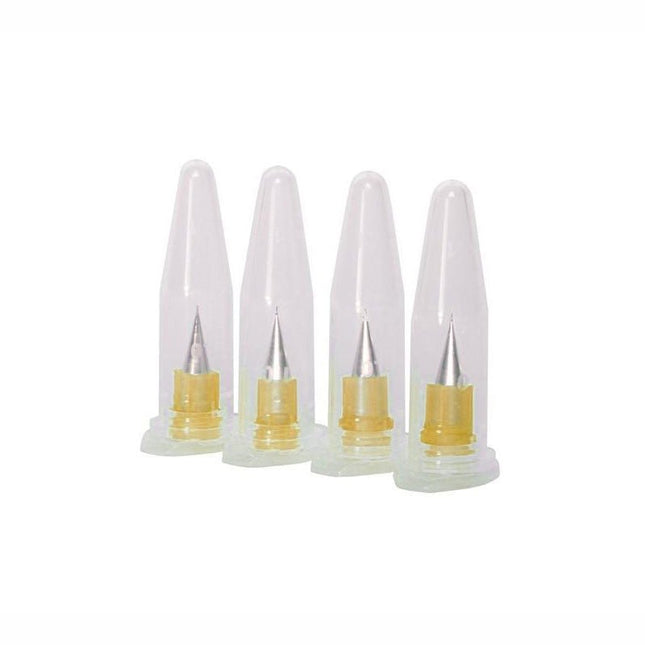
This pack contains 4 extra fine nozzles with an internal diameter of 0.100 mm (4 mil).
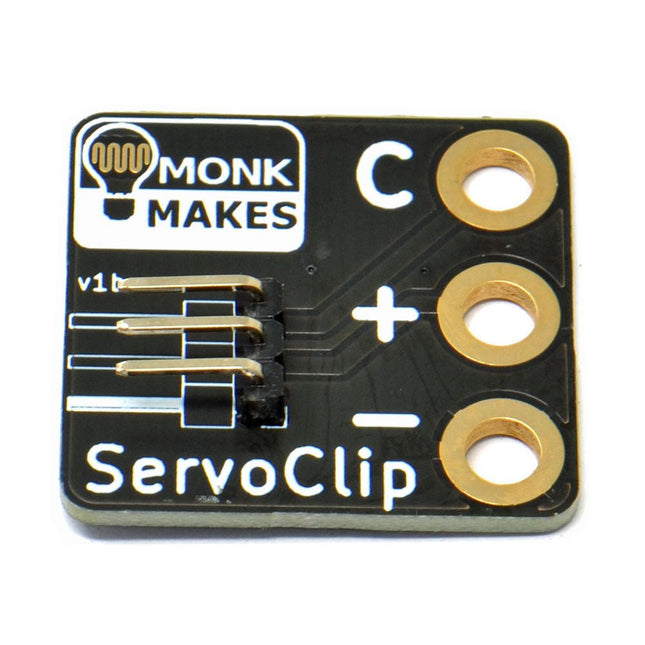
An adapter for connecting a servo meter with croc/alligator clips.
This is a handy little clip to connect a servo motor with 5.4 mm header socket using alligator clips. It is ideal for use with boards like the BBC micro:bit and Adafruit's Circuit Playground Express or Gemma.
Width: 27 mm
Height: 35 mm
Downloads
Datasheet
SMD Magazines are injection-molded containers and a great way to organize and consume SMD parts. They are custom built to store components and present them for picking. They can load up to 12-mm-wide, 9.5-mm tall tapes. They replace those hard-to-find plastic bags while being an excellent source of parts to pick and placing using Pixel Pump.
Each SMD-Magazine Rail presents up to eight magazines at the perfect angle for you to pick and place their components using Pixel Pump. You can also use these rails to group components for specific projects. They are equipped with non-slip rubber feet and weighted for extra stability.
An SMD Magazine rail holds up to eight SMD Magazines. A given rail can be used to hold a project-specific set of magazines indefinitely. Magazines are held at a right angle, ready to be picked and placed by Pixel Pump.
Each SMD-Magazine Rail presents up to eight magazines at the perfect angle for you to pick and place their components using Pixel Pump. You can also use these rails to group components for specific projects. They are equipped with non-slip rubber feet and weighted for extra stability.
Ever wanted an automated house? Or a smart garden? Well, now it’s easy with the Arduino IoT Cloud compatible boards. It means: you can connect devices, visualize data, control and share your projects from anywhere in the world. Whether you’re a beginner or a pro, we have a wide range of plans to make sure you get the features you need.
Connect your sensors and actuators over long distances harnessing the power of the LoRa wireless protocol or throughout LoRaWAN networks.
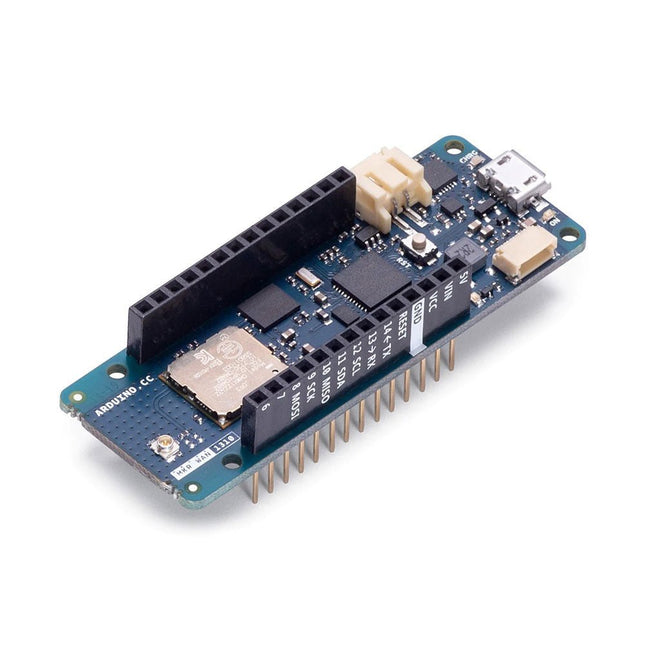
The Arduino MKR WAN 1310 board provides a practical and cost effective solution to add LoRa connectivity to projects requiring low power. This open source board can be connected to the Arduino IoT Cloud.
Better and More Efficient
The MKR WAN 1310, brings in a series of improvements when compared to its predecessor, the MKR WAN 1300. While still based on the Microchip SAMD21 low power processor, the Murata CMWX1ZZABZ LoRa module, and the MKR family’s characteristic crypto chip (the ECC508), the MKR WAN 1310 includes a new battery charger, a 2 MByte SPI Flash, and improved control of the board’s power consumption.
Improved Battery Power
The latest modifications have considerably improved the battery life on the MKR WAN 1310. When properly configured, the power consumption is now as low as 104 uA! It is also possible to use the USB port to supply power (5 V) to the board; run the board with or without batteries – the choice is yours.
On-board Storage
Data logging and other OTA (Over The Air) functions are now possible since the inclusion of the on board 2 MByte Flash. This new exciting feature will let you transfer configuration files from the infrastructure onto the board, create your own scripting commands, or simply store data locally to send it whenever the connectivity is best. Whilst the MKR WAN 1310’s crypto chip adds further security by storing credentials & certificates in the embedded secure element.
These features make it the perfect IoT node and building block for low-power wide-area IoT devices.
Specifications
The Arduino MKR WAN 1310 is based on the SAMD21 microcontroller.
Microcontroller
SAMD21 Cortex-M0+ 32-bit low power ARM MCU (datasheet)
Radio module
CMWX1ZZABZ (datasheet)
Board power supply (USB/VIN)
5 V
Secure element
ATECC508 (datasheet)
Supported batteries
Rechargeable Li-Ion, or Li-Po, 1024 mAh minimum capacity
Circuit operating voltage
3.3 V
Digital I/O pins
8
PWM pins
13 (0 .. 8, 10, 12, 18 / A3, 19 / A4)
UART
1
SPI
1
I²C
1
Analog input pins
7 (ADC 8/10/12 bit)
Analog output pins
1 (DAC 10 bit)
External interrupts
8 (0, 1, 4, 5, 6, 7, 8, 16 / A1, 17 / A2)
DC current per I/O pin
7 mA
CPU flash memory
256 KB (internal)
QSPI flash memory
2 MByte (external)
SRAM
32 KB
EEPROM
No
Clock speed
32.768 kHz (RTC), 48 MHz
LED_BUILTIN
6
USB
Full-Speed USB Device and embedded Host
Antenna gain
2 dB (bundled pentaband antenna)
Carrier frequency
433/868/915 MHz
Dimensions
67.64 x 25 mm
Weight
32 g
Downloads
Eagle Files
Schematics
Fritzing
Pinout
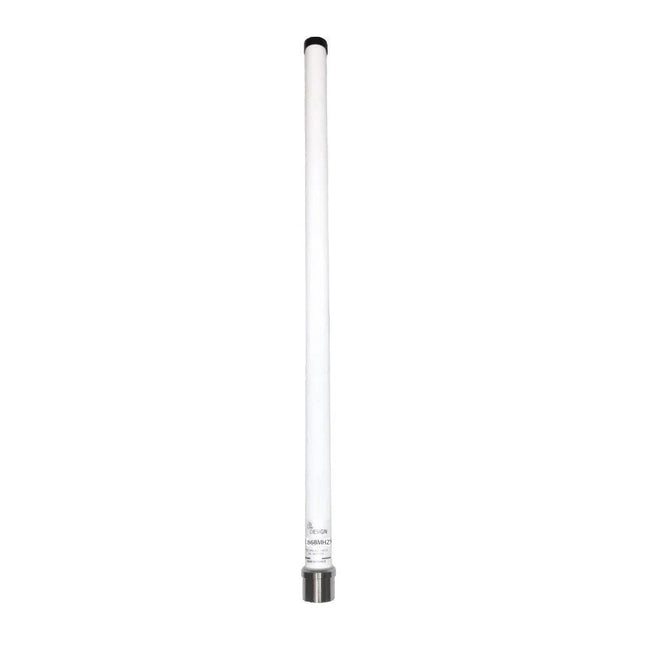
This fiberglass outdoor antenna is optimized for receiving signals in the 868 MHz ISM band, supporting technologies such as Sigfox, LoRa, Mesh Networks, and Helium. The antenna consists of a half-wave dipole with 4.4 dBi gain, encapsulated inside a fiberglass radome with an aluminum mounting base.
Specifications
Frequency
868-870 MHz
Antenna type
Dipole 1/2 wave
Connector
N female
Installation type
Mast Diam 35-60 mm (mounting bracket included)
Gain
4.4 dBi
SWR
≤1.5
Type of Polarization
Vertical
Maximum power
10 W
Impedance
50 Ohms
Dimensions
52.5 cm
Tube diameter
26 mm
Base antenna
32 mm
Operating temperature
−30°C to +60°C
Included
ISM Band Antenna (868 Mhz)
Mast bracket (for installation on a 35 to 60 mm diameter mast)
Waveshare DVK600 is an FPGA CPLD mother board that features expansion connectors for connecting FPGA CPLD core board and accessory boards. DVK600 provides an easy way to set up FPGA CPLD development system.
Features
FPGA CPLD core board connector: for easily connecting core boards which integrate an FPGA CPLD chip onboard
8I/Os_1 interface, for connecting accessory boards/modules
8I/Os_2 interface, for connecting accessory boards/modules
16I/Os_1 interface, for connecting accessory boards/modules
16I/Os_2 interface, for connecting accessory boards/modules
32I/Os_1 interface, for connecting accessory boards/modules
32I/Os_2 interface, for connecting accessory boards/modules
32I/Os_3 interface, for connecting accessory boards/modules
SDRAM interface
for connecting SDRAM accessory board
also works as FPGA CPLD pins expansion connectors
LCD interface, for connecting LCD22, LCD12864, LCD1602
ONE-WIRE interface: easily connects to ONE-WIRE devices (TO-92 package), such as temperature sensor (DS18B20), electronic registration number (DS2401), etc.
5 V DC jack
Joystick: five positions
Buzzer
Potentiometer: for LCD22 backlight adjustment, or LCD12864, LCD1602 contrast adjustment
Power switch
Buzzer jumper
ONE-WIRE jumper
Joystick jumper
Downloads
Schematics
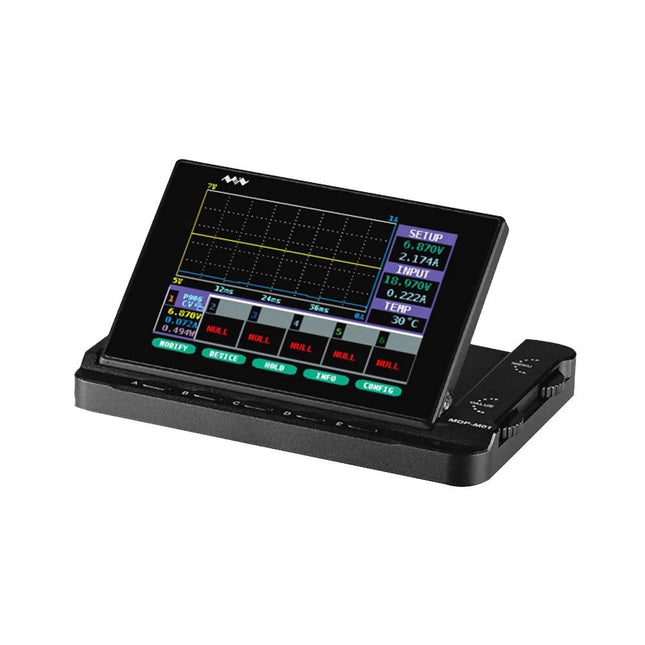
MDP-M01 is a display control module equipped with a 2.8-inch TFT display screen, the screen can be turned 90 degrees, which is convenient for users to view data and waveform. MDP-M01 can realize online display and control with MDP-P906 mini digital power supply modules and other modules of MDP system through 2.4 GHz wireless communication, and can control up to 6 sub-modules at the same time.
Specifications
Screen size
2.8" TFT
Screen resolution
240 x 320
Power
Micro USB power input, or taking power from sub-module via dedicated power cable
Input
DC 5 V/0.3 A
Other functions
Can control up to 6 sub-modulesUpgrade firmware through Micro USB
Dimensions
107 x 66 x 13.6 mm
Weight
133 g
Included
1x MDP-M01 Smart Digital Monitor
1x Cable (2.5 mm jack to Micro USB)
Downloads
User Manual v3.4
Firmware v1.32
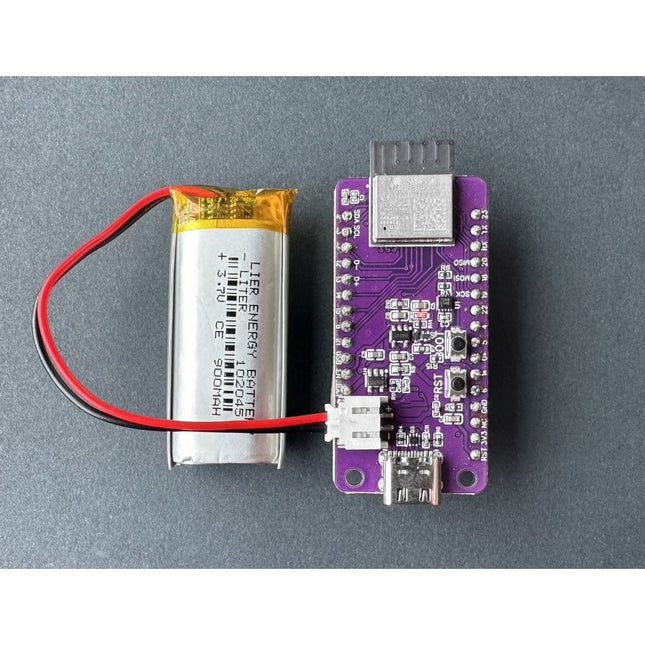
Enhance your ESP32 WiFi Color Display Kit Grande with this high-quality 900 mAh rechargeable lithium-polymer battery!
Designed to provide long-lasting power, this battery ensures your projects remain portable and efficient. With its compact size and lightweight design, it’s the perfect accessory for any DIY electronics enthusiast. The battery offers reliable performance, easy integration, and safe, stable power supply, making it ideal for extended use in a variety of applications.
900 mAh LiPo battery
JST Connector, fitting ePulse Feather
The Arduino MKR Zero is a development board for music makers! With an SD card holder and dedicated SPI interfaces (SPI1), you are able to play music files without extra hardware.
The MKR Zero brings you the power of a Zero in the smaller format established by the MKR form factor. The MKR Zero board acts as a great educational tool for learning about 32-bit application development. It has an on-board SD connector with dedicated SPI interfaces (SPI1) that allows you to play with MUSIC files with no extra hardware! The board is powered by Atmel’s SAMD21 MCU, which features a 32-bit ARM Cortex M0+ core.
The board contains everything needed to support the microcontroller; simply connect it to a computer with a micro-USB cable or power it by a LiPo battery. The battery voltage can also be monitored since a connection between the battery and the analog converter of the board exists.
Specifications
Microcontroller
SAMD21 ARM Cortex-M0+ 32-bit low power
Board power supply (USB/VIN)
5 V
Supported battery
Li-Po single cell, 3.7 V, 700 mAh minimum
DC current for 3.3 V pin
600 mA
DC current for 5 V pin
600 mA
Circuit operating voltage
3.3 V
Digital I/O pins
22
PWM pins
12 (0, 1, 2, 3, 4, 5, 6, 7, 8, 10, A3 - or 18 -, A4 -or 19)
UART
1
SPI
1
I²C
1
Analog input pins
7 (ADC 8/10/12 bit)
Analog output pins
1 (DAC 10 bit)
External interrupts
10 (0, 1, 4, 5, 6, 7, 8, A1 -or 16-, A2 - or 17)
DC current per I/O pin
7 mA
Flash memory
256 KB
Flash memory for bootloader
8 KB
SRAM
32 KB
EEPROM
No
Clock speed
32.768 kHz (RTC), 48 MHz
LED_BUILTIN
32
Downloads
Datasheet
Eagle Files
Schematics
Fritzing
Pinout
The Nicla Sense ME is a tiny, low-power tool that sets a new standard for intelligent sensing solutions. With the simplicity of integration and scalability of the Arduino ecosystem, the board combines four state-of-the-art sensors from Bosch Sensortec:
BHI260AP motion sensor system with integrated AI
BMM150 magnetometer
BMP390 pressure sensor
BME688 4-in-1 gas sensor with AI and integrated high-linearity, as well as high-accuracy pressure, humidity and temperature sensors.
The Arduino Nicla Sense ME is the smallest Arduino form factor yet, with a range of industrial grade sensors packed into a tiny footprint. Measure process parameters such as temperature, humidity and movement. Featuring a 9-axis inertial measurement unit and the possibility for Bluetooth Low Energy connectivity, it can help you to create your next Bluetooth Low Energy enabled project. Make your own industrial grade wireless sensing network with the onboard BHI260AP, BMP390, BMM150 and BME688 Bosch sensors.
Features
Tiny size, packed with features
Low power consumption
Add sensing capabilities to existing projects
When battery-powered, becomes a complete standalone board
Powerful processor, capable of hosting intelligence on the Edge
Measures motion and environmental parameters
Robust hardware including industrial-grade sensors with embedded AI
BLE connectivity maximizes compatibility with professional and consumer equipment
24/7 always-on sensor data processing at ultra-low power consumption
Specifications
BHI260AP – Self-learning AI smart sensor with integrated accelerometer and gyroscope
BMP390 – Digital pressure sensor
BMM150 – Geomagnetic sensor
BME688 – Digital low power gas, pressure, temperature & humidity sensor with AI
Microcontroller
64 MHz ARM Cortex-M4 (nRF52832)
Sensors
I/O
Castellated pins with the following features:
1x I²C bus (with ext. ESLOV connector)
1x Serial port
1x SPI
2x ADC, programmable I/O voltage from 1.8-3.3 V
Connectivity
Bluetooth 4.2
Power
Micro USB (USB-B), Pin Header, 3.7 V Li-po battery with Integrated battery charger
Memory
512 KB Flash / 64 KB RAM
2 MB SPI Flash for storage
2 MB QSPI dedicated for BHI260AP
Interface
USB interface with debug functionality
Dimensions
22.86 x 22.86 mm
Weight
2 g
Downloads
Datasheet
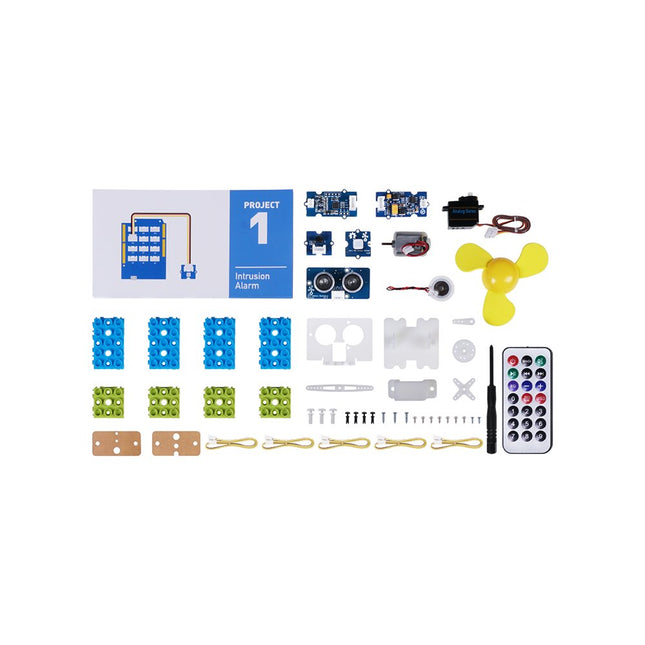
This is an add-on kit for the Seeed Studio Grove Beginner Kit for Arduino.
Applications
Suitable for Arduino beginners
Suitable for infrared control and motion detect
Suitable for getting started with open-source hardware and Arduino coding
Included
1x Grove Water Atomization
1x Grove Mini Fan
1x Grove Servo
1x Grove Ultrasonic Distance Sensor
1x Grove Infrared Receiver
1x Grove Mini PIR Motion Sensor
1x Grove Green Wrapper
1x Grove Blue Wrapper
5x Grove Cable
1x Infrared Remote Control Key
1x Ultrasonic Sensor Bracket Set
1x Motor Bracket Set
1x Servo Base
The reComputer J3010 is a compact and powerful edge AI device powered by the NVIDIA Jetson Orin Nano SoM, delivering an impressive 20 TOPS AI performance – up to 40 times faster than the Jetson Nano. Pre-installed with Jetpack 5.1.1, it features a 128 GB SSD, 4x USB 3.2 ports, HDMI, Gigabit Ethernet, and a versatile carrier board with M.2 Key E for WiFi, M.2 Key M for SSD, RTC, CAN, and a 40-pin GPIO header.
Applications
AI Video Analytics
Machine Vision
Robotics
Specifications
Jetson Orin Nano System-on-Module
AI Performance
reComputer J3010, Orin Nano 4 GB (20 TOPS)
GPU
512-core NVIDIA Ampere architecture GPU with 16 Tensor Cores (Orin Nano 4 GB)
CPU
6-core Arm Cortex-A78AE v8.2 64-bit CPU 1.5 MB L2 + 4 MB L3
Memory
4 GB 64-bit LPDDR5 34 GB/s (Orin Nano 4 GB)
Video Encoder
1080p30 supported by 1-2 CPU cores
Video Decoder
1x 4K60 (H.265) | 2x 4K30 (H.265) | 5x 1080p60 (H.265) | 11x 1080p30 (H.265)
Carrier Board
Storage
M.2 Key M PCIe (M.2 NVMe 2280 SSD 128 GB included)
Networking
Ethernet
1x RJ-45 Gigabit Ethernet (10/100/1000M)
M.2 Key E
1x M.2 Key E (pre-installed 1x Wi-Fi/Bluetooth combo module)
I/O
USB
4x USB 3.2 Type-A (10 Gbps)1x USB 2.0 Type-C (Device Mode)
CSI Camera
2x CSI (2-lane 15-pin)
Display
1x HDMI 2.1
Fan
1x 4-pin Fan Connector (5 V PWM)
CAN
1x CAN
Multifunctional Port
1x 40-Pin Expansion header
1x 12-Pin Control and UART header
RTC
RTC 2-pin, supports CR1220 (not included)
Power Supply
9-19 V DC
Mechanical
Dimensions
130 x 120 x 58.5 mm (with Case)
Installation
Desktop, wall-mounting
Operating Temperature
−10°C~60°C
Included
1x reComputer J3010 (system installed)
1x Power adapter (12 V / 5 A)
Downloads
reComputer J301x Datasheet
NVIDIA Jetson Devices and carrier boards comparisions
reComputer J401 schematic design file
reComputer J3010 3D file
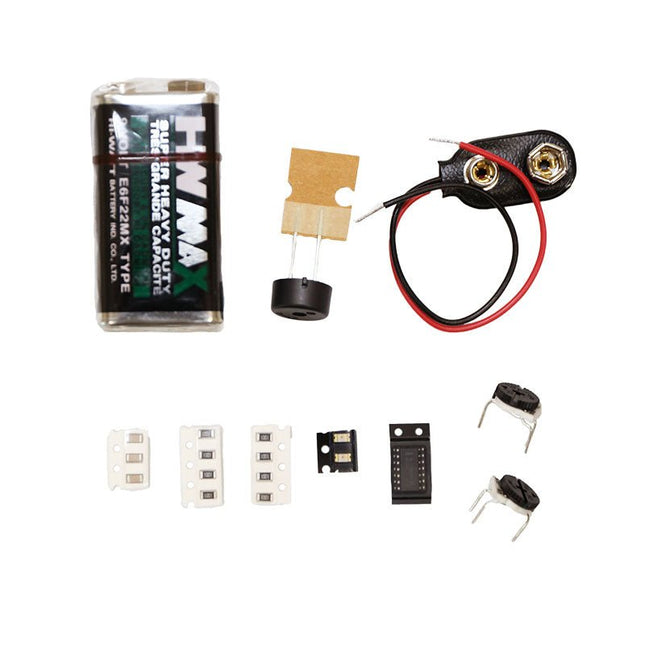
The Punk Console circuit is an advanced tutorial to get you familiar with the V-One Drill attachment. Learn how to create a double sided board and turn the knobs to create music!
The kit contains:
2x Green LEDs
8x 1k Resistors
3x 0.01uF Capacitor
2x 500K Trimpots
1x 556 Timer
1x Piezo Buzzer
1x 9 V Battery
1x 9 V Battery Connector
Rivets and a V-One Drill are required.
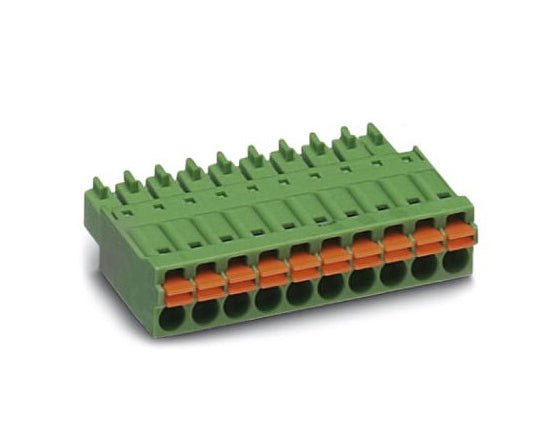
This 14-way MonoDAQ-compatible connector allows the user to create, reuse and archive test fixtures instead of rewiring the connector furnished with the MonoDAQ everytime a measurement or test has to be repeated. Helps the user to build a library of plug-and-play test setups. Features Time saving push-in connection, tools not required Defined contact force ensures that contact remains stable over the long term Intuitive use through colour coded actuation lever Operation and conductor connection from one direction enable integration into front of device All necessary technical data can be found here.
The MLX90640 SparkFun IR Array Breakout features a 32×24 array of thermopile sensors generating, in essence, a low resolution thermal imaging camera. With this breakout you can observe surface temperatures from a decent distance away with an accuracy of ±1.5°C (best case). This board communicates via I²C using the Qwiic system developed by Sparkfun, which makes it easier to operate the breakout. However, there are still 0.1'-spaced pins in case you favour using a breadboard.
The SparkFun Qwiic connect system is an ecosystem of I²C sensors, actuators, shields and cables that make prototyping faster and helps you avoid errors. All Qwiic-enabled boards use a common 1 mm pitch, 4-pin JST connector. This reduces the amount of required PCB space, and polarized connections help you connect everything correctly.
This specific IR Array Breakout provides a 110°×75° field of view with a temperature measurement range of -40~300°C. The MLX90640 IR Array has pull up resistors attached to the I²C bus; both can be removed by cutting the traces on the corresponding jumpers on the back of the board. Please be aware that the MLX90640 requires complex calculations by the host platform so a regular Arduino Uno (or equivalent) doesn't have enough RAM or flash to complete the complex computations required to turn the raw pixel data into temperature data. You will need a microcontroller with 20,000 bytes or more of RAM.
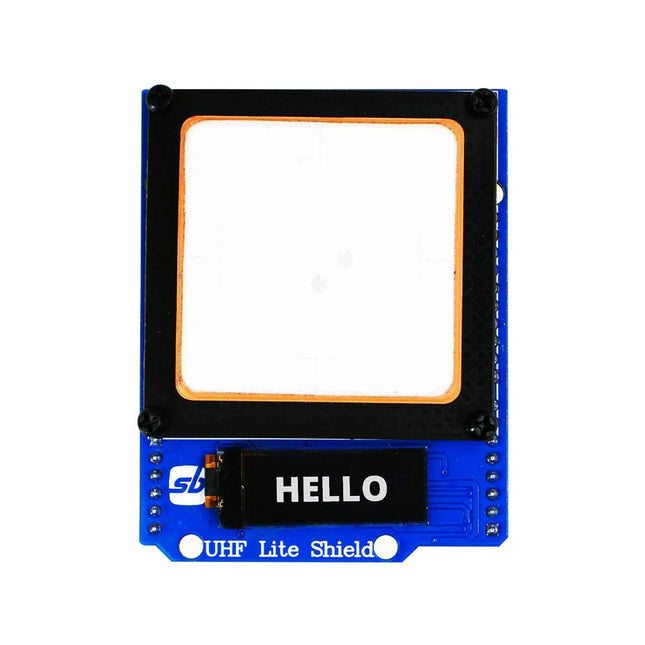
Designed with cutting-edge technology, this shield brings the power of Ultra High Frequency (UHF) RFID to your fingertips.
With the Ardi UHF Shield, you can effortlessly read up to an impressive 50 tags per second, allowing for fast and efficient data collection. The shield features an onboard UHF antenna, ensuring reliable and accurate tag detection even in challenging environments.
Equipped with a high-performance 0.91" OLED display, the Ardi UHF Shield provides clear and concise visual feedback, making it easy to monitor and interact with the RFID readings. Whether you're tracking inventory, managing access control, or implementing a smart attendance system, this shield has you covered.
With a remarkable 1-meter reading distance, the Ardi UHF Shield offers an extended range for capturing RFID data. Say goodbye to the limitations of proximity-based RFID systems and embrace the flexibility and convenience of a wider reading range.
The shield provides read-write capabilities, allowing you to not only retrieve information from RFID tags but also update or modify data as needed. This versatility opens up a world of possibilities for advanced applications and custom solutions.
Features
Onboard High-performance UHF RFID reader module
24 hours x 365 days’ work normally
0.91” OLED display for visual interaction with shield
Multi-tone Buzzer onboard for Audio alerts
Shield compatible with both 3.3 V and 5 V MCU
Mounts directly onto ArdiPi, Ardi32 or other Arduino compatible boards
Specifications
OLED resolution 128x32 pixels
I²C Interface for OLED
UHF Frequency Range (EU/UK): 865.1-867.9 MHz
UHF Module Type: Read/Write
Protocols Supported: EPCglobal UHF Class 1 Gen 2 / ISO 18000-6C
Reading Distance: 1 meters
Can identify over 50 tags simultaneously
Communication interface: TTL UART Interface for UHF
Communication baud rate: 115200 bps (default and recommend) – 38400 bps
Operation current: 180 mA @ 3.5 V (26 dBm Output, 25°C), 110 mA @ 3.5 V (18 dBm Output, 25°C)
Working humidity <95% (+25°C)
Heat-dissipating method Air cooling(no need out install cooling fin)
Tags storage capacity: 200 pcs tags @ 96 bit EPC
Output power: 18-26 dBm
Output power accuracy: +/-1 dB
Tags RSSI support
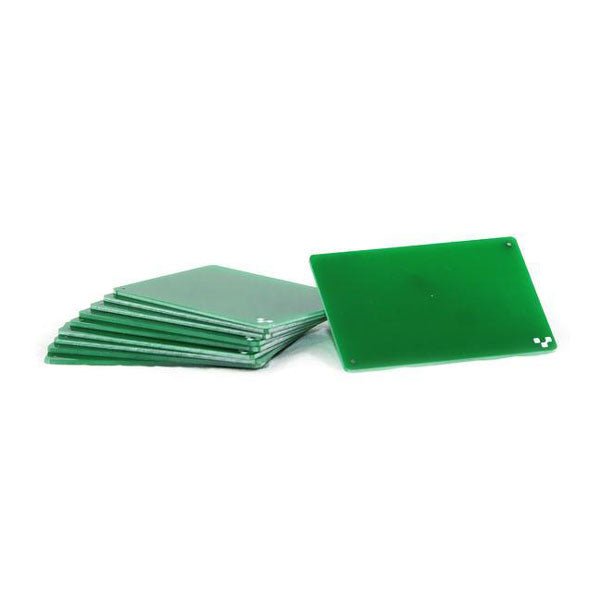
If you are going to be drilling, we recommend drilling on FR1 substrates. Unlike FR4, FR1 dust does not contain fiber glass. It is also a softer material, which means a less wear and tear on the drill bits. Download the template and incorporate them into your design here. 10 substrates included.